
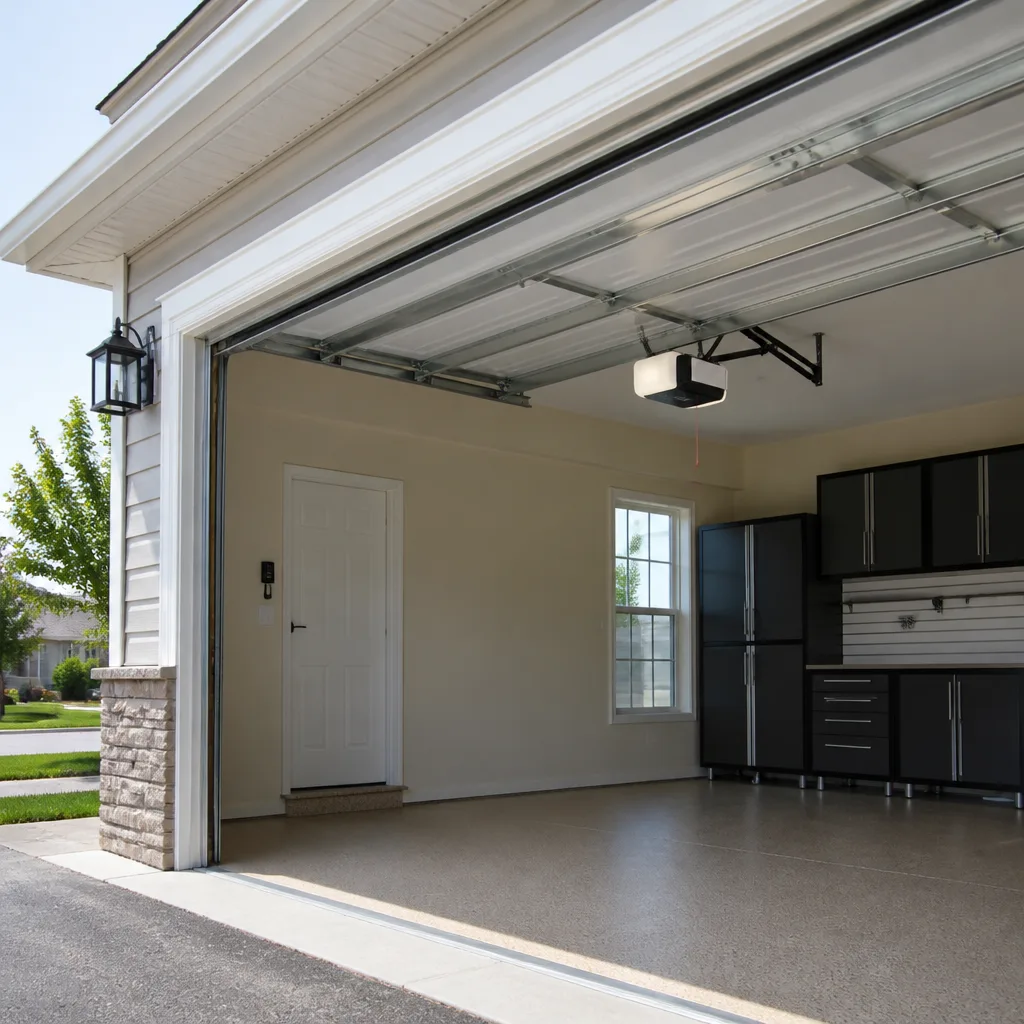
 LiftMaster openers
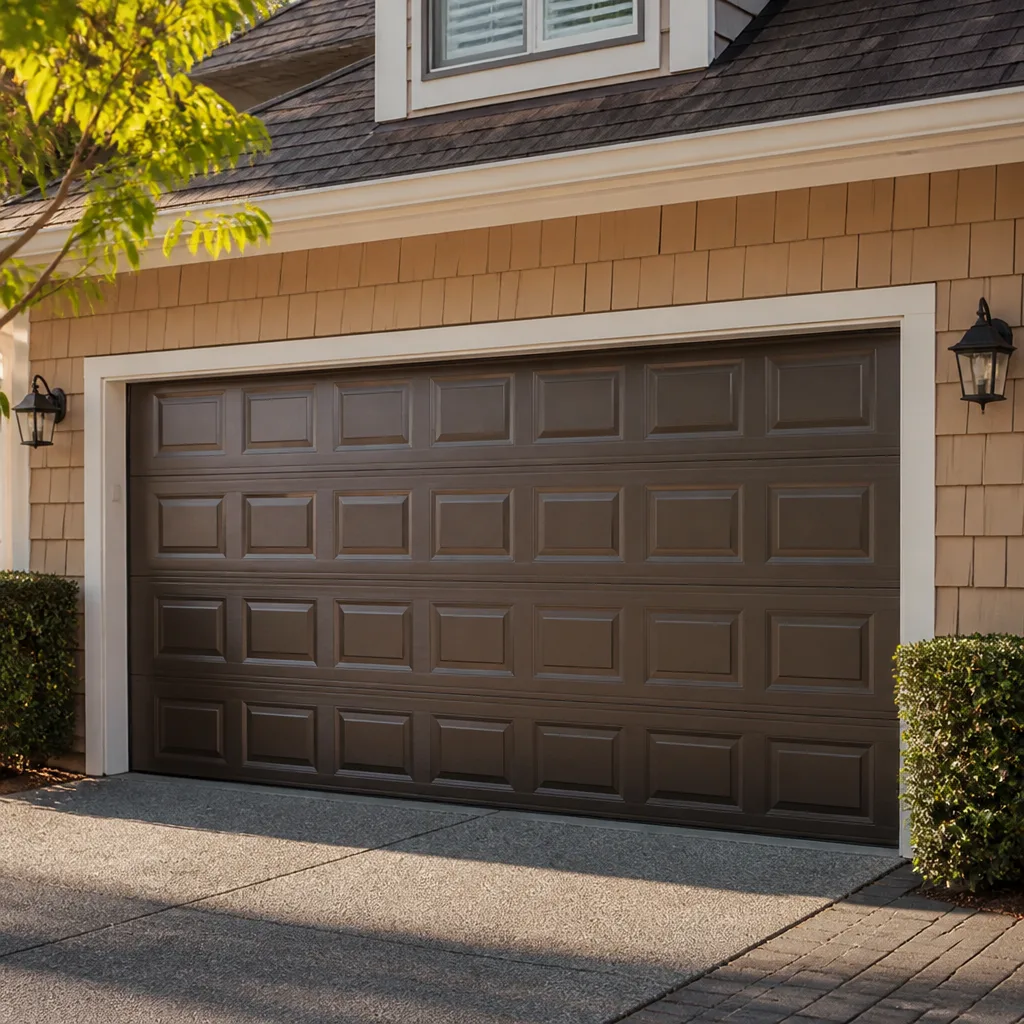 Raised-panel steel
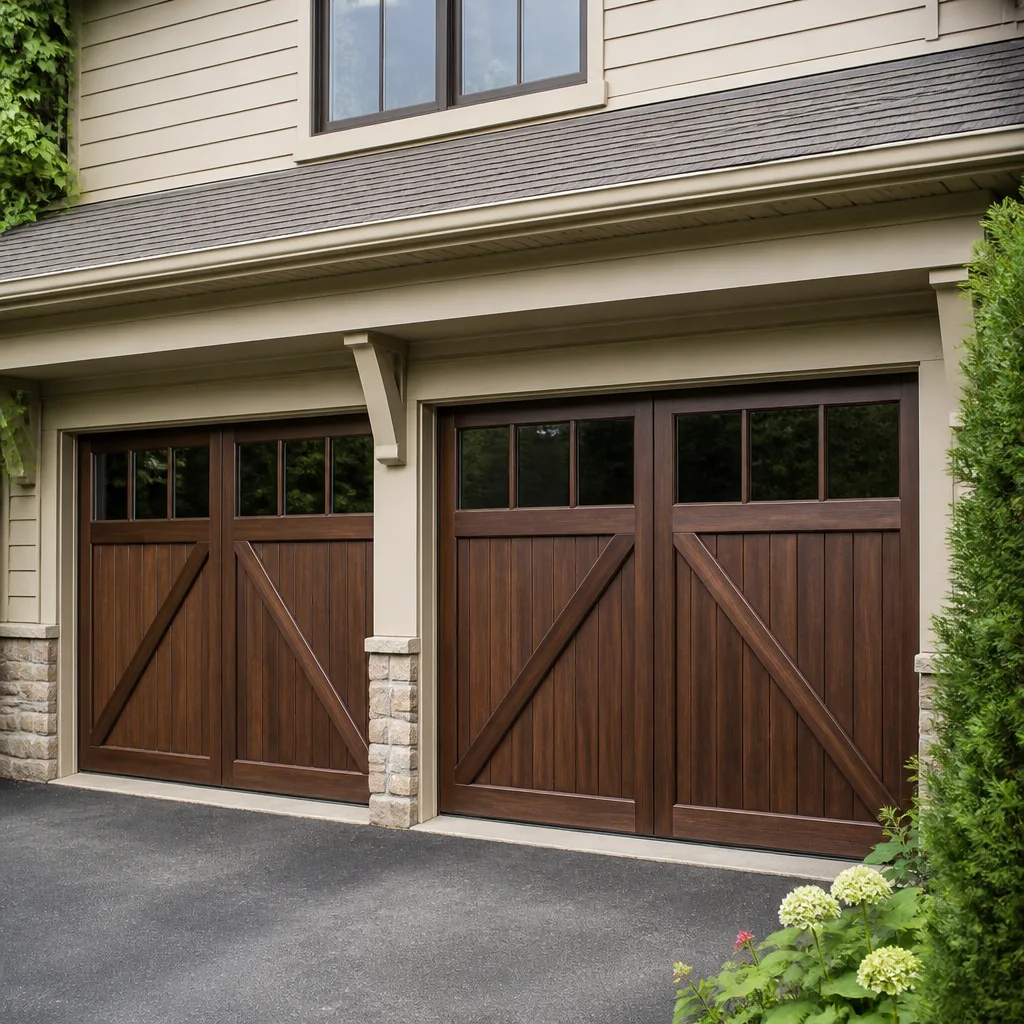 Carriage house
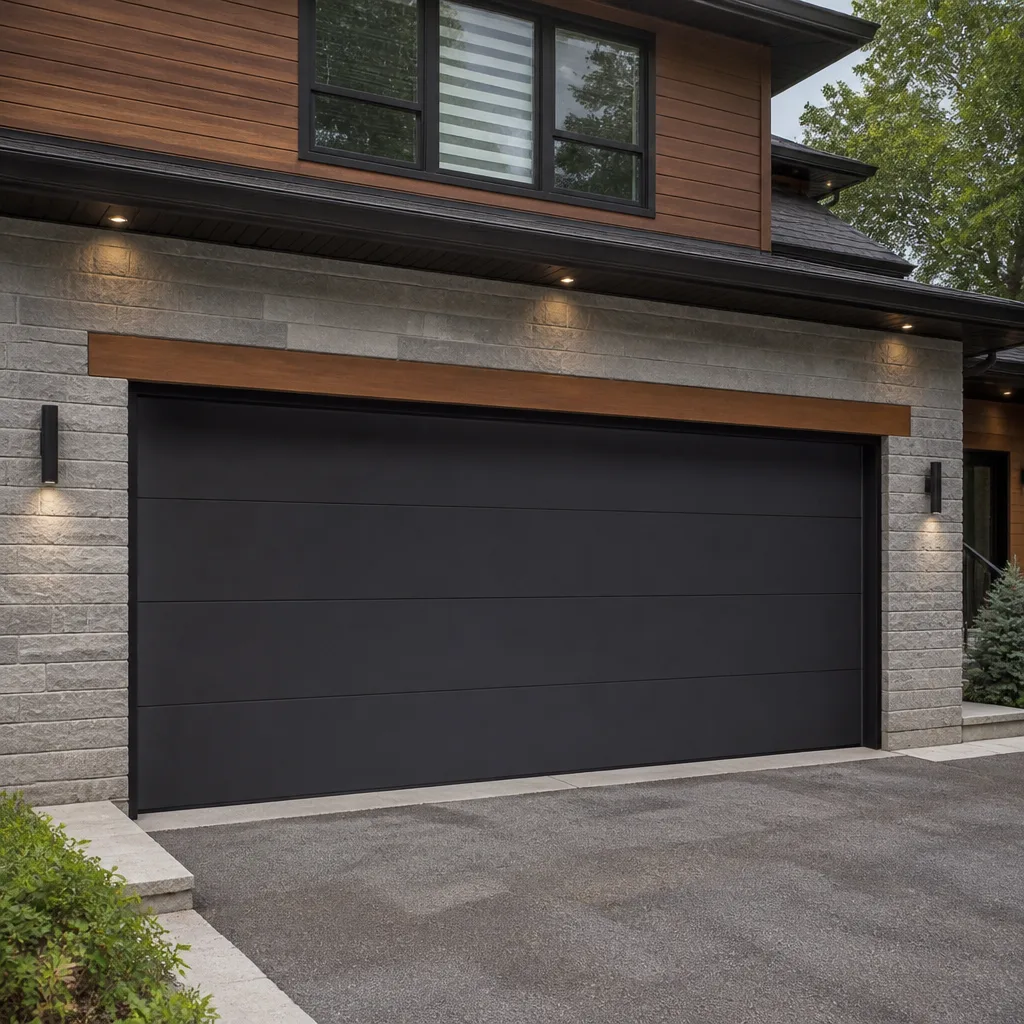 Modern flush
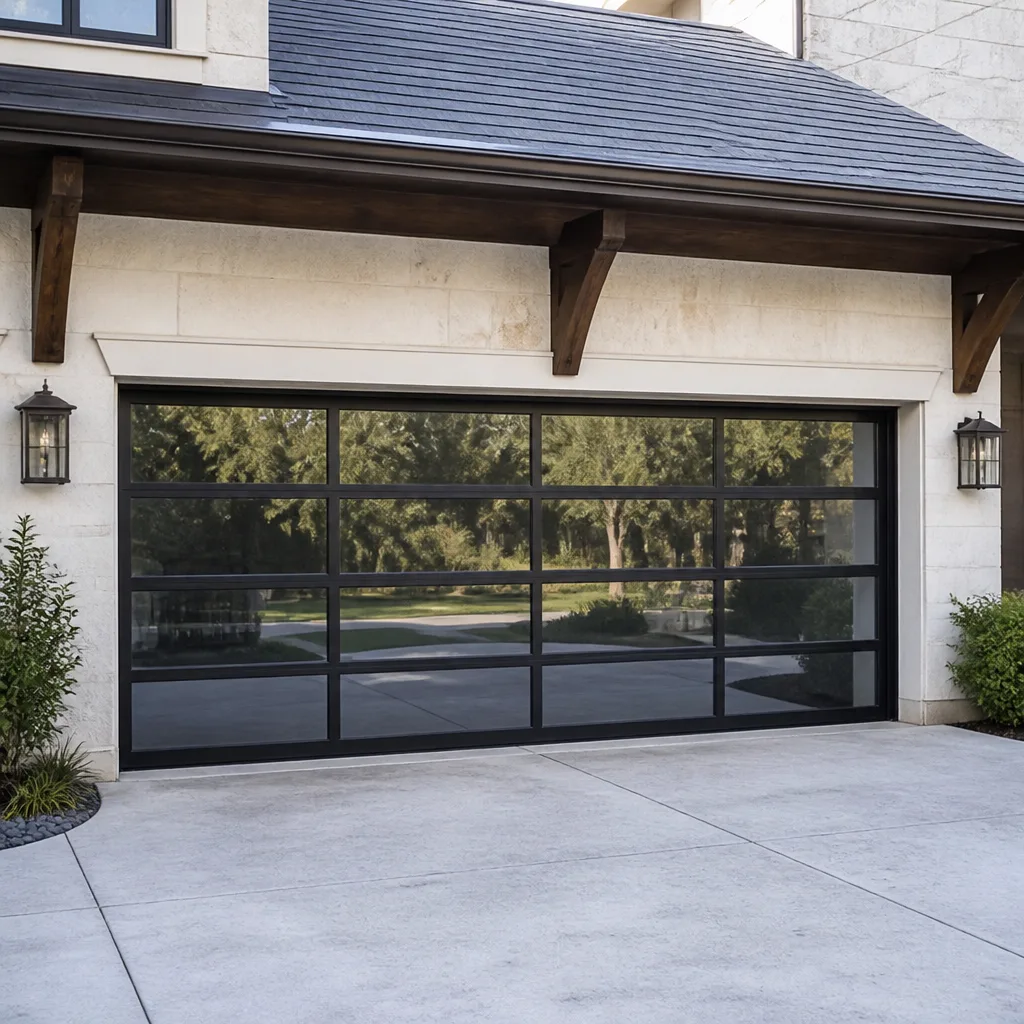 Full-view glass
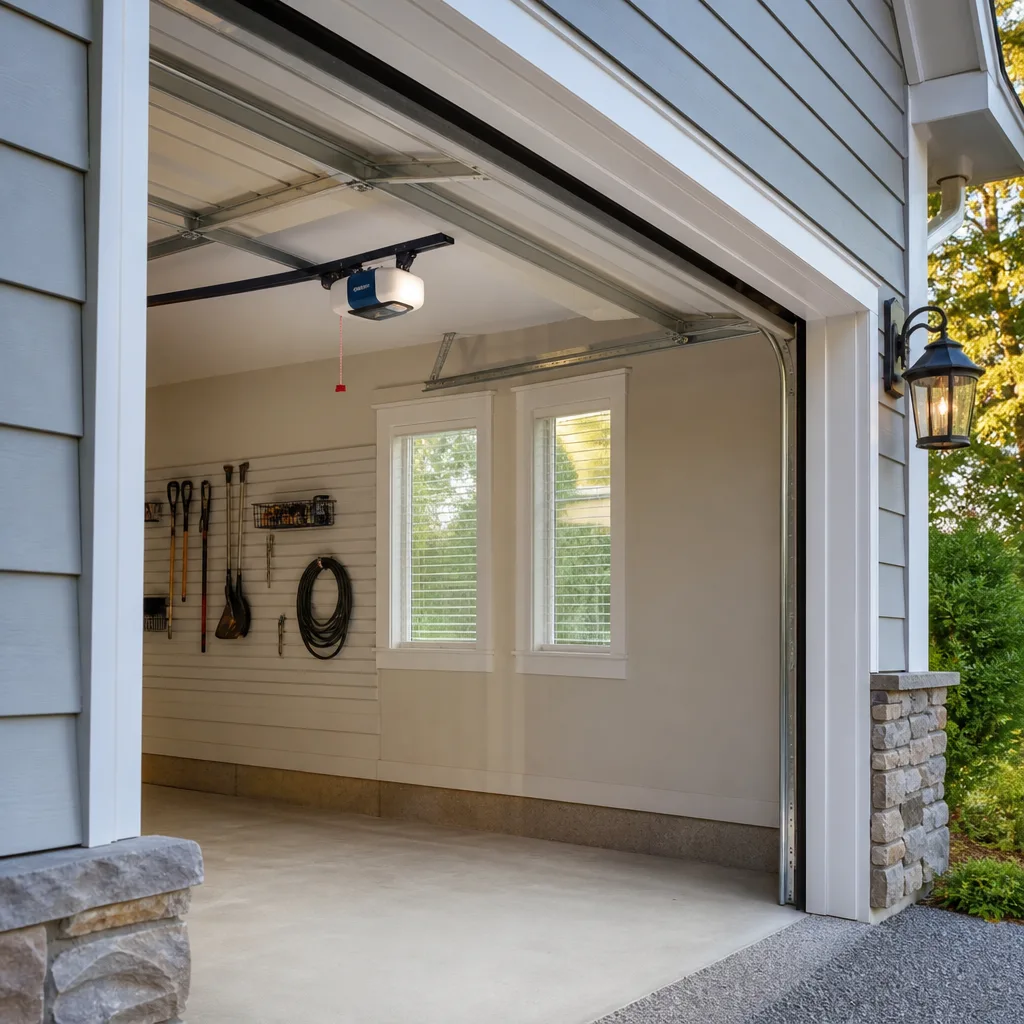 Chamberlain openers
Full 25-point door and opener safety check with every visit - springs, cables, rollers, tracks, and your LiftMaster or Chamberlain opener included
You get a price before we start. It does not change when the truck arrives.
Get your free estimateLiftMaster Roller Replacement: The San Francisco Owner’s Guide
LiftMaster roller replacement in San Francisco typically costs $130 – $260 installed, and we stock compatible rollers on our trucks for most same-day or next-day appointments. A worn roller is the most common cause of a garage door that suddenly sounds like it’s dragging gravel across concrete, or one that shudders when it moves. Most homeowners find out a roller has failed the hard way: the door starts binding, the opener strains, and at some point the door refuses to open or close smoothly.
Here’s the thing about rollers that most people don’t realize until one goes bad: your LiftMaster opener is only as good as the ten or twelve small wheels carrying the door’s full weight along the track. When one seizes up or loses its bearing, the door fights the opener. The motor keeps working, but it’s pulling against friction that shouldn’t be there. Fix the roller, and the door glides again. Aaron Teague has pulled apart enough of these doors to tell you that in a hurry, and the fix is usually straightforward.
Which LiftMaster Models This Applies To
This roller replacement guidance applies to virtually every LiftMaster residential garage door setup in San Francisco, whether your opener is a newer belt-drive unit from the 8000 series, a chain-drive 8160, or an older model that’s still running fine. The rollers themselves aren’t specific to your opener. They’re sized to your door: its weight, its panel profile, and its track radius. What matters is the diameter (2-inch rollers are the residential standard, though heavier doors and some older San Francisco builds run 3-inch), the stem length, and the bearing type.
Here’s the compatibility gotcha that trips people up: the LiftMaster name is on the opener, but the rollers are part of the door assembly. If you have a heavy wood door in an older Sunset District or Richmond District home, you may have 3-inch rollers. If you have a standard steel sectional door, you almost certainly have 2-inch rollers. We can confirm the size by looking at the stamp on the wheel or by measuring it, but here’s the practical short version: the overwhelming majority of San Francisco homes we visit use 2-inch nylon rollers with either 10-ball or 12-ball sealed bearings. We stock both in steel and nylon on the truck. As for OEM versus aftermarket: LiftMaster rollers are fine, but a quality sealed-bearing nylon roller from a reputable aftermarket supplier will often outlast the factory nylon version. We’re an independent service provider, not affiliated with LiftMaster, and we carry both so you can choose based on your budget and how long you plan to live in the house.
Styles & brands we work with
Signs Your LiftMaster Roller Replacement Is Failing
- A grinding or chattering sound during travel: This is the ball bearings inside the roller breaking down. Once the bearing starts shedding metal, the wheel doesn’t roll, it drags. The noise changes pitch as the door moves because some rollers have failed while others haven’t.
- The door hesitates or jerks mid-travel: A seized roller forces the door to pause as the panels work their way past that spot on the track. You’ll usually see a visible bump in the door’s motion at one specific point.
- Visible flat spots or wobble on the roller wheel: Nylon rollers can develop flat spots if they’ve been forced to slide instead of roll for an extended period. Shine a flashlight up the track and look at the wheel shape. If it’s not round, it’s done.
- The door sits slightly crooked in the opening: When one roller collapses or the stem bends, that corner of the door drops. This puts uneven pressure on the cables and springs, and it’s a secondary failure waiting to happen if ignored.
- Black dust or metal shavings on the track: That’s the roller bearing disintegrating. The dust collects on the horizontal track sections first. By the time you see it, the bearing is mostly gone.
See the difference
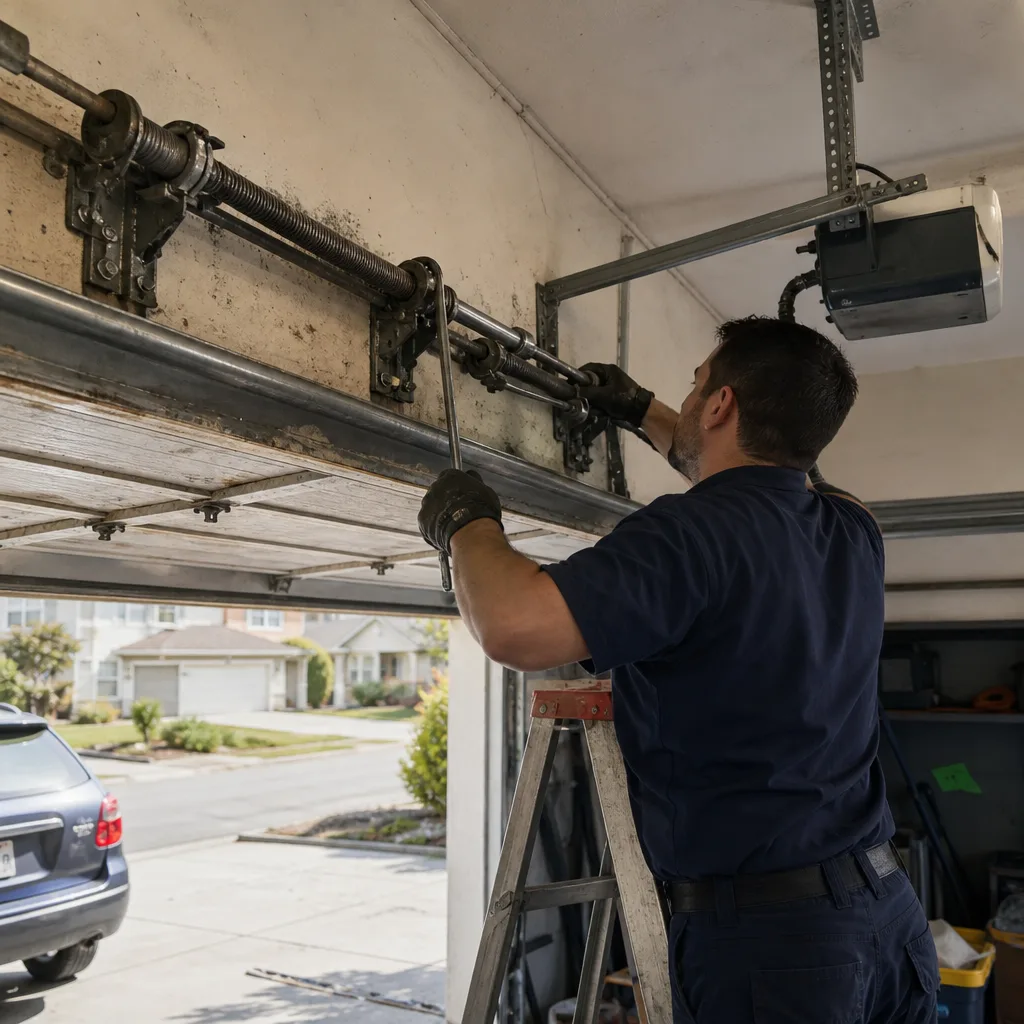 Before
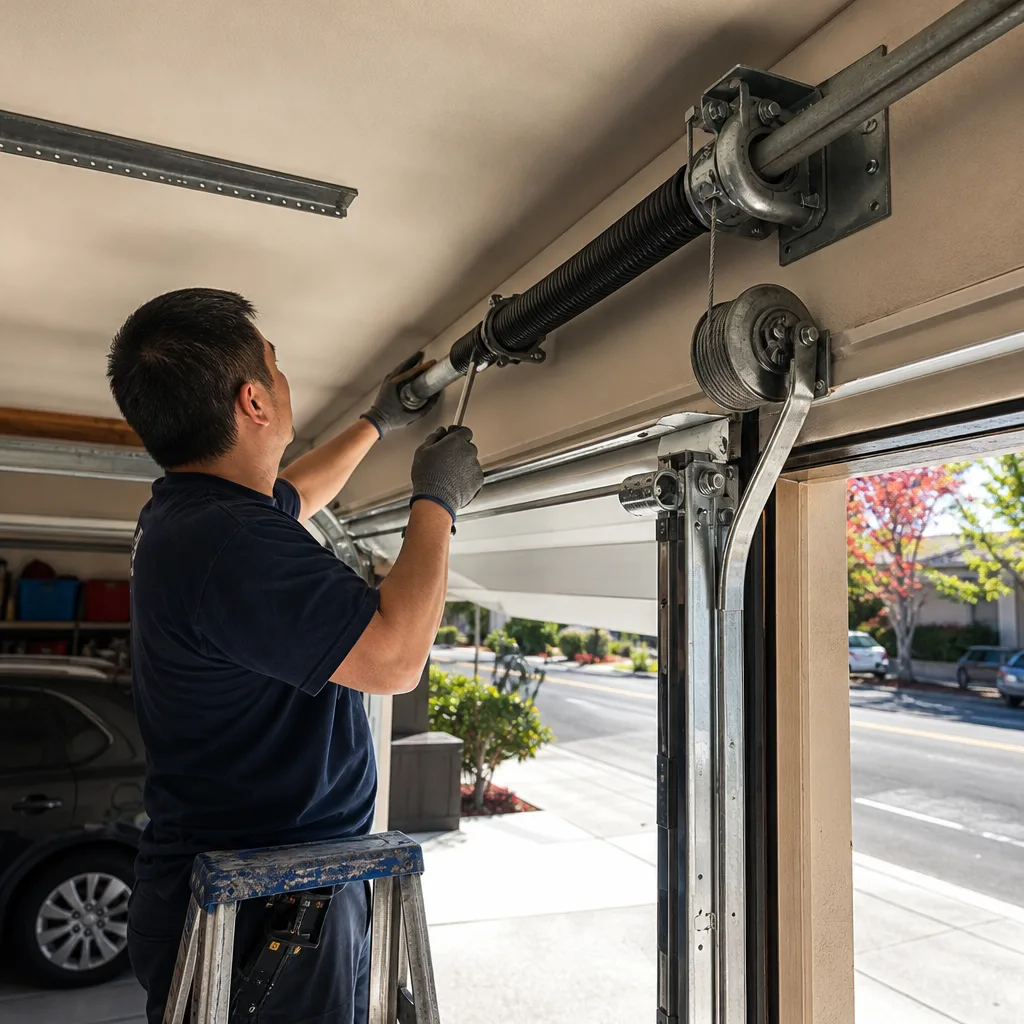 After
After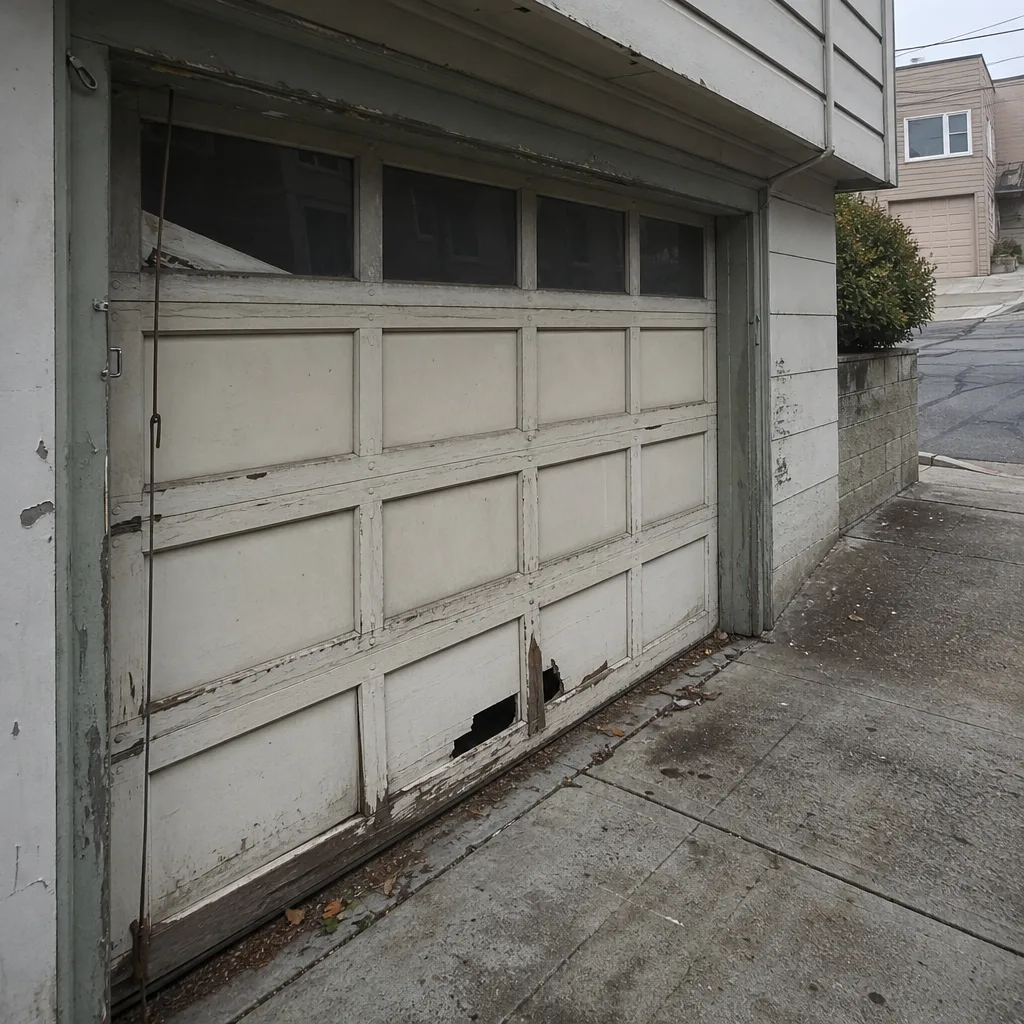 Before
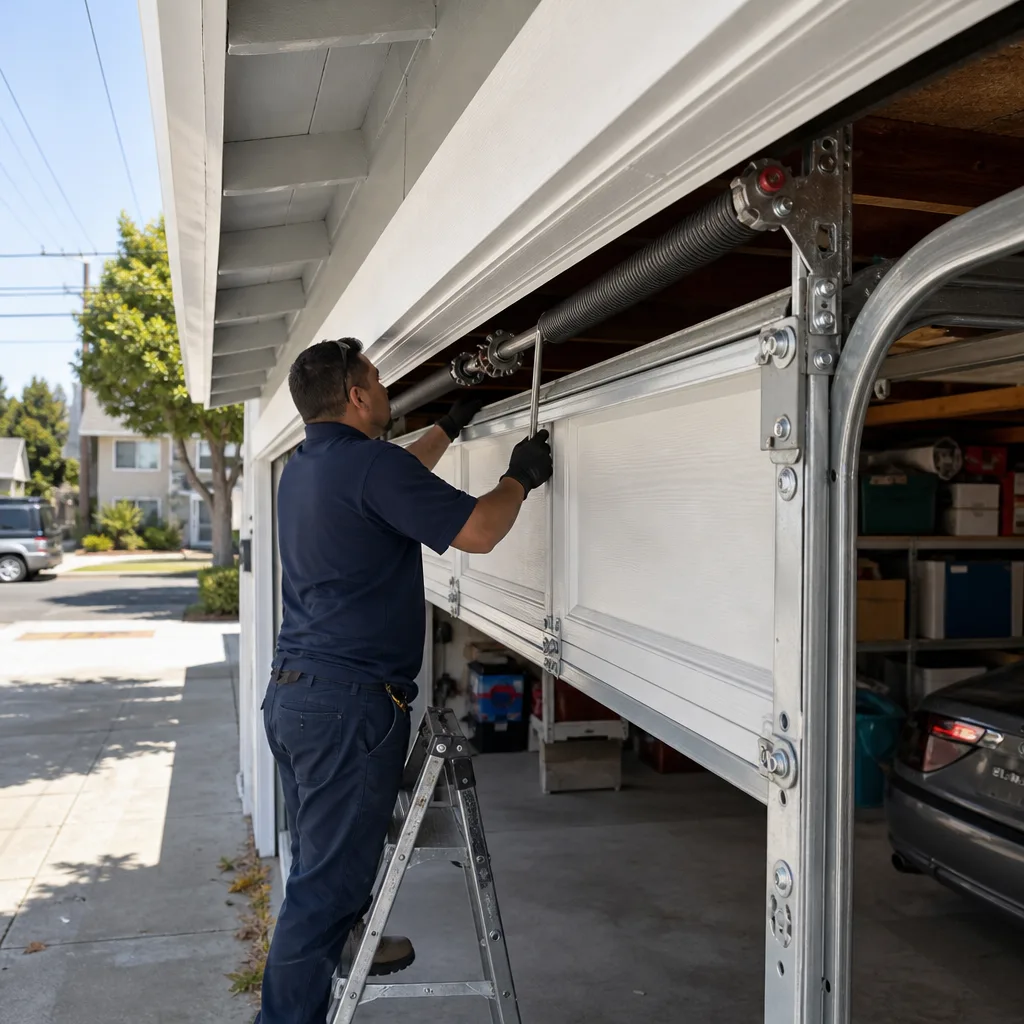 After
After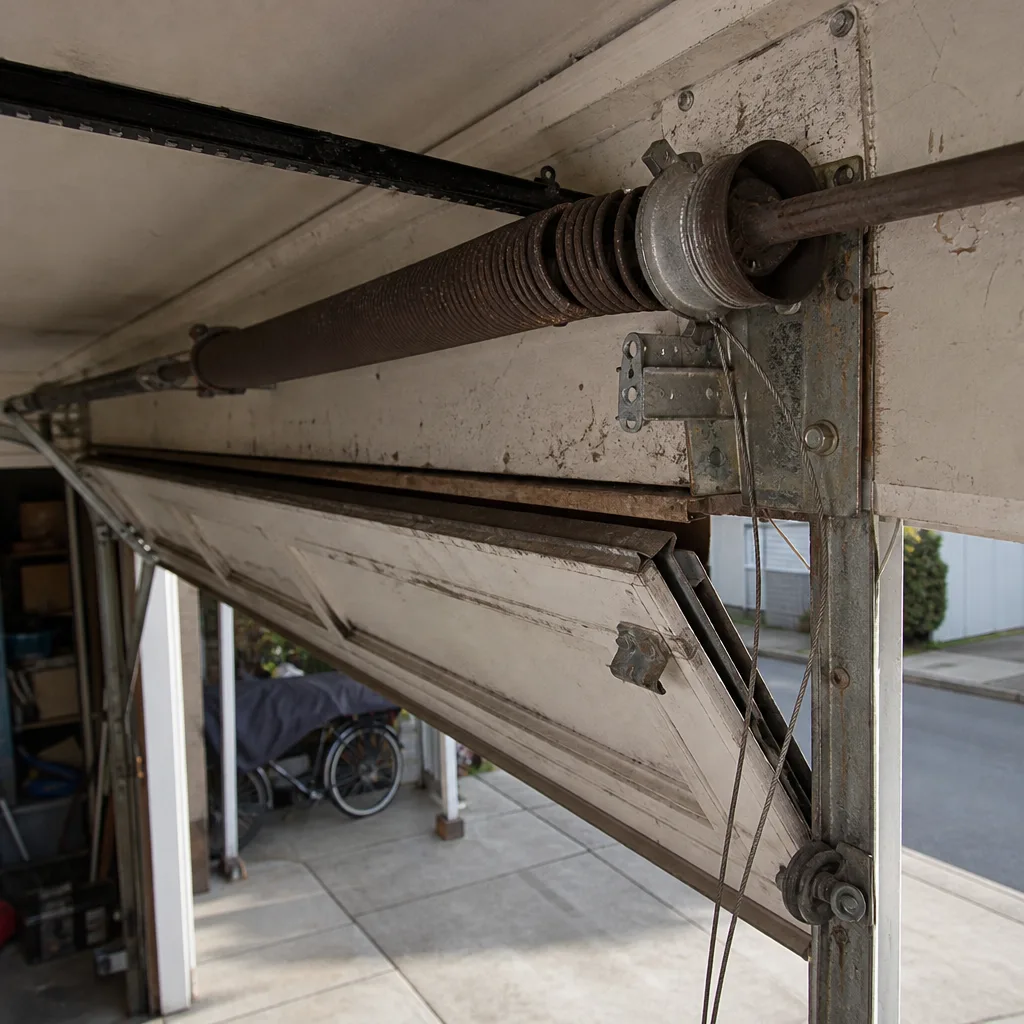 Before
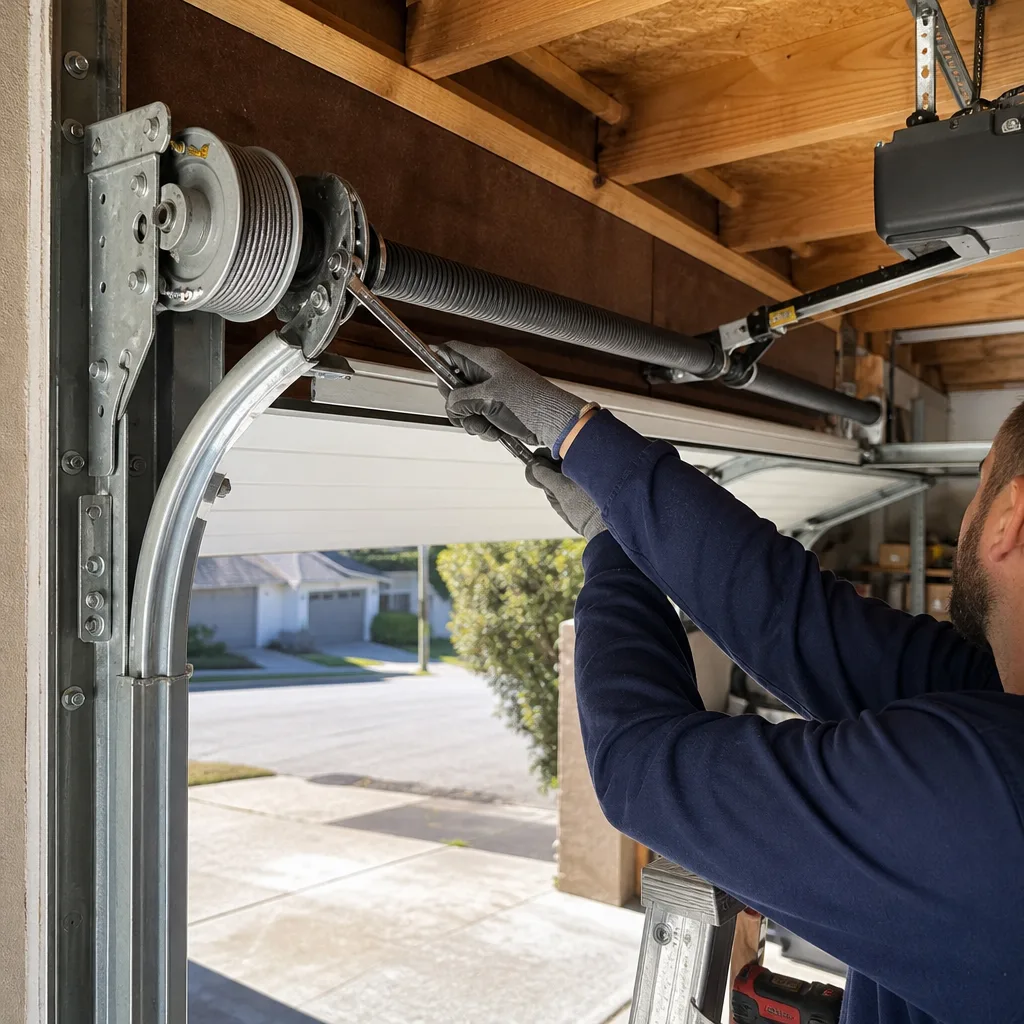 After
AfterReplacement Cost & What’s Included
A full roller replacement for a standard 2-car LiftMaster door in San Francisco runs $130 – $260 installed. On the lower end, you’re looking at nylon rollers with sealed bearings on a standard sectional door. On the higher end, you’re replacing larger 3-inch rollers on a heavier door, or you have a door with unusually high cycle counts where we replace all rollers rather than just the failing ones. The price includes the rollers themselves, the labor to swap every one on the door, and a quick check of the track alignment while we’re up there.
We give you the written price before we touch anything. If we open up the door and find the job is bigger than expected, we stop and talk to you first. No verbal estimates, no surprise invoices. And every roller replacement carries our 365-Day Done Right Promise: if it’s not done right, we make it right. 365 days from the date of repair, if a roller fails, we come back and fix it at no charge. That’s in writing, on every job.
DIY or Call Us?
You can safely watch a roller replacement and understand exactly what we’re doing, but I want to be straight with you about the risks of doing this one yourself. The bottom roller brackets on a sectional door are under tension from the cable. If you unbolt the wrong bracket without securing the door, that cable releases and you’ve got a heavy panel dropping. The top rollers are accessible, but reaching them still means working with the door up, which means the spring is under load. The spring won’t be at the roller, but it’s still in the system holding everything in tension.
What you can safely do: identify the failing roller visually, clean the track with a dry rag, and note which side and which position. That helps us stock the right parts and get in and out faster. The swap itself, especially on the bottom brackets, is a two-person job with the right tools and the door properly clamped. If you’d rather not risk it, call (650) 550-9734. We’ll get someone out, show you exactly what’s wrong, and hand you a written price before we start.
FAQs
Most factory nylon rollers with unsealed bearings last 5 to 7 years in San Francisco before the bearings start breaking down; sealed-bearing nylon rollers typically last 10 to 15 years, and in foggy, salt-air neighborhoods like the Sunset District we recommend sealed bearings exclusively because the moisture finds its way into unsealed bearings faster. Call (650) 550-9734 and we’ll tell you what’s on your door now.
No, a roller with a damaged bearing or a flat spot can’t be repaired; the bearing is a sealed unit and the wheel is one piece, so replacement is the only correct fix. The good news is the part is inexpensive, and the labor is straightforward, which is why the full job stays in the $130 – $260 range.
For a standard 2-car door where we’re replacing all rollers, the job takes 45 to 90 minutes from setup to cleanup. Most San Francisco appointments are completed the same day, and since we carry both 2-inch and 3-inch rollers on the truck, there’s no second trip while parts are ordered.
Yes, we stock 2-inch and 3-inch sealed-bearing nylon rollers along with steel alternatives on every truck, so we can replace your LiftMaster door’s rollers the same visit. We also carry parts for Chamberlain and Genie openers if we spot a secondary issue while we’re working on the door.
Written by Aaron Teague, Owner, Doyle Garage Doors San Francisco at Doyle Garage Doors San Francisco, serving San Francisco and nearby areas.