
Last updated October 16, 2026
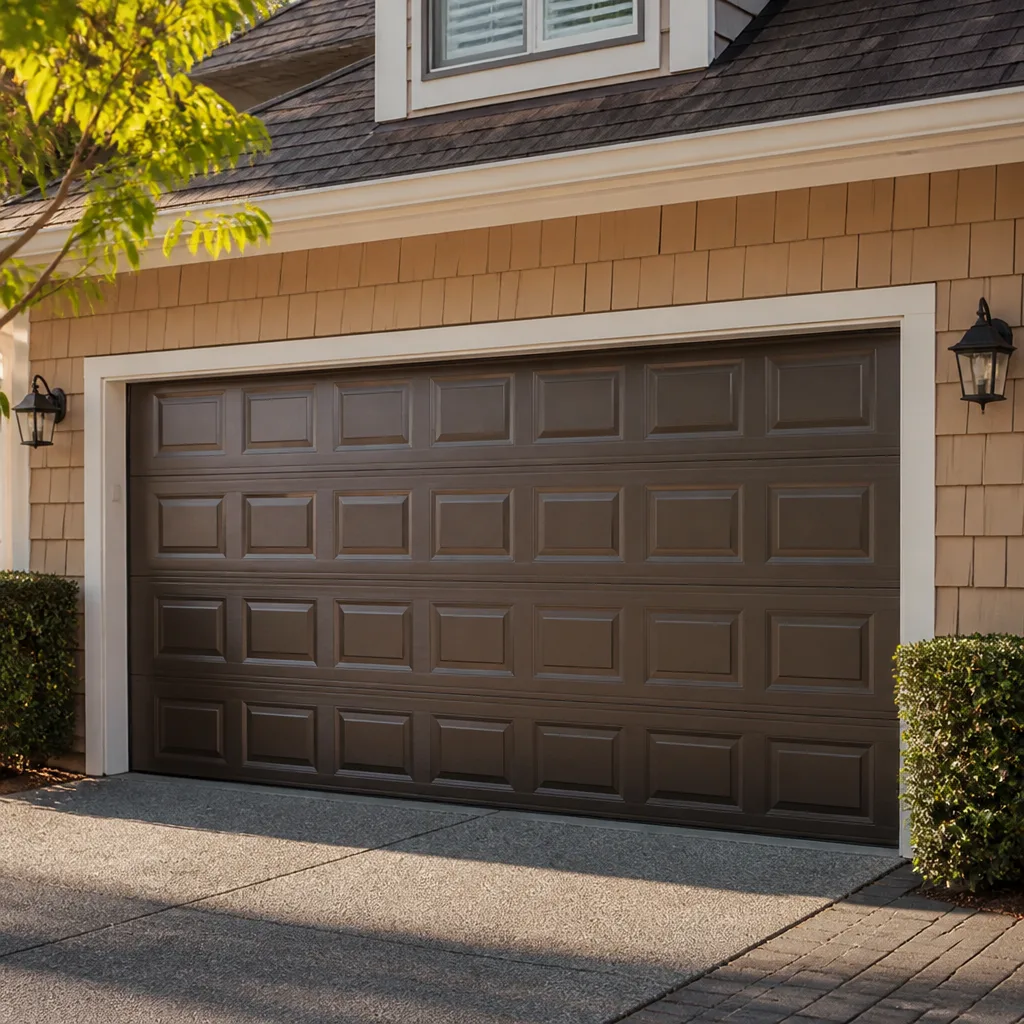 Raised-panel steel
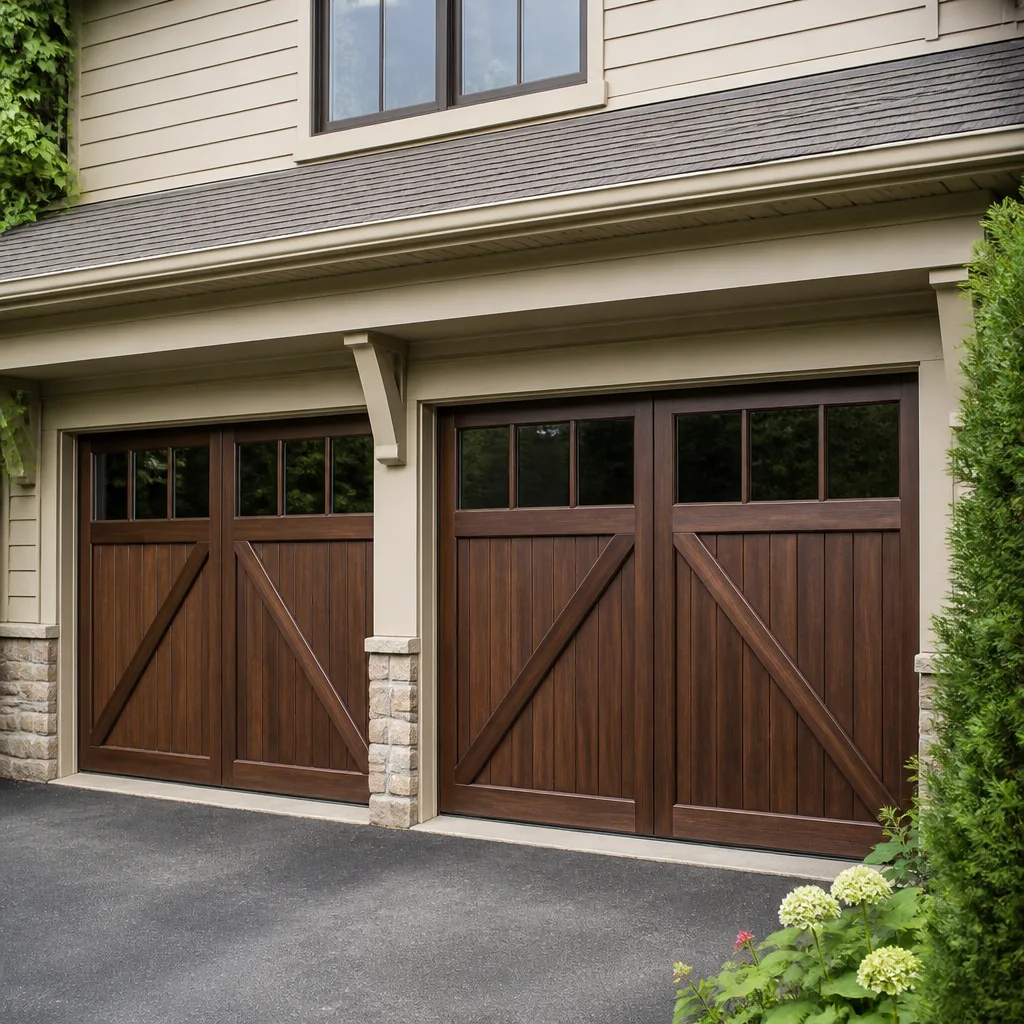 Carriage house
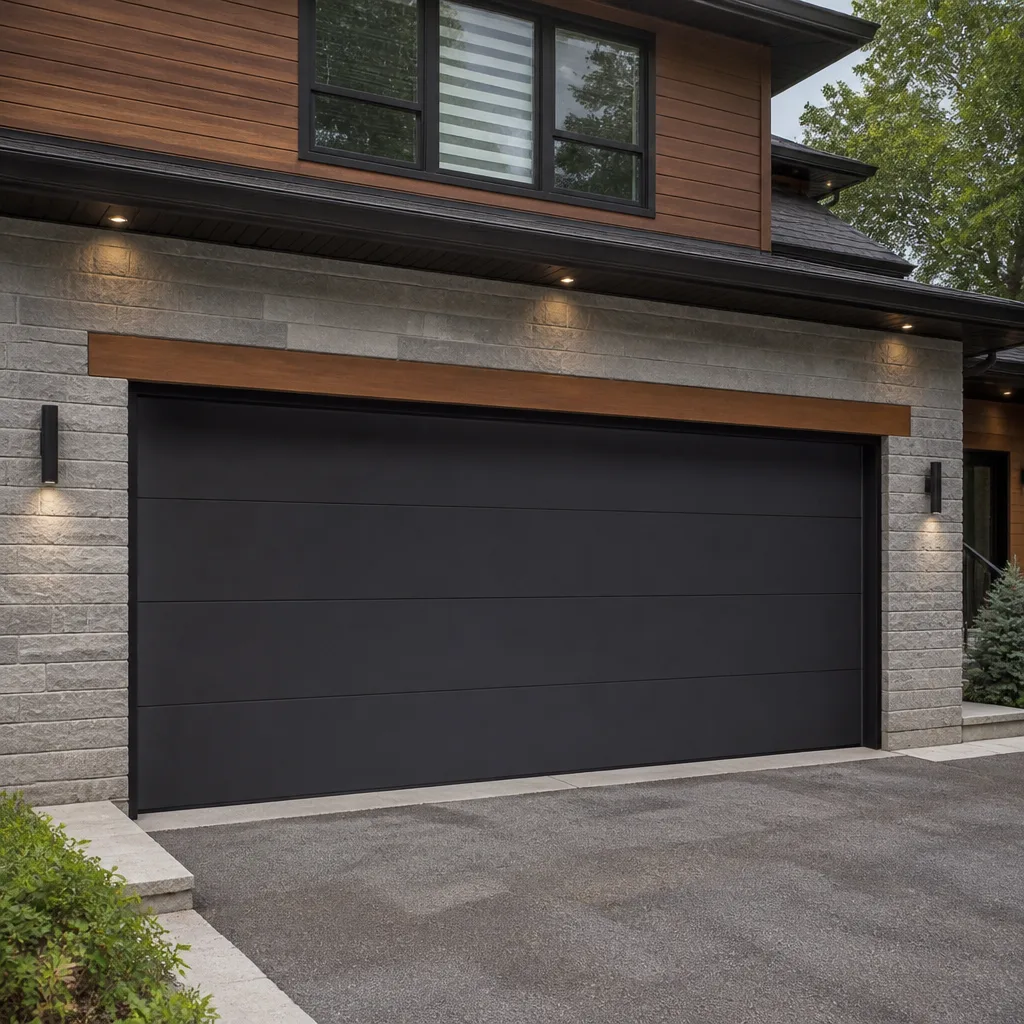 Modern flush
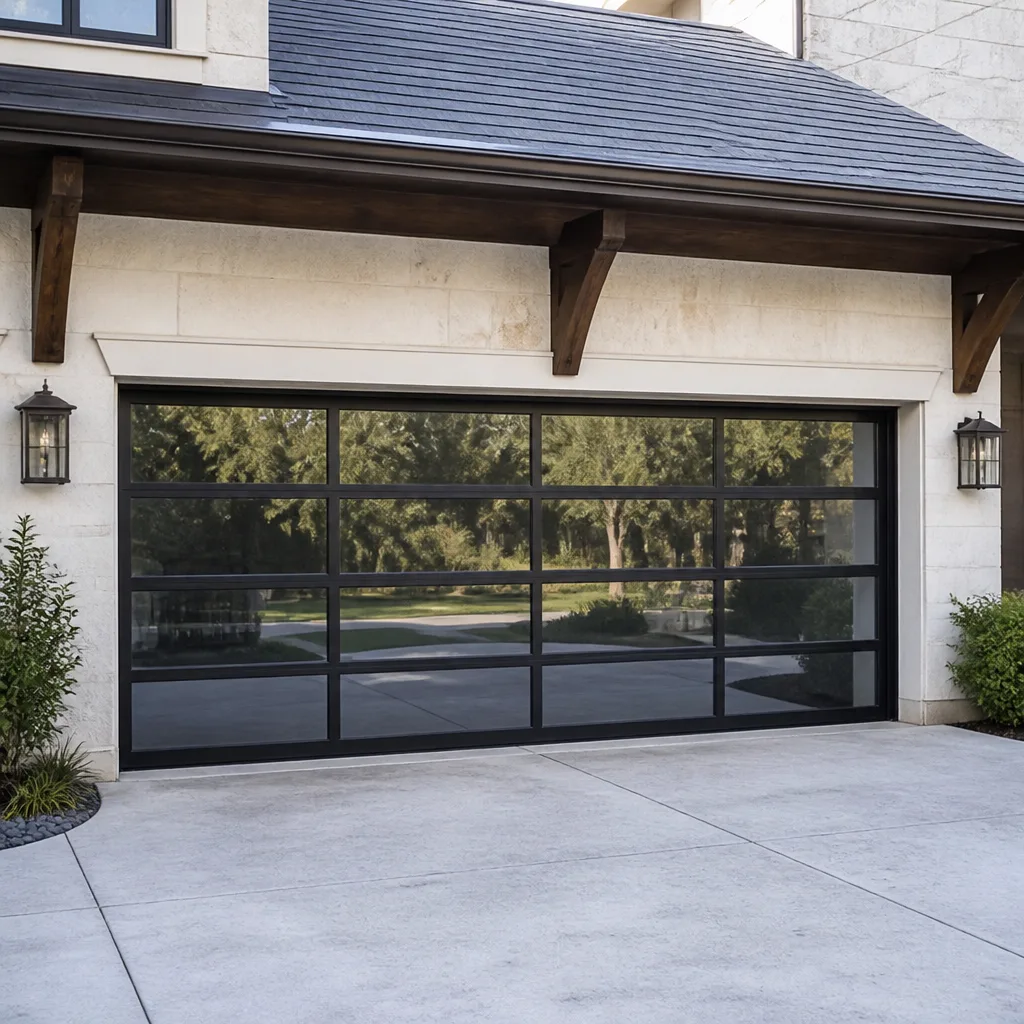 Full-view glass
 LiftMaster openers
 Chamberlain openers
Full 25-point door and opener safety check with every visit - springs, cables, rollers, tracks, and your LiftMaster or Chamberlain opener included
You get a price before we start. It does not change when the truck arrives.
Get your free estimateThe Complete Guide to Garage Door in San Francisco
Most garage door guides treat every city the same, as if a door in Phoenix behaves like one in San Francisco. It doesn’t. The average San Francisco garage door hangs on a building constructed before the 1989 Loma Prieta earthquake retrofit era, which means the wall framing, header, and spring anchor plate may not meet current load requirements. Throw in marine fog, salt air, Victorian-era carpentry, and driveways angled like ski slopes, and you have a maintenance picture no national guide addresses. This guide covers what San Francisco homeowners actually need to know: how fog and microclimates affect springs, what seismic code requires of your opener, how to read a door’s age, and when to call someone who understands pre-war framing.
Styles & brands we work with
Quick Answer
A garage door in San Francisco needs three things done differently than anywhere else in California: corrosion protection for salt air and fog, spring and opener adjustments that account for the city’s temperature swings between neighborhoods, and a structural check on the header and mounting points because so many local garages sit in buildings predating modern seismic codes. Expect to lubricate moving parts three to four times a year in fog-belt neighborhoods like the Inner Sunset, test your opener’s auto-reverse monthly, and have a professional inspect the spring anchor plate and header at least once every two years. If your door was installed before 2000, assume it needs a seismic compliance review.
Table of Contents
- How San Francisco’s Climate Actually Affects Your Door
- Torsion vs. Extension Springs: What Most SF Garages Need
- Victorian and Edwardian Structural Realities
- Seismic Requirements for SF Garage Door Openers
- How to Read Your Door’s Serial Plate
- A San Francisco Maintenance Calendar
- What Repairs Actually Cost in San Francisco
- Common Mistakes to Avoid
- When to Call a Professional
- Frequently Asked Questions
- The Bottom Line
How San Francisco’s Climate Actually Affects Your Door
San Francisco is not one climate. It’s a patchwork of microclimates, and each one treats a garage door differently. A door facing the ocean in the Outer Richmond gets hit with salt-laden fog most mornings from June through August. A door in the Mission sits in sun and warmth while the west side is socked in, and that temperature difference changes how the metal behaves. The door in the Richmond expands and contracts less, but rusts faster. The door in the Mission gets more daily thermal cycling, which means the torsion spring, the large coil mounted above the door that does most of the lifting, loses tension at a slightly different rate than the identical spring installed three miles west.
Here’s what our technicians see, neighborhood by neighborhood:
- Inner Sunset and Outer Richmond: Fog sits on these doors 200 plus days a year. Expect surface rust on the track brackets within 3 to 5 years if the door is unpainted steel. Rollers with exposed metal bearings seize faster here than anywhere else in the city.
- Mission, Bernal Heights, and Noe Valley: More sun, bigger temperature swings. The torsion spring cycles through more expansion and contraction, which means it creeps toward fatigue sooner. If you hear a metallic ticking when the door runs, that’s likely the spring binding.
- Bayview and Hunter’s Point: Prevailing wind off the bay carries salt air, but the real issue is airborne grit from industrial traffic. Track rollers pick up particulate and wear their nylon coating down faster.
- Pacific Heights and the Marina: Many doors here sit in garages cut into hillsides with retaining walls on one or both sides. Moisture wicks through concrete and raises humidity inside the garage, which accelerates rust on hinges and cables even when the door itself stays dry.
Lubrication schedules should follow the microclimate, not the calendar. A door in the Inner Sunset may need roller and hinge lubrication quarterly. The same door in the Mission can go six months between lubes. The takeaway: don’t copy your neighbor’s maintenance schedule from across town. Their door lives in a different San Francisco than yours.
Torsion vs. Extension Springs: What Most SF Garages Need
There are two kinds of springs that counterbalance a garage door, and San Francisco’s typical garage layout makes the choice more consequential than in the suburbs. A torsion spring is the thick coil mounted on a metal bar directly above the closed door. It winds and unwinds, storing torque, and it’s the design found on nearly all doors installed in the last 40 years. An extension spring is the older system: two long springs mounted horizontally on cables that run along the side tracks. Those springs stretch when the door closes and contract when it opens.
For San Francisco garages, torsion is usually the right answer for three reasons:
- Low-clearance ceilings. Many SF garages, especially under Victorians with tandem depth, have ceilings under 8 feet. A torsion assembly sits tight against the header and adds almost no side footprint, while extension spring cables and pulleys need side clearance many pre-war garages don’t have.
- Safety. When a torsion spring fails, it typically stays on the bar, contained. When an extension spring snaps, the spring or cable can whip sideways. In a narrow San Francisco garage, that’s a genuine hazard to anyone standing nearby. Most professional installers in the city will convert an extension spring door to torsion exactly for this reason.
- Service life. Torsion springs are rated in cycles, one cycle being a full open-and-close. A standard torsion spring runs 10,000 cycles, which in a busy household garage used four times a day is about 7 years. Extension springs typically last half that. Given that many San Francisco garages are the primary entry point, four or more cycles a day is common.
If you have an extension spring setup, especially in a narrow garage, we recommend having it evaluated for a torsion conversion. This is the kind of repair our garage door repair team in San Francisco does regularly on pre-1990 homes.
Victorian and Edwardian Structural Realities
San Francisco has roughly 48,000 buildings that predate 1915. A meaningful share of them have garages that were never part of the original construction, which means someone cut a garage opening into a foundation or basement wall at some point in the last century. The header above that opening, the horizontal beam that carries the load from the floors and roof above, may be original material the builder never spec’d for a door opening. And the spring anchor plate, the steel bracket that holds the torsion assembly to the wall, is only as strong as the wood it’s bolted to.
Why this matters in practice:
- A garage door exerts hundreds of pounds of force on the header every time it cycles. On a retrofit opening in a Victorian, that header might be a 4×6 beam with a century of dry rot at the ends. It holds, until it doesn’t.
- Tandem-depth garages, common in Edwardian row houses, run front to back through the building. The door often sits directly beneath a bedroom or living space. A failing spring assembly vibrates through the structure, and a header failure becomes a habitability problem, not just a garage problem.
- Shared-wall conditions in row houses mean the door track is often bolted into a party wall. That’s fine when installed correctly, but a previous owner may have cut into shared framing, which is a structural and fire-safety issue the city takes seriously.
This is the single biggest gap we see between generic door companies and the work Doyle Garage Doors San Francisco home technicians do daily. You can’t spec a door for a 1908 Victorian by reading the door manufacturer’s install guide. You have to look at what the door is bolted to, and in San Francisco, that assembly is often 100 years old.
Seismic Requirements for SF Garage Door Openers
California Building Code requires that every residential garage door opener installed after 1991 has an automatic reverse mechanism that activates in the event of a power outage or other disconnect. That means the opener must sense when the door is not moving as commanded, reverse direction, and close the door, or the system must fail in a closed, locked position. The intent is simple: during an earthquake or a blackout, you don’t want your garage door sitting half-open and unsecured.
A lot of San Francisco openers fail this requirement. Here’s the pattern we see across the city:
- Older Genie and Chamberlain chain-drive units from the 1990s often lack the automatic reverse on power failure. They’ll reverse on obstruction while running, which is the photoelectric sensor test most homeowners know, but they won’t secure the door if the power cuts mid-cycle.
- Openers retrofitted into Victorian garages sometimes have the emergency release cord zip-tied or wire-wrapped because the low ceiling caused the cord to hang in the door’s path. That’s a code violation and, in a real seismic event, it means the door can’t be manually secured.
- Battery backup units are worth considering. San Francisco’s Department of Building Inspection hasn’t mandated battery backups for residential openers the way some jurisdictions have for commercial doors, but after Loma Prieta and the 2014 South Napa earthquake, a growing number of Bay Area homeowners are asking for them. Our garage door opener repair service in San Francisco can add a battery backup to most lift-master and Chamberlain openers installed after 2010.
One practical note: test your auto-reverse monthly. Put a 2×4 flat on the ground under the door and close it. If the door doesn’t reverse within two seconds of contact, call a professional. That test is not a nuance. It’s the difference between a door that stops and a door that crushes.
How to Read Your Door’s Serial Plate
Every manufactured garage door has a serial plate, typically a metal or foil sticker on the inside bottom section or on the hinge side of the top section. It carries the manufacturer name, a serial number, and often a date code. In San Francisco, where doors from the 1990s are still extremely common, that plate is the difference between ordering a correct replacement panel and guessing.
What to look for:
- Manufacturer. Clopay, Amarr, and Wayne Dalton are the three brands we see most often on San Francisco homes built or renovated between 1985 and 2010. Each uses a different track profile and hinge pattern, and most parts don’t cross between brands.
- Date code. Clopay and Amarr typically encode the month and year of manufacture in the serial or a separate line. If you can’t interpret it, any manufacturer customer-service line can, as long as you have the full serial number.
- Cycle rating. This doesn’t always appear on the plate, but the model number can be cross-referenced to the door’s rated cycles. A door rated for 5,000 cycles that’s now 25 years old has likely exceeded its intended service life several times over. The springs may have been replaced, but the hinge barrels, roller stems, and track brackets haven’t.
- Parts support. If the manufacturer has discontinued the door line, which several brands did between 2008 and 2015, panels, hinges, and stiles are no longer available. That means any significant damage requires a full door replacement rather than a panel swap.
If your door predates the serial plate era or the plate is painted over or illegible, we can typically identify the door by hinge geometry and track profile during a service call. But the serial plate is faster, and it’s worth photographing it now and keeping the photo in your phone.
A San Francisco Maintenance Calendar
Garage door maintenance is not seasonal in the way people assume. San Francisco has wet winters and foggy summers, so the traditional “spring tune-up” does less good here than a schedule built around moisture exposure.
What to do, and when:
- Every month: Run the auto-reverse test with a 2×4. Check the photoelectric sensors at the bottom of each track for alignment and clean the lenses with a dry cloth. Inspect the emergency release cord to confirm it hangs free and isn’t tied off.
- Every 3 to 4 months (fog-belt neighborhoods: Inner Sunset, Outer Richmond, Outer Sunset, Parkside, Lakeshore): Lubricate the roller stems, hinge pins, and torsion spring with a silicone-based garage door lubricant. Do not use WD-40; it displaces moisture but doesn’t lubricate under load. Do not grease the track; grease collects fog-borne grit and turns it into grinding paste.
- Every 6 months (sun-belt neighborhoods: Mission, Bernal, Noe, Potrero, Bayview): Same lubrication, and add a visual check of the torsion spring for gaps or uneven coil spacing, a sign the spring is failing.
- Every 12 months: Have the door balanced by a professional. A technician disconnects the opener and manually lifts the door to half-height. If it doesn’t hold, the springs need attention. Also inspect the weatherstripping at the bottom and sides; San Francisco’s rain arrives sideways, and a failed seal puts water on the track brackets and the bottom panel.
- Every 2 years: Professional inspection of the header, spring anchor plate, and mounting bolts. This is the structural check that matters most in pre-war buildings.
If you want this done by someone who will write down what they found and what it costs before asking you to approve anything, that’s exactly how our garage door installation and maintenance team in San Francisco operates.
What Repairs Actually Cost in San Francisco
Garage door repair costs in San Francisco run higher than the national average, and for reasons that have nothing to do with greed. Permit fees are higher here, permits and codes in California add complexity, the Department of Building Inspection has specific requirements for garage work in pre-1940 buildings, parking for a service truck in many neighborhoods is a real logistical problem, and most local garages require awkward panel handling up narrow stairs or through shared corridors.
Here are the ranges we quote most often for repairs in San Francisco:
| Repair | Typical San Francisco Range | What Drives the Cost |
|---|---|---|
| Torsion spring replacement (single spring) | $220 – $340 | Spring cycle rating, labor, local disposal fees |
| Torsion spring replacement (double spring) | $310 – $480 | Second spring, balancing time |
| Extension spring conversion to torsion | $400 – $650 | New shaft, cable drums, mounting hardware |
| Cable replacement (one side) | $130 – $190 | Part cost is low; labor on tensioned cable is the cost |
| Roller replacement (full set, nylon) | $100 – $180 | Nylon rollers cost more upfront, run quieter and cleaner |
| Track realignment | $120 – $225 | Often includes re-shimming the brackets; pre-war garages need more shim work |
| Opener replacement (LiftMaster or Chamberlain, installed) | $425 – $780 | Opener model, rail type, battery backup option |
Every price we give is written down and handed to the customer before a single bolt is turned. No verbal estimates, no invoice surprises. The price you approve is the price you pay, unless we find something structural mid-repair, in which case we stop and write the new scope before proceeding. That’s uncommon, but it happens more in San Francisco than in newer housing stock.
Common Mistakes to Avoid
- Lubricating the track. The track is not designed to be lubricated. It needs to stay clean and dry, because any lubricant in the track attracts fog moisture and grit. Spray the moving parts, never the rail the rollers travel on.
- Ignoring a slow door. A door that takes noticeably longer to open than it did six months ago is usually telling you the opener’s limit switch or the spring tension is off. Waiting means more wear on the opener motor and a higher repair bill later.
- Replacing only one spring. Torsion springs wear as a pair. Replacing only one leaves the other as the new weak point and almost guarantees a second service call inside a year. Most reliable San Francisco technicians will not quote single-spring replacement on a double-spring door.
- Painting over the serial plate. A fresh paint job on a door feels like maintenance, and it is, until the plate with the model and serial number is covered. Paint around it or tape it off.
- Using the garage door as the daily entry when the opener is unreliable. In San Francisco, the garage is often the only way in with a stroller or a bicycle. If the opener is intermittent, you’re one failure away from a blocked entry. Address it before it strands you.
- Assuming a 1995 door is still safe because it opens. Doors installed before January 1, 1991 were not required to meet the current auto-reverse and shear-pinch safety standards that protect fingers and detect obstructions. A door from that era that hasn’t had opener retrofits can be genuinely dangerous around kids.
- Hiring the cheapest quote without asking who shows up. In San Francisco, the lowest bid is often a subcontracted technician with no local knowledge of pre-war framing. Ask whether the person who arrives is a company employee and whether they specialize in older building stock. The wrong answer on a Victorian-era garage can cost thousands in structural repair.
When to Call a Professional
Call a professional the moment you hear a loud bang from the garage, because that’s almost always a torsion spring letting go, and the door may now weigh 150 to 300 pounds with no counterbalance. Call if the door reverses for no reason, hangs crooked in the tracks, or the opener runs but the door doesn’t move, which points to a stripped gear or a broken carriage. Call if you see frayed cables or a gap in a spring coil. And call if your house predates 1940 and you’ve never had the header and anchor plate inspected. Doyle Garage Doors San Francisco offers free estimates in San Francisco, and every visit includes a written price before any work begins. Call (650) 550-9734.
Frequently Asked Questions
Torsion spring replacement in San Francisco typically costs between $220 and $480 depending on whether the door has one spring or two, the spring’s cycle rating, and the access conditions. Any quote you receive should be written down before work starts. Call (650) 550-9734 for an exact quote on your door, at no charge.
Yes, in most cases we can complete a spring or cable repair the same day you call, because our San Francisco trucks carry the common spring sizes, cable drums, and rollers for Clopay, Amarr, and Wayne Dalton doors. A live person answers our phones 24/7, day, night, weekends, and holidays, and we’ll tell you on the call whether a same-day visit is realistic for your neighborhood.
No, not without your written approval. The price we quote is the price you pay, and if we find something structural, like a header that needs reinforcing, we stop and give you a new written scope before doing anything else. This is true on every job, every time.
Yes. California code requires the opener to reverse on obstruction and the door to fail secure in a power outage. Many pre-2000 openers in San Francisco do not meet current standards, and we recommend a professional assessment, especially in pre-1940 buildings where seismic retrofit work has not been completed.
We typically recommend a belt-drive LiftMaster or Chamberlain opener with a battery backup for San Francisco Victorians. Belt drives run quieter than chain drives, which matters when the garage sits under living space, and the battery backup keeps the door operable during the power outages that come with the city’s storm and seismic events.
Yes. Our San Francisco service trucks are stocked with the torsion springs, cable drums, rollers, hinges, and opener parts needed for most Clopay, Amarr, Wayne Dalton, Genie, and LiftMaster equipment. That means most repairs in San Francisco are completed on the first visit, not a follow-up. Call (650) 550-9734 and a real person will confirm what your job needs.
The Bottom Line
A San Francisco garage door asks more of its owner than a door in Sacramento or San Jose. The fog, the salt air, the microclimates, the seismic codes, and the pre-war buildings all demand a maintenance approach tailored to this city, not a generic national checklist. Read your serial plate, know your spring type, test your auto-reverse monthly, and treat the header and anchor plate as part of the door system, because on a 1908 Victorian or a 1925 Edwardian, they are. For more guides & resources, visit our blog. This guide was written by Aaron Teague, Owner at Doyle Garage Doors San Francisco, serving San Francisco since 2001.
See the difference
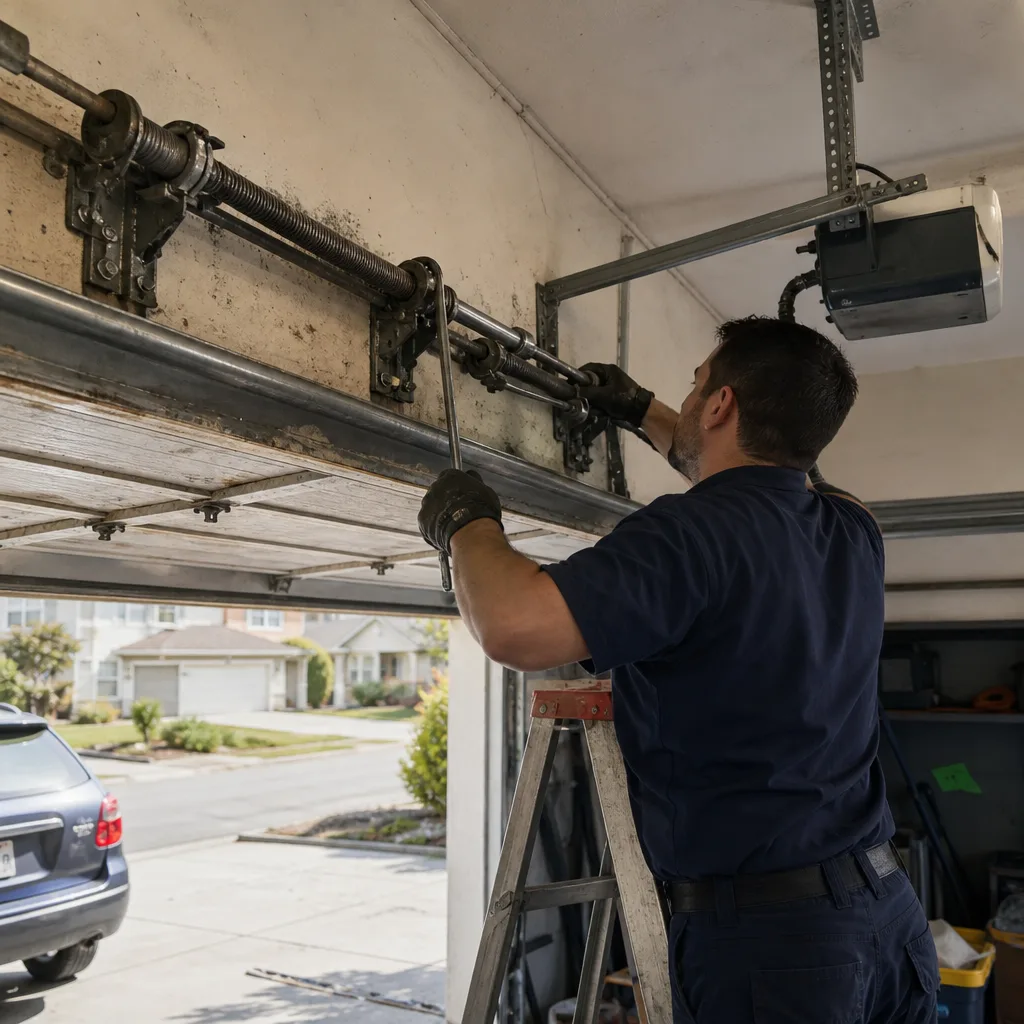 Before
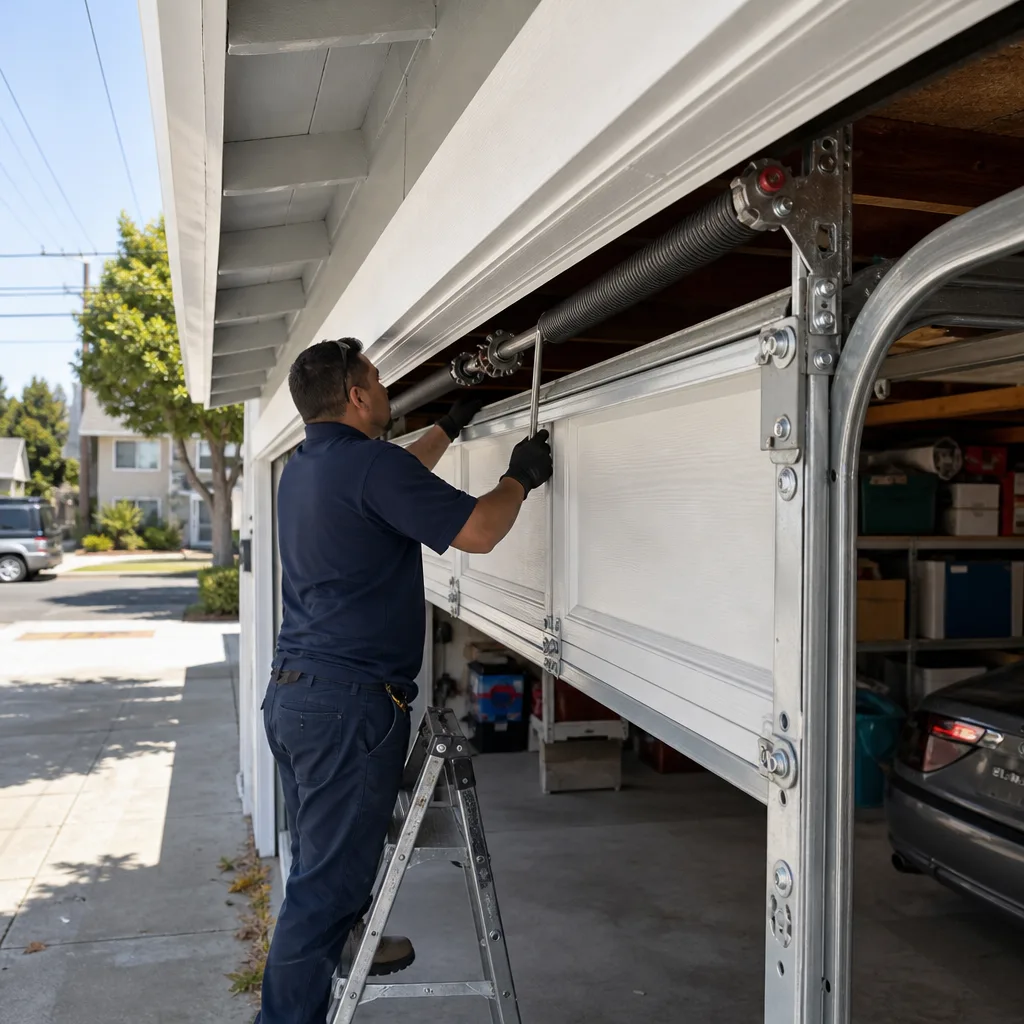
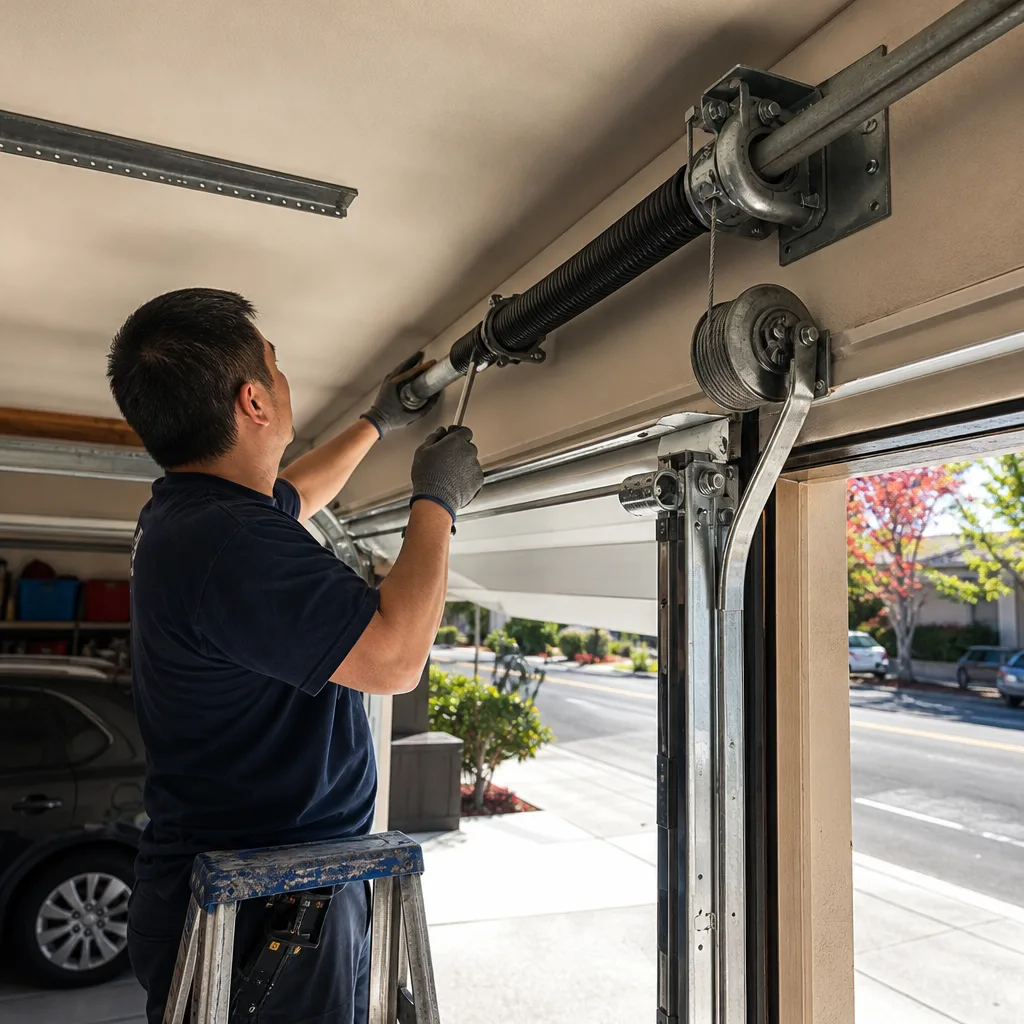 After
After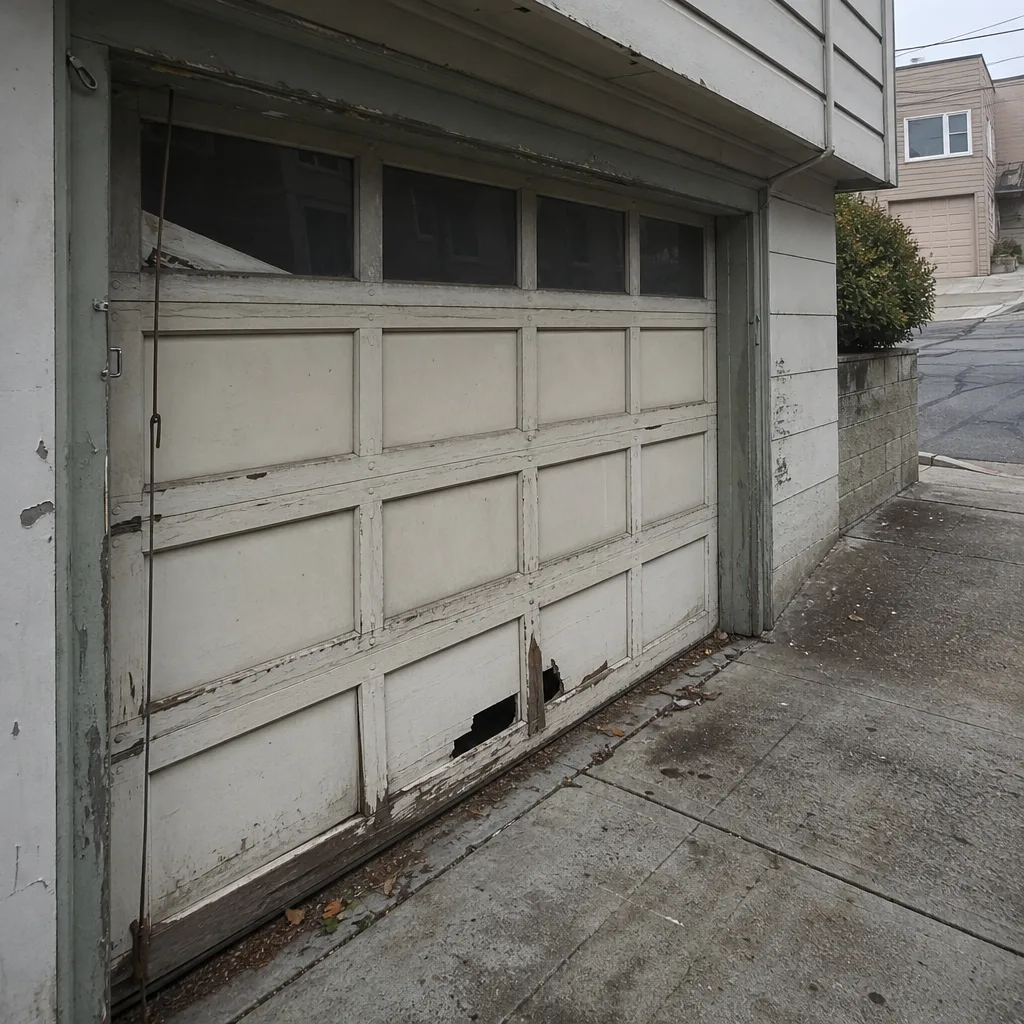 Before
 After
After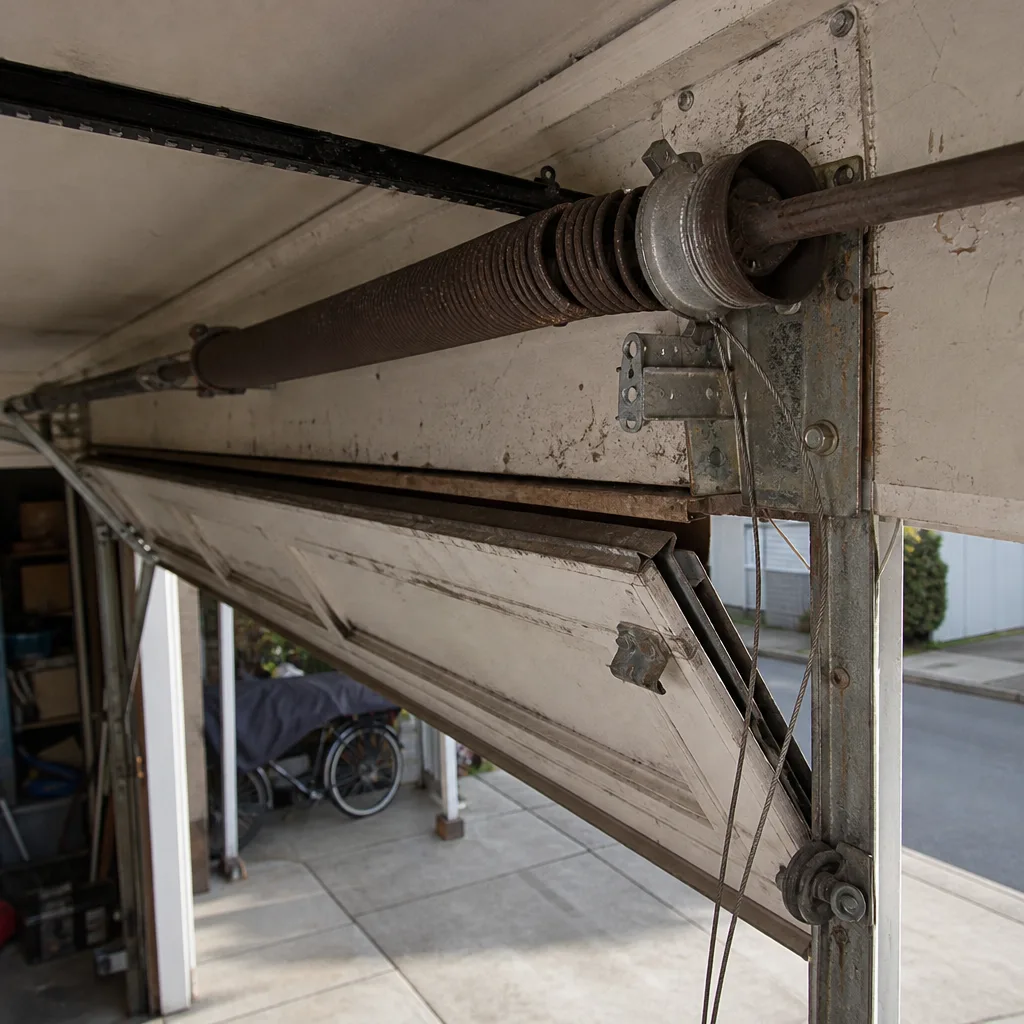 Before
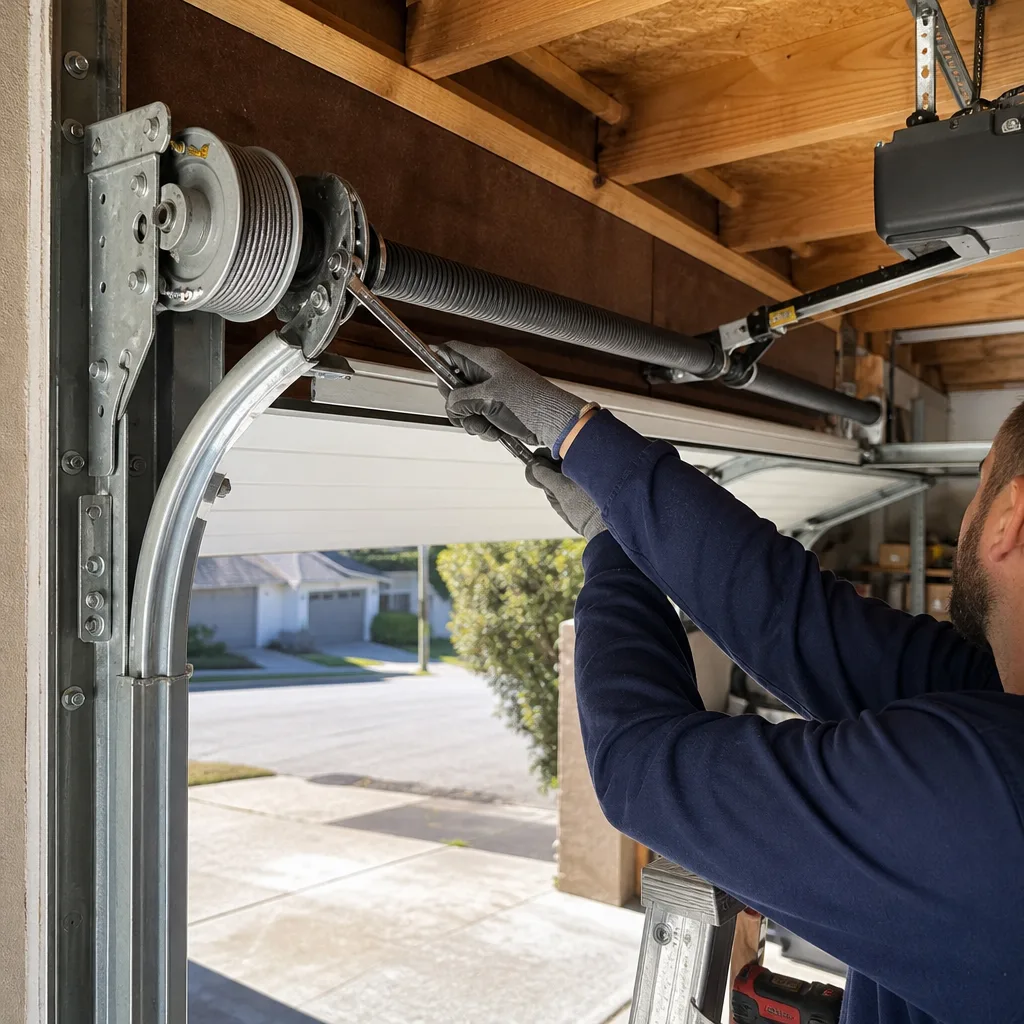 After
After