
Last updated October 16, 2026
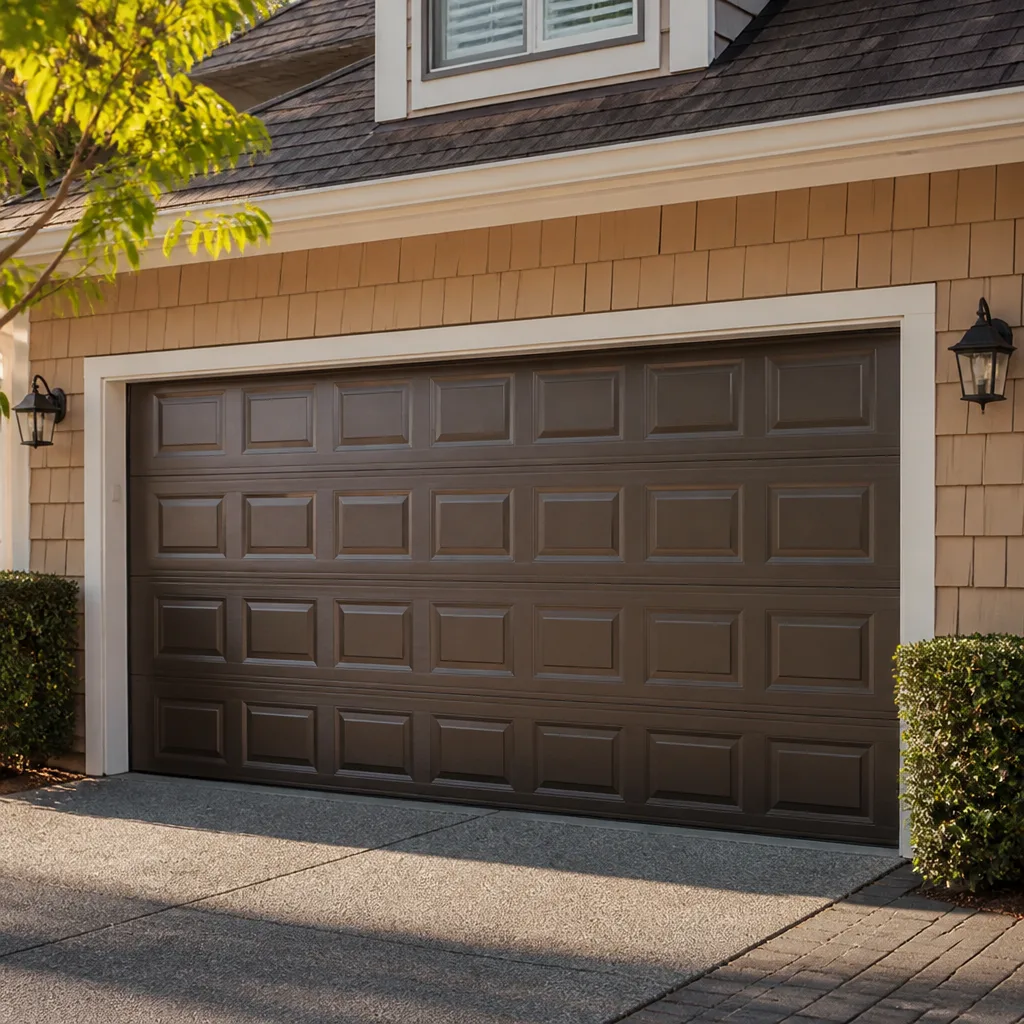 Raised-panel steel
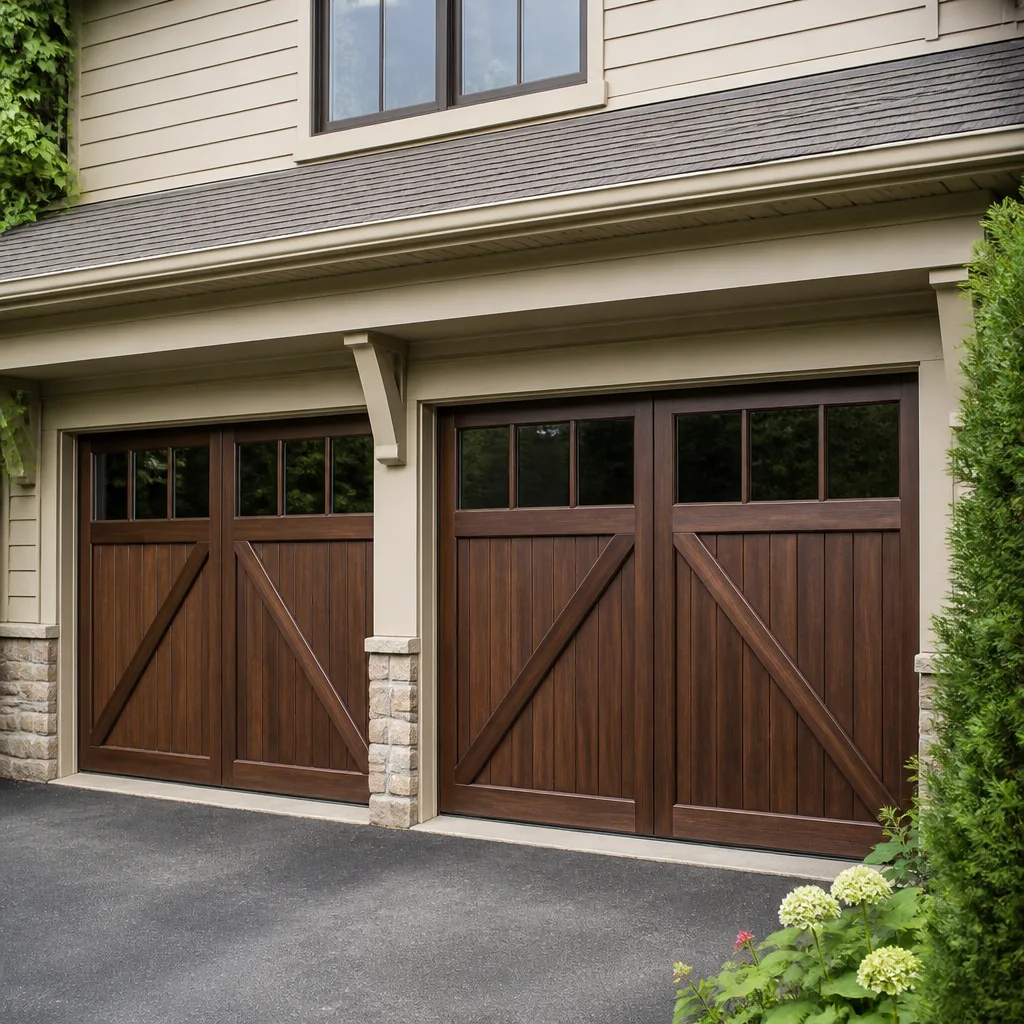 Carriage house
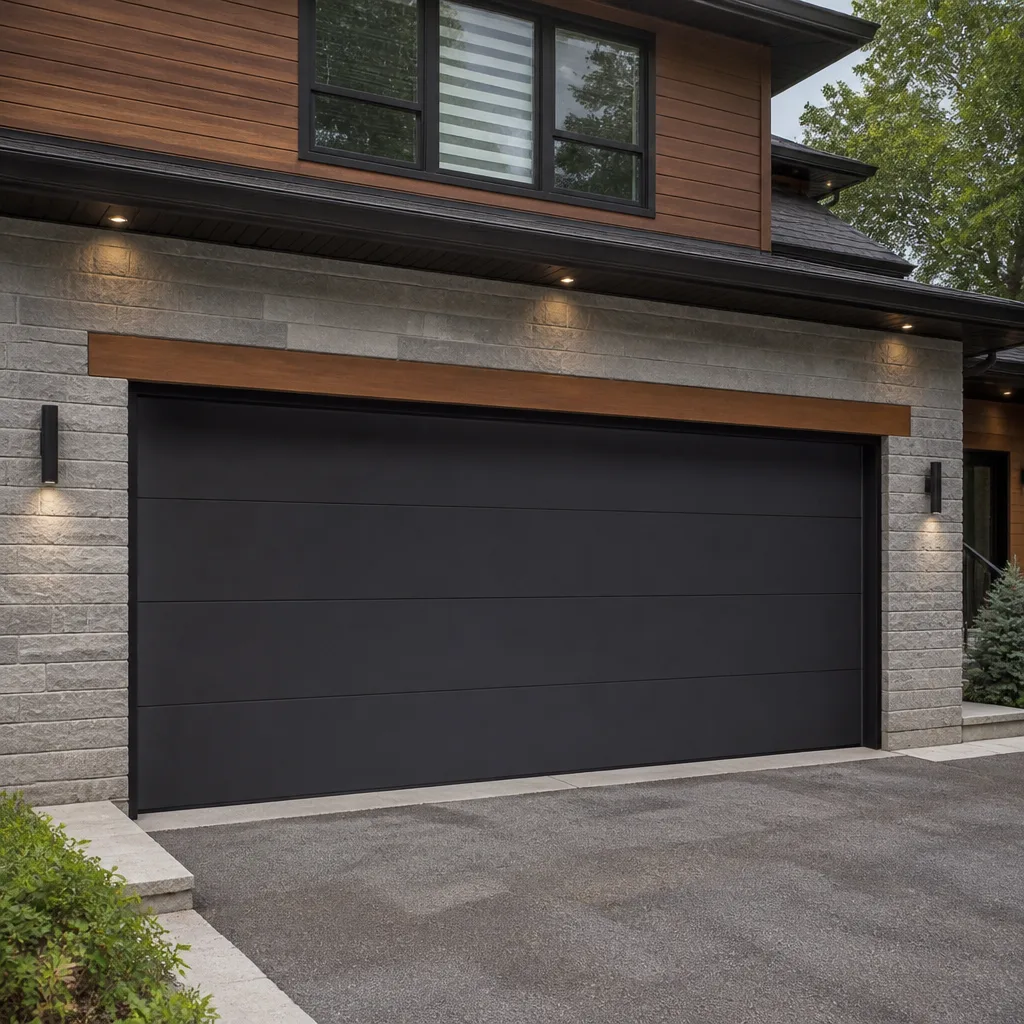 Modern flush
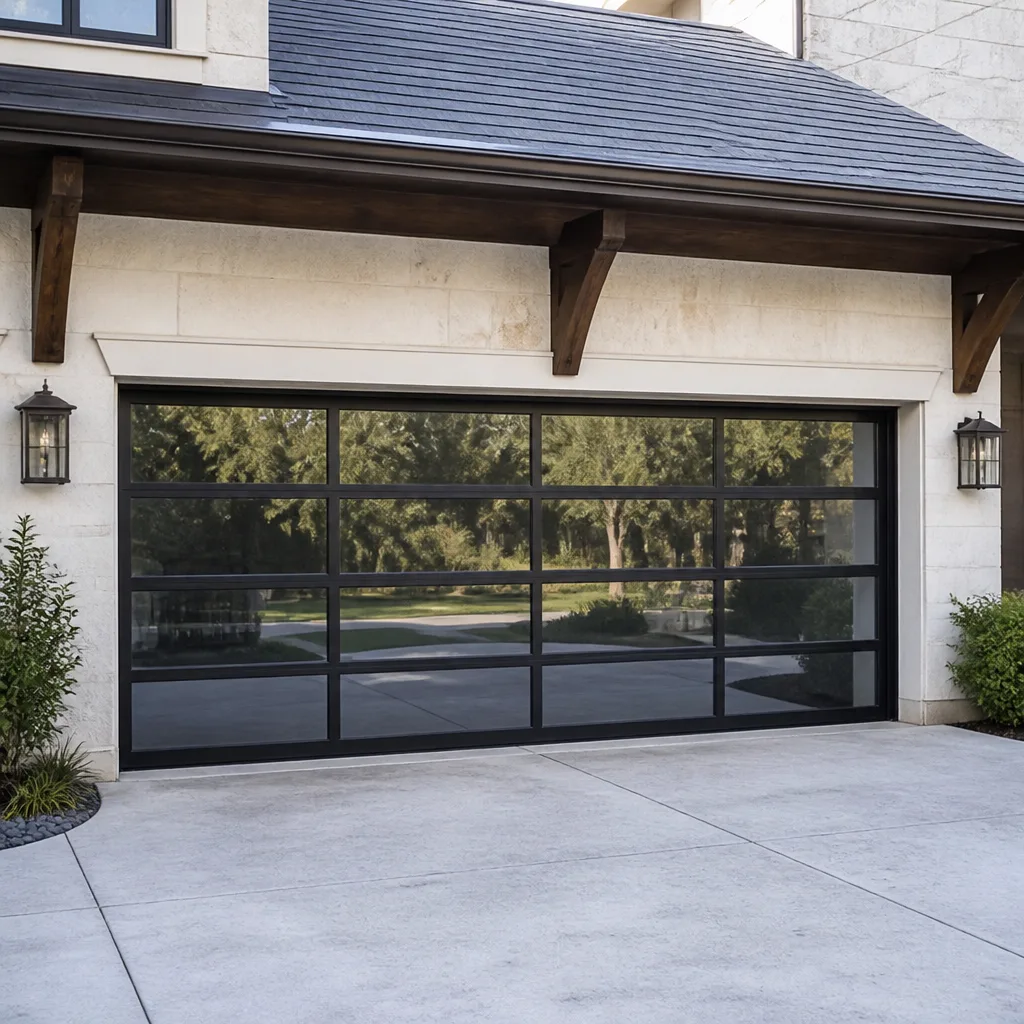 Full-view glass
 LiftMaster openers
 Chamberlain openers
Full 25-point door and opener safety check with every visit - springs, cables, rollers, tracks, and your LiftMaster or Chamberlain opener included
You get a price before we start. It does not change when the truck arrives.
Get your free estimateGarage Door Permits, Codes & Inspections in CA: What You Need to Know
Most homeowners in San Francisco don’t think about their garage door until it stops opening or starts sagging. Then the question hits: do I need a permit to replace this thing? The answer is messier than most contractors admit, because California code doesn’t treat every garage door project the same way. A like-for-like swap of a broken panel is usually fine without one. A new opening, a bigger header, or an opener swap in a fire-rated assembly can trigger a permit, an inspection, and a paper trail that follows your house to escrow. Here’s what actually applies in San Francisco, and what nobody tells you until it’s too late.
Quick Answer
In California, a straight garage door replacement using the same opening and the same door type generally does not require a building permit. You do need a permit in San Francisco when you change the door opening size, alter the header or supporting framing, install a new fire-rated door assembly in an attached garage, or in some cases replace the opener with a different system. When in doubt, a call to the San Francisco Department of Building Inspection costs nothing and prevents a title problem when you sell.
Styles & brands we work with
Table of Contents
- What Triggers a Garage Door Permit in California
- The Like-for-Like Rule: When No Permit Is Needed
- San Francisco DBI Specifics: Fire-Rated Assemblies and Local Amendments
- Seismic Bracing and Opener Requirements in San Francisco
- What Happens During a San Francisco Building Inspection
- HOA Overlay: Condos, TICs, and Shared Garages in San Francisco
- What Garage Door Permits and Work Actually Cost in San Francisco
What Triggers a Garage Door Permit in California
California’s building code is built on the California Code of Regulations, Title 24. Section 105.1 of the California Building Code says you need a permit to construct, enlarge, alter, repair, move, demolish, or change the occupancy of a building or structure. That sounds broad. In practice, garage door work falls into a gray zone that depends on three things: what you’re changing, how much you’re changing, and where the garage sits in relation to your living space.
The California Residential Code (CRC) draws a practical line. A direct replacement, meaning a new door that fits the existing opening without touching the framing, header, or structural supports, is classified as a repair or minor alteration. Repairs that don’t affect structural integrity or fire resistance don’t require a permit in most California jurisdictions. But the moment you touch the framing, change the rough opening dimensions, add or remove a door, or swap a garage-to-house door from hollow-core to something else, you’ve crossed into permit territory.
Here’s what our technicians see in San Francisco garages every week, translated into plain terms:
- Torsion spring replacement (the large coil mounted above the door that does most of the lifting): no permit, but the work is dangerous. This is one repair where a trained professional is genuinely non-negotiable. The tension in a wound spring is enough to cause serious injury or death if it lets go.
- Panel replacement on an existing track system: no permit, assuming the panels match the original weight and the springs are rebalanced.
- Full door replacement, same size, same type: no permit in most San Francisco cases, but see the fire-rating note below if the garage is attached to living space.
- Widening the opening, adding a second door, or raising the header: permit required. You’re altering the load path of the wall above, which means a DBI plan review and an inspection.
- Replacing a garage-to-house door with a non-fire-rated door: not just a permit issue, it’s a code violation that can fail an inspection years later. We’ll get to that.
If you’re unsure where your project falls, the San Francisco Department of Building Inspection has a permit counter at 49 South Van Ness. You can also call a licensed contractor and ask directly. Anyone who answers instantly with “yeah, no permit needed” without asking about your garage type, framing, or door location is guessing. Don’t let a guess attach itself to your house.
The Like-for-Like Rule: When No Permit Is Needed
The term “like-for-like” gets thrown around a lot and rarely explained. It means the new door is functionally identical to the old one: same size, same material class, same weight category, same mounting system, same opening dimensions. Swap a 16-foot steel sectional door for another 16-foot steel sectional door, and you’re doing a like-for-like replacement. No structural change, no change to the fire rating of the assembly, no change to the way loads travel through the header. No permit.
But here’s the nuance that bites people. “Like-for-like” stops being like-for-like when any of these change:
- The new door is materially heavier than the old one. A solid wood door replacing a hollow steel door changes the load on the header and the springs. A sharp inspector will flag it.
- The operating system changes from extension springs to torsion, or from manual to motorized. Adding a motor means adding electrical, and depending on the wiring, that can pull an electrical permit into the project.
- The old door was non-insulated and you’re installing an insulated door in a conditioned garage. It changes the thermal barrier and can affect energy code compliance.
- The existing opening is being re-framed even slightly, say to square up a sagging header or replace rotted trim that has structural function. Once you’re cutting lumber that carries load, you’re not doing a repair anymore.
In San Francisco specifically, the age of your home matters. Pre-war garages in the Sunset, Richmond, and Bernal Heights often have non-standard openings that were framed with materials and methods that wouldn’t pass today’s code. If an inspector comes out for an unrelated permit, say a kitchen remodel, and sees a garage door opening that was altered without a permit at some point in the past, that can become a correction item. It’s not your fault, but it is your problem. This is one reason we tell San Francisco homeowners to document any garage door work with before-and-after photos and a receipt that specifies the scope. If the work was truly like-for-like, the paper trail ends the discussion.
San Francisco DBI Specifics: Fire-Rated Assemblies and Local Amendments
San Francisco doesn’t just adopt the California Building Code. It amends it. The San Francisco Building Code includes local requirements that go beyond the state baseline, and one of them matters a lot for garage doors.
The fire-rated door assembly between an attached garage and living space is non-negotiable in this city. Section 302.5.1 of the California Residential Code requires that any door between a garage and a dwelling unit be solid wood no less than 1-3/8 inches thick, solid or honeycomb-core steel no less than 1-3/8 inches thick, or a 20-minute fire-rated door. It must have a self-closing device. That’s the door from the garage into the house, not the big vehicle door. But in occupied San Francisco garages, especially the converted garages and in-law units that are everywhere in the Excelsior, the Mission, and the Outer Sunset, the big vehicle door also has to meet fire-separation standards if the garage is part of the conditioned or habitable envelope.
If you’re replacing a garage-to-house door in San Francisco and you install a hollow-core interior door because it was cheaper at the hardware store, you’ve just created a code violation that will surface at the worst possible moment. DBI inspectors routinely check fire-rated assemblies during final inspections for any permit, even if the permit was for something unrelated. A home inspector working for a buyer will flag it too. And if there’s ever a fire, the insurance company’s investigators will absolutely find it. That’s the kind of cost that dwarfs whatever you saved on the door.
The vehicle door itself (the sectional, roll-up, or tilt-up door facing the driveway) is generally not required to be fire-rated in a detached garage. In an attached garage, San Francisco enforcement focuses more on the separation wall and the pedestrian door than the vehicle door, but a garage that’s been converted to living space, legally or not, changes everything. If your garage has a permit on file as a dwelling unit, the vehicle door becomes part of the thermal and weather barrier of the house, and replacements should be reviewed against current energy code. When we do a garage door installation in San Francisco, we check the permit history and the current use of the space before recommending a door. A door that’s fine for a cold garage in the Richmond is not automatically fine for a converted unit in Noe Valley.
Seismic Bracing and Opener Requirements in San Francisco
San Francisco sits on the Hayward and San Andreas fault systems. The California Residential Code reflects that reality, and garage door openers are part of the seismic conversation more than most people expect.
Federal law has required automatic reverse mechanisms on garage door openers since 1993. That’s the requirement that the door reverses if it hits something, tested by the two-second rule: the reversal must occur within two seconds of contact with a 2×4 laid flat on the ground. California law adds its own layer. The state requires that all residential garage door openers have a battery backup system installed as of July 2019, so that the door can still be opened during a power outage. That matters in a city where power shutoffs during fire season and the occasional earthquake are real events, not hypotheticals.
The seismic angle applies to how the opener and the door are secured. During the 1989 Loma Prieta quake, plenty of garage doors in the Marina and the Outer Sunset jumped their tracks because the opener mounts and the track bracing weren’t designed for lateral movement. Current code requires positive attachment of the operator rail to the ceiling structure and secure anchoring of the track brackets to the wall. A lot of pre-1993 openers still running in San Francisco garages don’t meet current safety standards, and if you’re doing a remodel that triggers an inspection, an inspector can and will require the opener to be brought up to code. That’s not a suggestion; it’s a correction notice.
In practical terms, if your garage door opener predates the Clinton administration, it’s time to replace it. The safety reverse is a mechanical system that wears out, and the battery backup requirement means a 2019 law already caught up with the unit you’ve been meaning to fix. We replace older openers all the time as part of our garage door opener repair in San Francisco work. The common thread in the Mission, Glen Park, and the Sunset is that the owner didn’t realize the opener was a code item at all. It is.
What Happens During a San Francisco Building Inspection
If your project does require a permit, here’s what to expect when the DBI inspector shows up. Knowing this in advance takes the anxiety out of the process, and it also tells you what to look for in a contractor’s work before you sign off.
A garage door inspection in San Francisco typically focuses on four things:
- Spring anchor plate attachment. The inspector verifies that the spring anchor bracket is through-bolted or lagged into the header or framing, not just screwed into drywall or sheathing. It’s a safety issue. A torsion spring under tension carries enormous force, and if the anchor lets go, the spring becomes a projectile.
- Header load path. The header above the door carries the weight of the wall and roof above it. The inspector checks for the correct header size for the span, proper bearing on the jack studs, and the right number of fasteners. If you changed the opening size, this is the heart of the inspection.
- Opener safety reverse. The inspector tests the auto-reverse with the 2×4 method, verifies the photo-eye sensors are mounted no higher than six inches off the floor, and confirms the battery backup is present and functional. This is the part of the inspection where older installations fail most often.
- Fire-rated assembly integrity. In an attached garage or converted unit, the inspector checks the pedestrian door, the separation wall, and any penetrations through the ceiling from the garage into living space. Ductwork, pipes, and wiring that pass through the fire separation must be properly fire-stopped.
Preparing for the inspection means clearing the garage floor so the inspector can see the bottom of the door, testing the safety reverse yourself before the inspector arrives, and having your permit paperwork and any product data sheets for the door and opener at hand. Most inspections take under 30 minutes. The things that fail are predictable: a missing battery backup, a photo-eye sensor taped to the wall instead of properly mounted, or a fire-rated door that isn’t self-closing. None of those are hard to fix, but all of them are harder to fix at 4:30 PM on the day your buyer’s closing is scheduled.
If you’re buying a house in San Francisco and the seller can’t produce a permit record for a garage conversion or a visible opening alteration, bring it up before you close. The title report won’t necessarily flag it, but DBI records are public. We’ve had buyers call us during escrow because the home inspector noticed a header that looked undersized or a spring anchor that looked hand-drilled. It’s a lot cheaper to resolve before the deed transfers.
HOA Overlay: Condos, TICs, and Shared Garages in San Francisco
San Francisco has roughly 32,000 residential buildings, and a large percentage of them are condos, TICs, or multi-unit buildings with shared garage spaces. If you’re in SoMa, Russian Hill, or the Marina, your garage door probably isn’t just your door. It’s common-area property, which means the HOA gets a vote before you get a permit.
This is the layer most guides miss. In a condo building, the garage door that serves the parking level is typically owned by the association, not the individual unit, even if you park behind it and your remote opens it. That means:
- You need written HOA approval before any door or opener work, and the HOA may require its own review process, its own approved contractor list, or its own insurance requirements.
- The HOA’s CC&Rs may dictate the door material, color, and even the brand, because the door affects the building’s exterior appearance and fire rating. A Clopay door that’s fine for your taste might violate the HOA’s uniform exterior rule.
- In TIC buildings, which are more common in San Francisco than almost anywhere else in the country, the group ownership structure means every owner shares liability for common-area code violations. A permit problem on the garage door is everyone’s problem.
- Some San Francisco HOAs require the door and opener to be serviced by a contractor who carries a minimum liability policy and names the HOA as an additionally insured party. We do this routinely for buildings that ask. If a contractor balks at that request, the HOA will not approve the work.
If you live in one of these buildings, start with the HOA manager before you start with the city. It’s the correct order of operations, and it prevents you from paying for a door that the association will make you take out. We’ve seen it happen. The disputes aren’t fun, and replacing a good door is a waste of money that no written guarantee covers.
What Garage Door Permits and Work Actually Cost in San Francisco
Here are honest numbers for San Francisco, because walking into an appointment knowing the range is better than finding out when the work is already half done. These reflect what we see across the city, from the Richmond to Bayview, and they’re listed as ranges because every garage is different.
| Item | Typical San Francisco Range |
|---|---|
| DBI permit for door opening alteration or header work | $300, $900 depending on scope and plan review |
| DBI permit for fire-rated assembly correction | $150, $400 |
| Like-for-like sectional door replacement (no permit) | $1,200, $2,800 installed |
| Torsion spring replacement (pair, including labor) | $280, $450 |
| New opener with battery backup and safety reverse | $450, $850 installed |
| Fire-rated pedestrian door, self-closing | $600, $1,200 installed |
| HOA review or approval paperwork, if applicable | $0, $500 depending on the association |
These prices reflect licensed, insured work in San Francisco. You can find lower bids. The tradeoff is what you always trade in this city: the lowest bidder cuts corners on exactly the things the inspector is going to look at, and the cheapest door usually fails on the safety reverse test or the fire-rating requirement. When you’re looking at whether a permit is needed, the cost of the permit itself is minor compared to the cost of doing the work twice.
Before any work begins, the price should be written down and handed to you. Not a verbal estimate at the door, not a text message after the fact. A written price, with the scope listed, before a single bolt gets turned. If a contractor won’t do that, the price is going to move. It’s that simple. And for anyone wondering about the difference between what a repair costs and what a replacement costs, start with our garage door repair in San Francisco pricing guide before you commit.
Common Mistakes to Avoid
- Assuming every replacement needs a permit. Like-for-like replacements usually don’t. Paying for a permit you don’t need is better than skipping one you do need, but neither is as good as knowing the difference.
- Replacing a fire-rated pedestrian door with a hollow-core interior door. This is the most common code violation we see in San Francisco attached garages. It fails inspections, it fails home inspections, and it’s a genuine fire safety hazard.
- Changing the opening size without telling the contractor the wall is load-bearing. Every garage door opening in a San Francisco house has a header carrying weight. Cutting into that requires an engineer’s letter, not just a saw.
- Installing a new opener in a pre-1993 garage without checking the safety reverse. Old openers without auto-reverse are illegal to operate in California. It’s not a grandfather clause situation; the opener either reverses or it’s a liability.
- Skipping the HOA approval in a condo or TIC building. The HOA can force you to restore the door to its original condition. We’ve watched this exact situation play out in SoMa buildings with strict exterior rules.
- Ignoring the battery backup requirement. California has required battery backups on all residential openers since 2019. An inspector will flag it. A home inspector will flag it. You’ll wish you’d known before the door wouldn’t open during the next PG&E shutoff.
- Not pulling the permit history before you buy. DBI records are public. If the garage looks converted or the opening looks altered, spend an hour at 49 South Van Ness before you write the offer.
See the difference
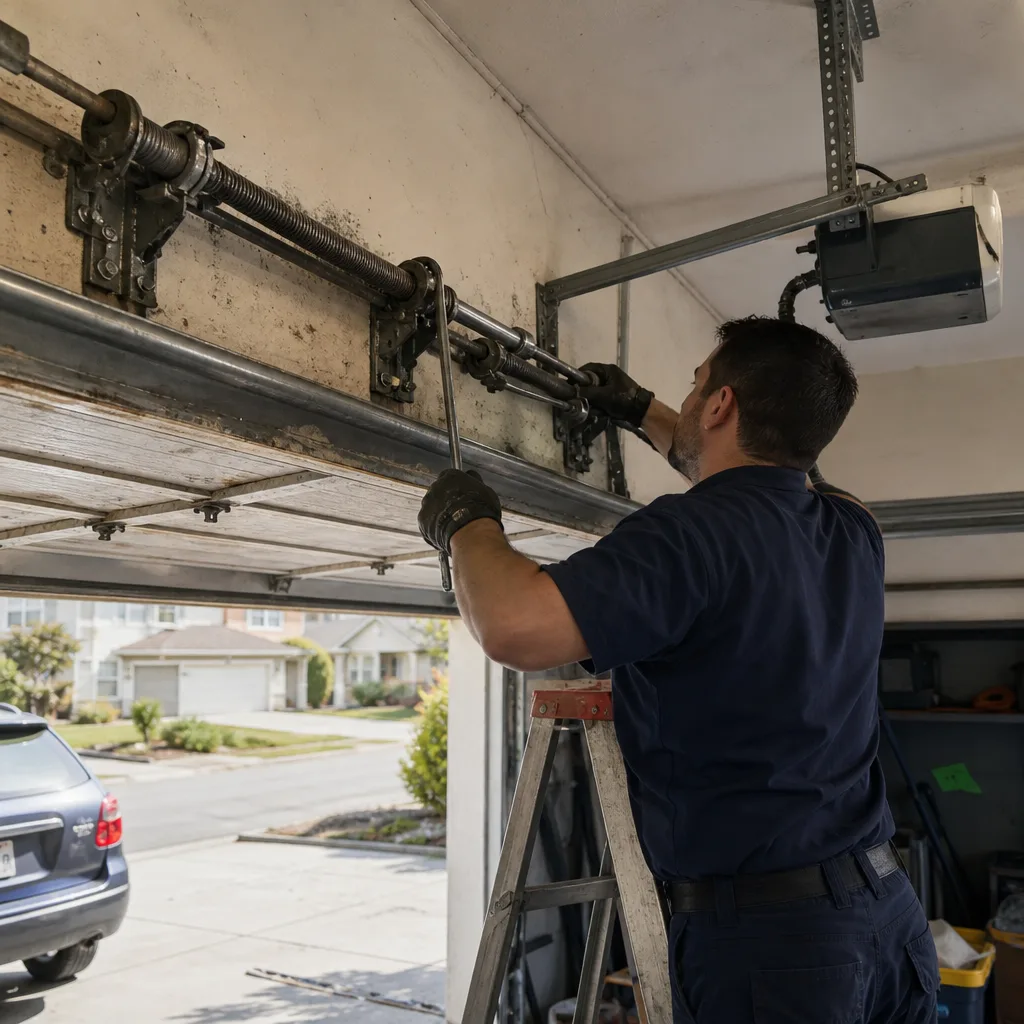 Before
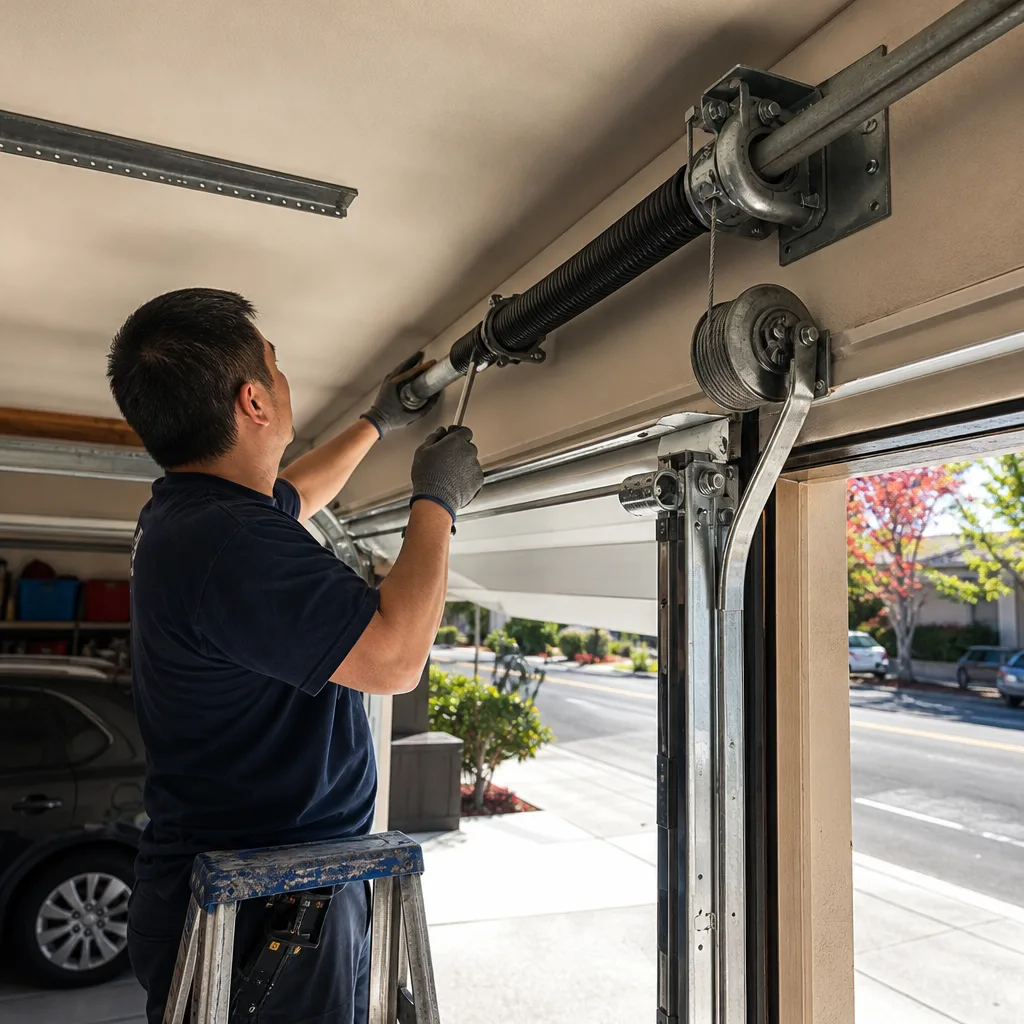 After
After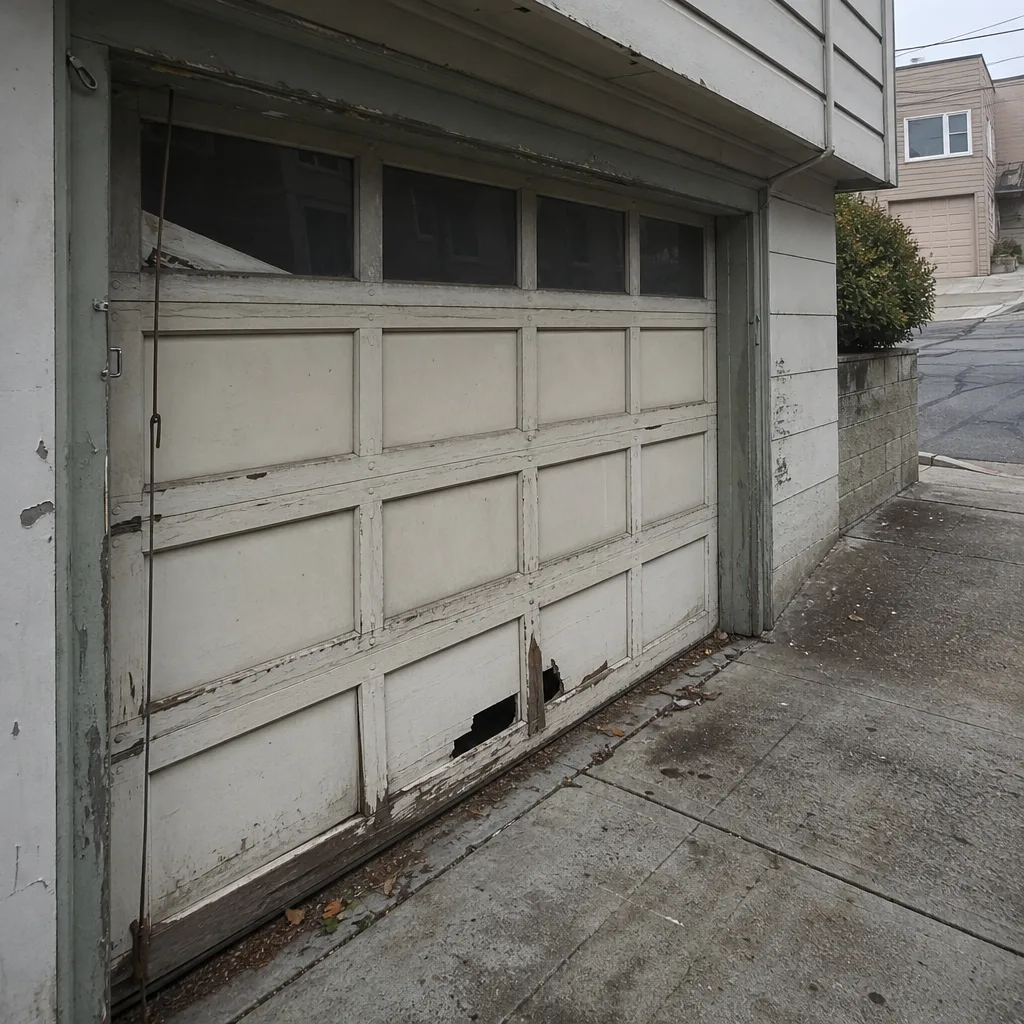 Before
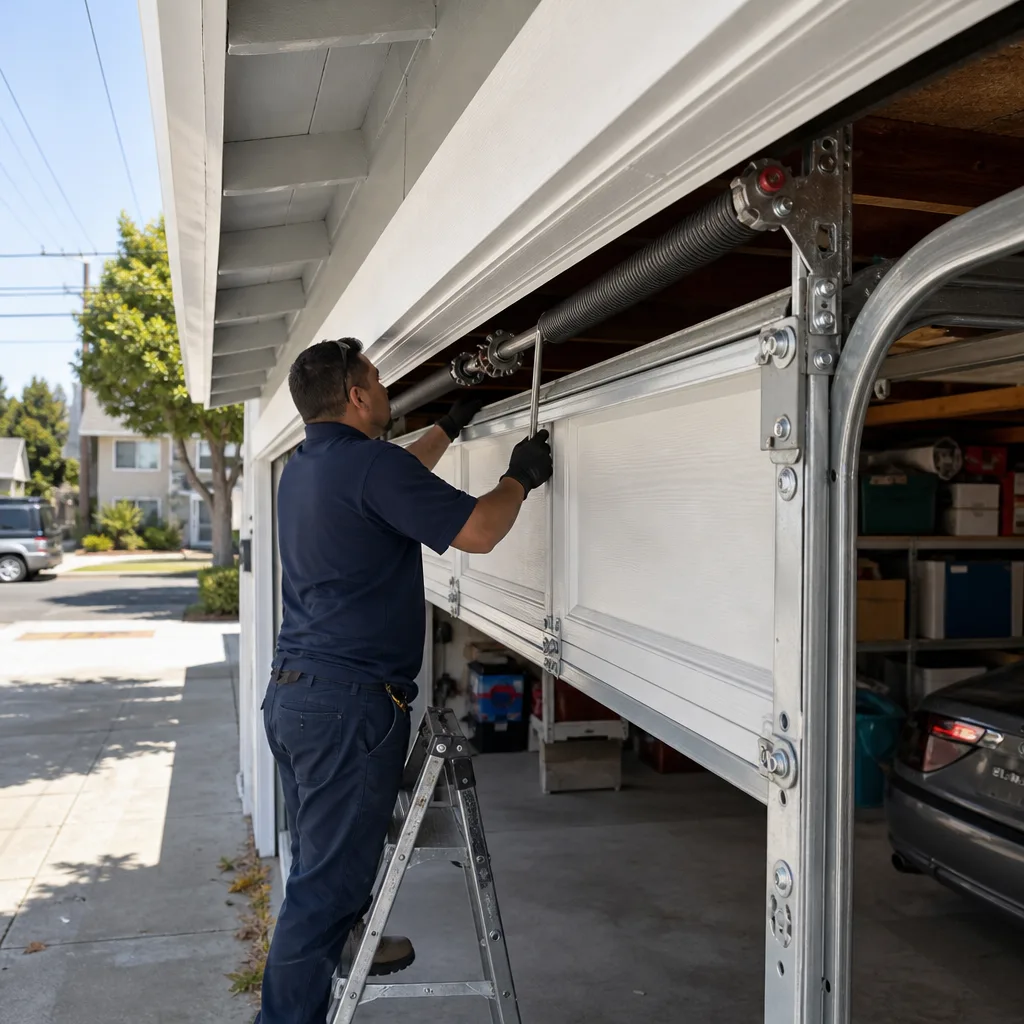 After
After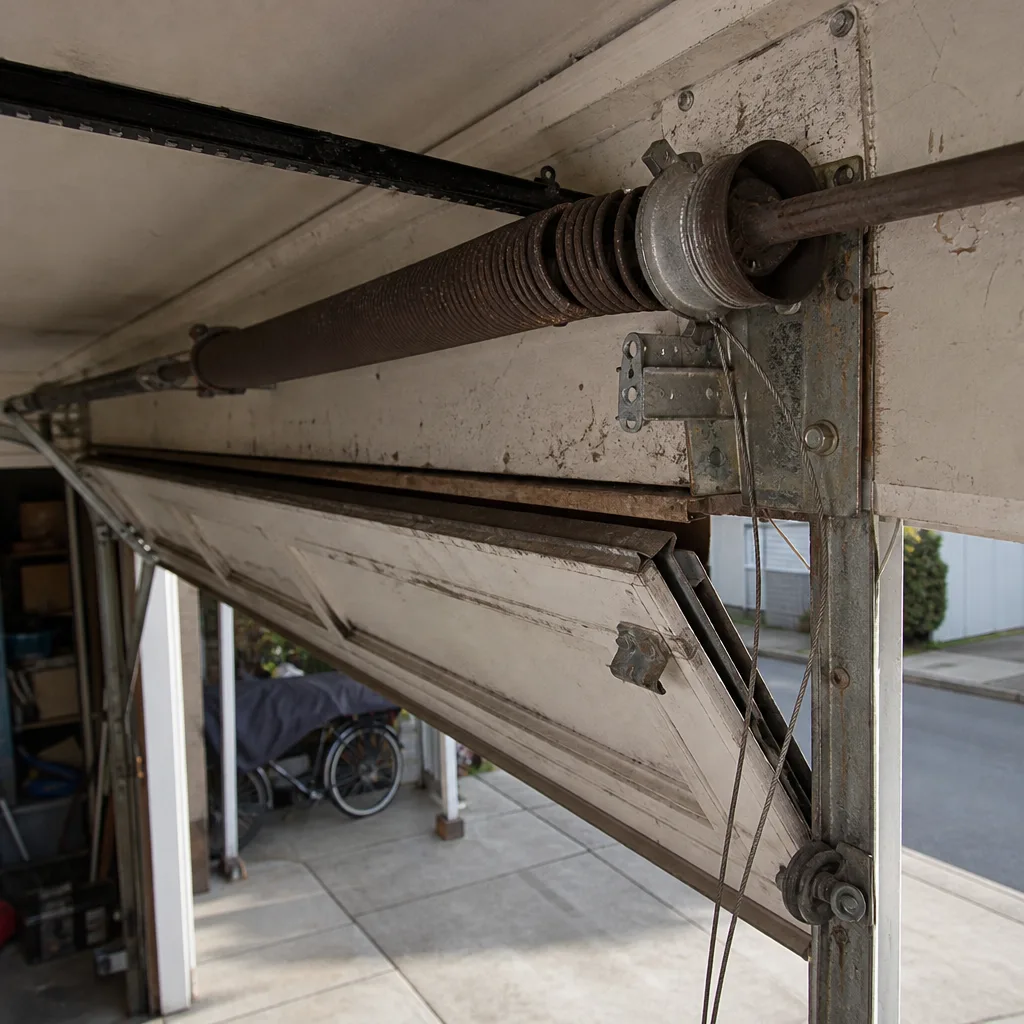 Before
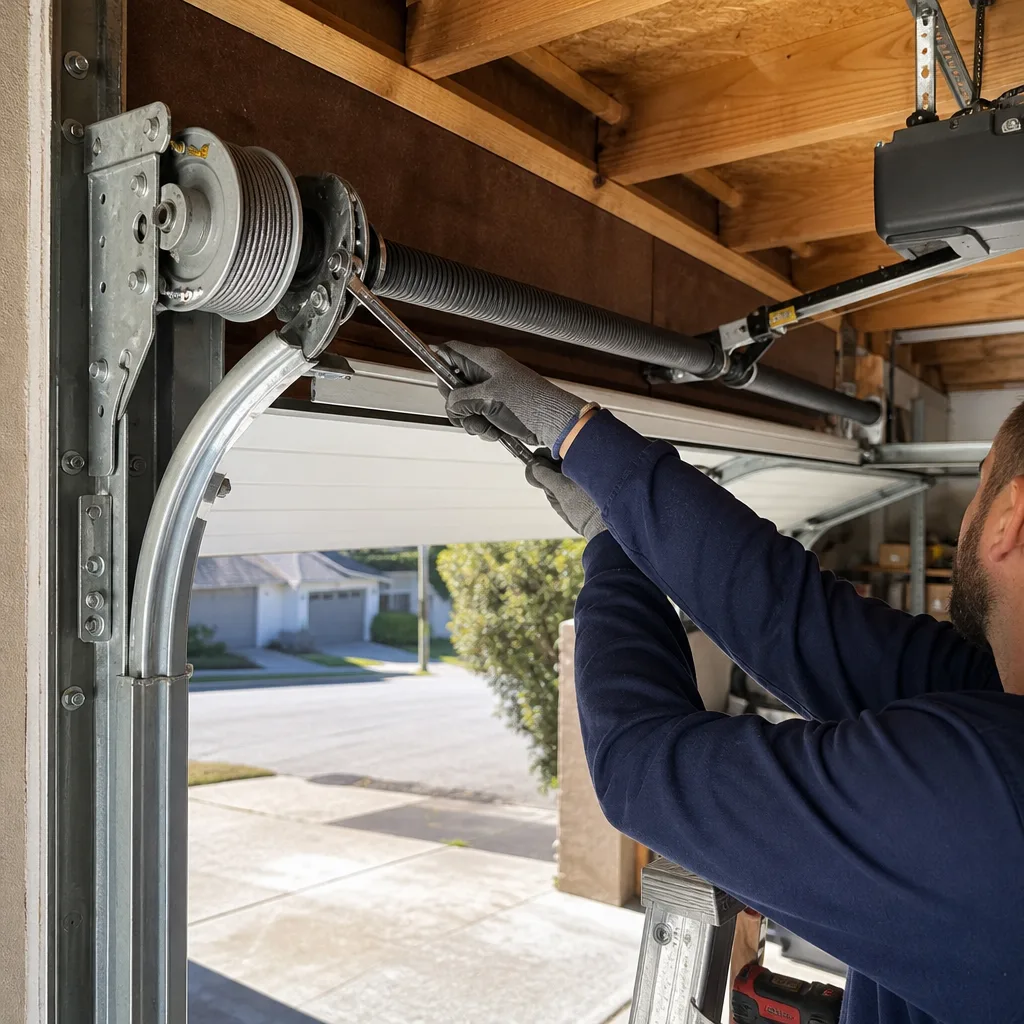 After
AfterWhen to Call a Professional
If your project touches the opening dimensions, the header, a fire-rated assembly, or an opener that’s more than 25 years old, call a licensed contractor who does this work in San Francisco every day. A professional can tell you in one visit whether a permit is required, what the inspection will look for, and what the work will cost, in writing, before anything starts.
Doyle Garage Doors San Francisco offers free estimates across San Francisco. Call (650) 550-9734 and a live person answers, day, night, weekend, or holiday. We’ll send a technician who is background-checked, identity-verified, and whose name and photo you’ll have before they ring the bell. Written price before any work starts, every time. That’s the only way this job should be done.
Frequently Asked Questions
No, not if the replacement is like-for-like: same opening size, same door type, no framing changes, no new electrical. You do need a San Francisco DBI permit if you alter the opening, the header, the fire-rated assembly, or install an opener requiring new wiring. Call (650) 550-9734 if you’re not sure, and we’ll tell you over the phone without sending someone out.
Most San Francisco DBI permits for garage door framing or fire-rating corrections run between $150 and $900 depending on the scope and whether plans are required. The permit cost is small compared to the cost of correcting unpermitted work later. Have the contractor verify the permit requirement in writing before work starts.
The door between an attached garage and living space must be solid wood or steel at least 1-3/8 inches thick, or a 20-minute fire-rated door, and it must be self-closing. The vehicle door facing the driveway is not typically fire-rated in a detached garage, but in a converted or conditioned San Francisco garage the rules change. An inspector will check this during any permit-related inspection.
In most cases, replacing an existing opener with a new one in the same location does not require a permit, but the new opener must have an automatic safety reverse and a battery backup per California law. If new wiring or a new circuit is being added, an electrical permit may be required through DBI. We handle opener replacements across San Francisco, including LiftMaster, Genie, Craftsman, and Chamberlain units, as part of our regular garage door opener repair in San Francisco service.
The inspector typically checks four things: the spring anchor plate attachment, the header load path above the opening, the opener safety reverse and battery backup, and the integrity of any fire-rated assemblies. Inspections usually take under 30 minutes. Preparation means clearing the garage floor and testing the auto-reverse before the inspector arrives. Our contact page has the Doyle Garage Doors San Francisco home details if you want to follow up on inspection prep.
Yes, in most condos and TIC buildings in San Francisco, the garage door is common-area property and the HOA must approve any replacement or opener work before it happens. CC&Rs may restrict the door brand, material, and color. Start with the HOA manager, then check with DBI. We regularly work with San Francisco HOAs on approved contractor lists and insurance requirements.
You can list it, but an alert buyer’s agent will pull DBI records, and an unpermitted garage conversion or altered opening will surface during escrow. It can delay closing, reduce the sale price, or require retroactive permits that are expensive and time-consuming. If you’re not sure about your garage’s permit history, check DBI records before you list, and bring in a contractor who can tell you what corrections would cost. Our garage door installation in San Francisco service often starts with exactly this kind of inspection.
The Bottom Line
California’s garage door permit rules come down to one question: is the work structural or not? A like-for-like door swap in San Francisco is generally permit-free. Anything that touches the opening, the header, the fire-rated assembly, or adds new electrical pulls a permit and an inspection. The city’s fire-rating and seismic requirements are stricter than the state baseline, and in condos and TICs the HOA layer comes first. The safest approach is to have a professional assess the scope before you order any parts. A written price and a clear permit answer upfront cost you nothing and protect the biggest asset you own.
Written by Aaron Teague, Owner at Doyle Garage Doors San Francisco, serving San Francisco since 2001.