
Last updated October 16, 2026
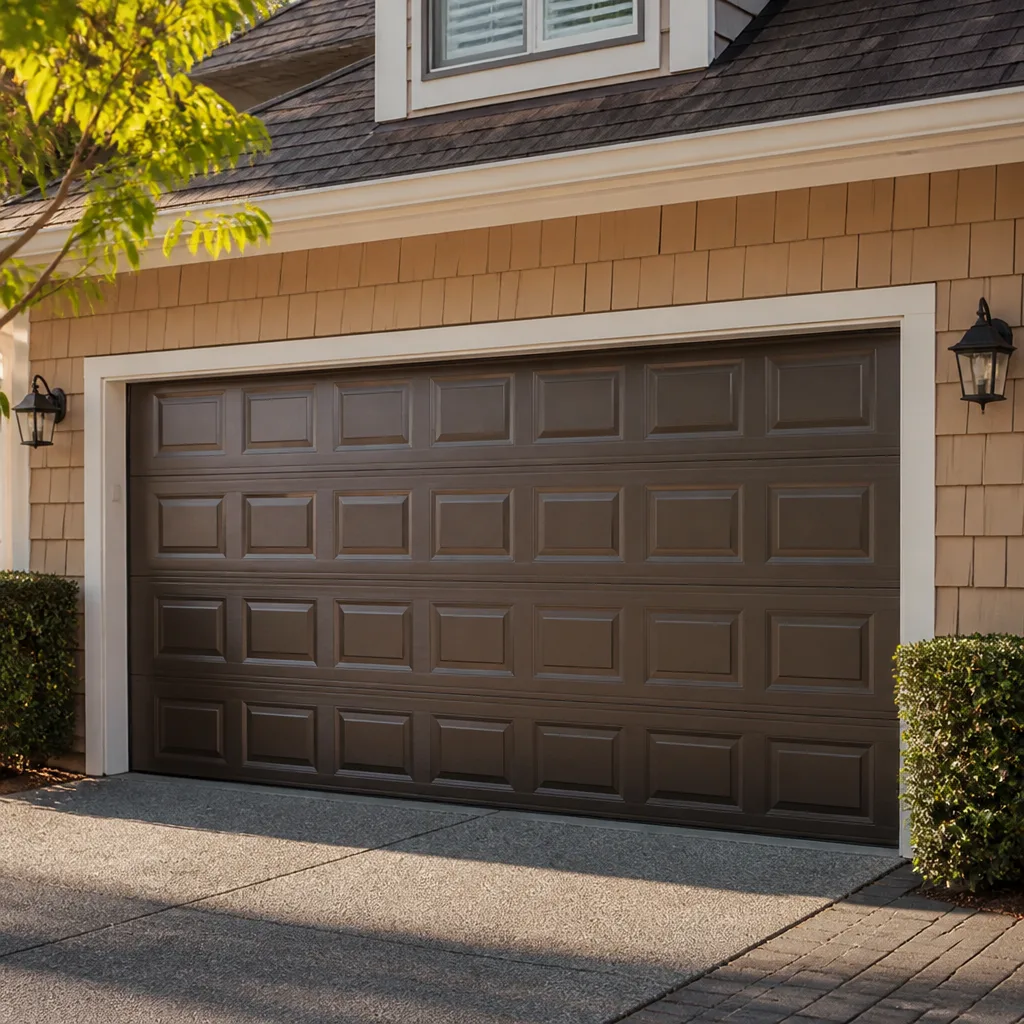 Raised-panel steel
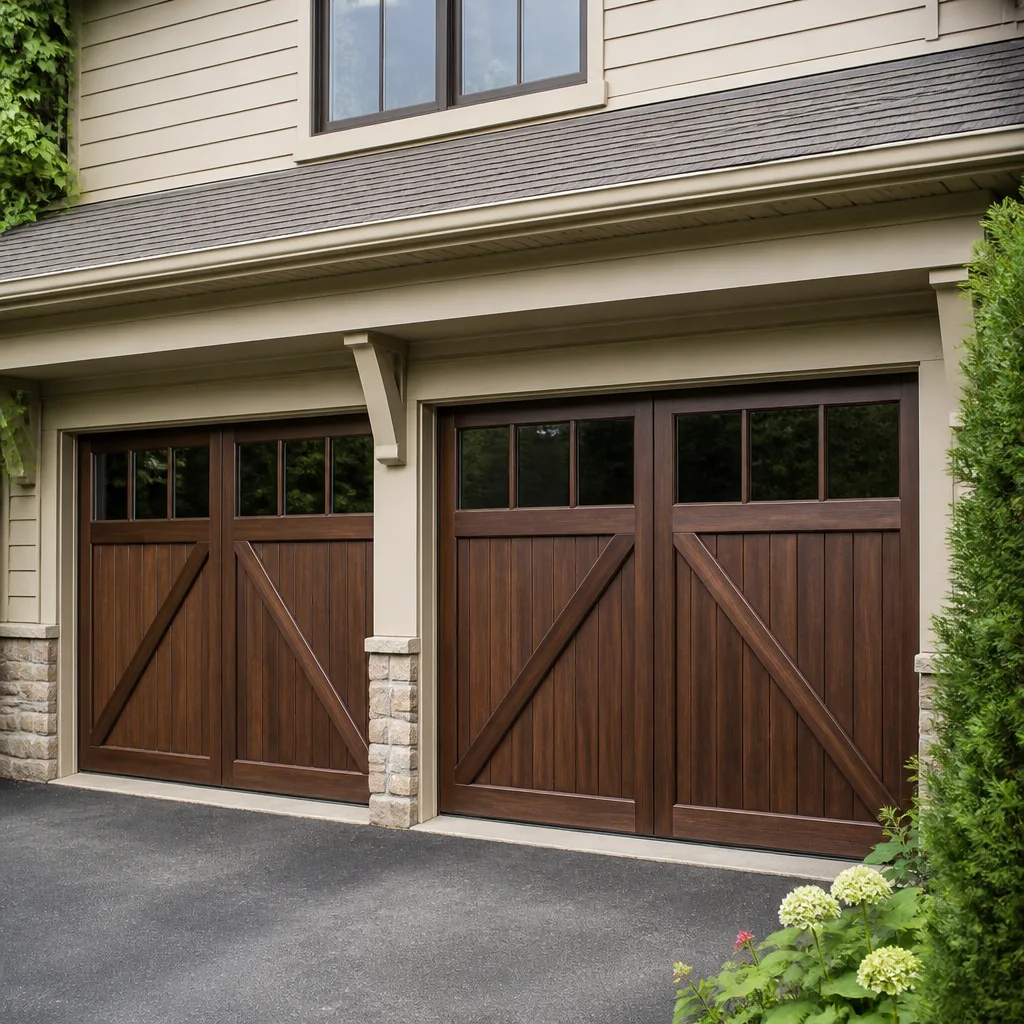 Carriage house
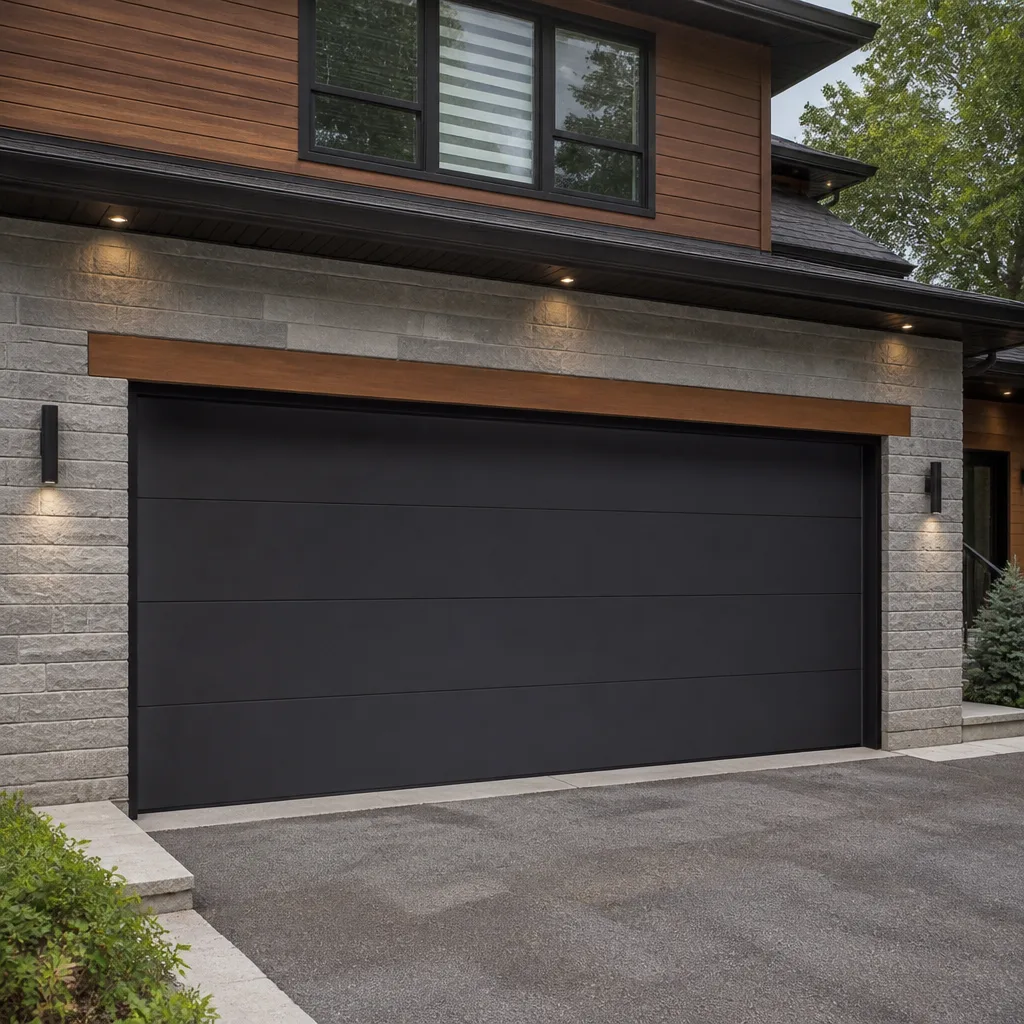 Modern flush
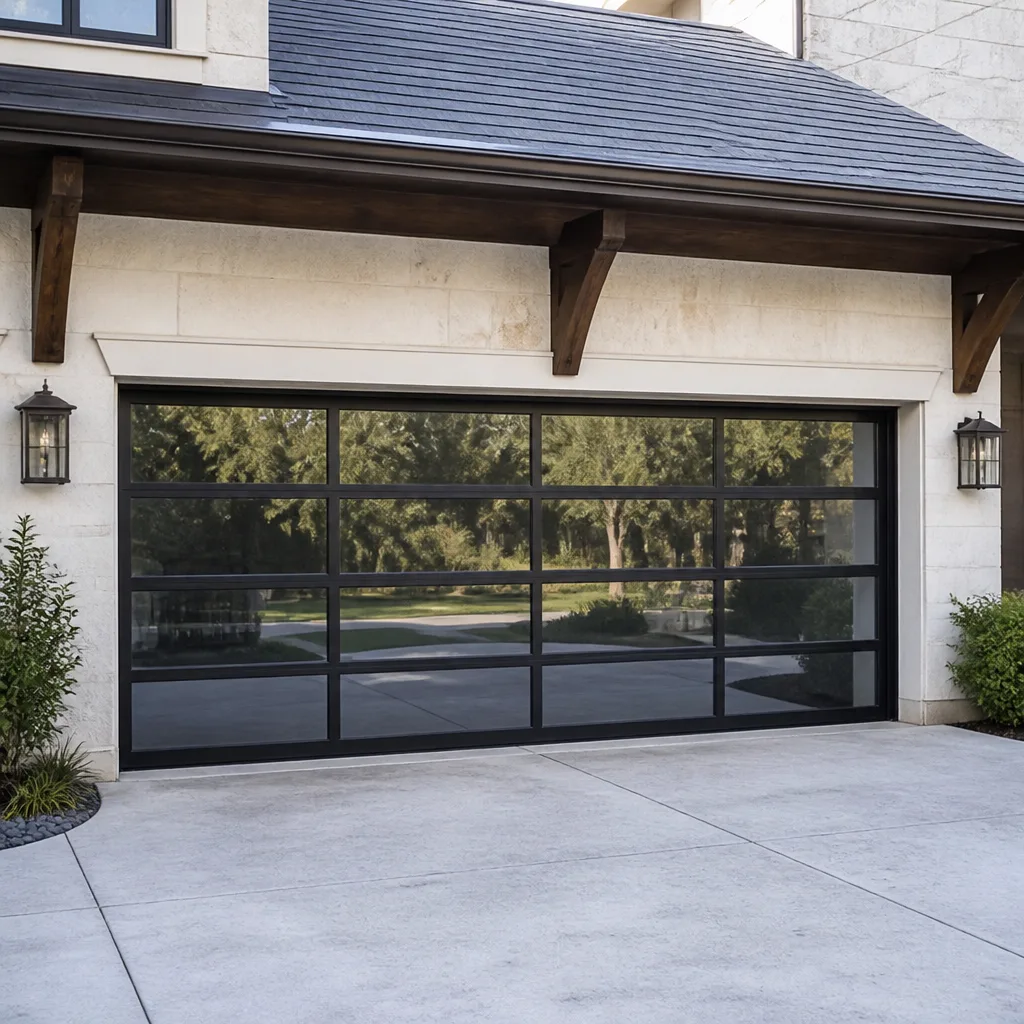 Full-view glass
 LiftMaster openers
 Chamberlain openers
Full 25-point door and opener safety check with every visit - springs, cables, rollers, tracks, and your LiftMaster or Chamberlain opener included
You get a price before we start. It does not change when the truck arrives.
Get your free estimateHow to Hire a Garage Door Contractor in San Francisco: A Step-by-Step Guide
San Francisco has no dedicated garage door contractor license. Any person with a general B-license, a specialty C-61/D-28 license, or in some cases no license at all can legally show up at your door, put a van in your driveway, and start working on the largest moving object in your home. The question isn’t “are they licensed?” It’s “what specifically are you checking before you open the door?” This guide walks you through the exact verification steps, the San Francisco-specific issues most guides miss, and the red flags that tell you to close the door and call someone else. For more, see our more guides & resources.
Quick Answer
To hire a garage door contractor in San Francisco, verify their contractor’s license is active on the CSLB website and matches the company name on their van and invoice, ask for the technician’s name and photo before they arrive, require a written itemized estimate before any work starts, and confirm they provide a written guarantee of at least one year. Then check San Francisco-specific factors like earthquake bracing requirements and shared-wall access before signing anything.
Styles & brands we work with
Table of Contents
- Step 1: Verify the License (The 90-Second Check That Eliminates 80% of Bad Contractors)
- Step 2: Ask for the Technician’s Name and Photo Before They Arrive
- Step 3: Demand a Written, Itemized Estimate Before Any Work Starts
- Step 4: Get the Guarantee in Writing, Not Just in Words
- San Francisco-Specific Issues: Earthquake Bracing, Shared Walls, and Permit Triggers
- Red Flags: What a Bad Contractor Sounds Like on the Phone
- Ten Questions to Ask Before You Say Yes
- What Garage Door Work Actually Costs in San Francisco
Step 1: Verify the License (The 90-Second Check That Eliminates 80% of Bad Contractors)
California requires any contractor doing work over $500 in labor and materials to hold a valid Contractor’s State License Board (CSLB) license. For garage door work, the relevant classifications are a general B license (for full door installation) or a C-61/D-28 specialty license (for doors, gates, and activating devices). Here’s the thing most San Francisco homeowners don’t realize: a handyman with no license can legally take smaller jobs, and plenty of unlicensed operators quote garage door spring replacements every day in this city. If the spring fails and the door comes down on your car, or worse, you have no recourse because there’s no bond, no insurance, and no license to pull.
The verification process takes 90 seconds:
- Go to the CSLB website and click “Check a License.”
- Enter the license number the contractor gave you. If they hesitate to give you a number, that’s your answer.
- Confirm the license status reads “Active” – not “Expired,” “Suspended,” or “Revoked.”
- Check that the business name on the license matches the name on the van, the invoice, and the person answering the phone. A license bonded to a different company than the one calling you is a classic bait-and-switch signal.
- Look at the license issue date. A contractor who’s been licensed continuously since 2001 has survived 24 years of CSLB scrutiny. A contractor licensed six months ago might be fine, but you’re taking a different kind of risk.
In our experience at Doyle Garage Doors San Francisco, we’ve had customers show us quotes from companies whose license belonged to a completely different entity. One homeowner in the Sunset District almost hired a “company” whose license was registered to a defunct landscaping firm in Stockton. The CSLB check caught it in under two minutes.
Step 2: Ask for the Technician’s Name and Photo Before They Arrive
This is the step most hiring guides skip entirely, and it’s the one that matters most for the audience reading this page: people who are home alone, parents with young children, older homeowners, and anyone who takes the stranger-at-the-door question seriously. You are about to open your home to a person you’ve never met. You have a right to know who that person is before the doorbell rings.
A legitimate contractor will tell you the technician’s name. A confident one will send you a photo. Under the Threshold Standard that Doyle Garage Doors San Francisco operates by, every technician is background-checked, identity-verified, and the customer receives a name and photo before the visit. At the door, the technician arrives in a clean marked uniform and shows a photo ID badge before stepping inside. Every time. No exceptions.
What does it signal if a company can’t or won’t provide a name and photo in advance? It signals one of a few things: they’re dispatching whoever is available with no vetting process, they’re using day laborers with no company affiliation, or they simply don’t think your safety concern is worth addressing. None of those are companies you want inside your garage.
Ask this question on the phone: “Can you send me the name and a photo of the technician who’s coming?” If there’s a long pause, a vague answer, or a “you’ll meet them when they arrive,” hang up and call the next company.
Step 3: Demand a Written, Itemized Estimate Before Any Work Starts
Any legitimate garage door contractor can give you a written, itemized price before touching the door. Line-item parts. Labor. Disposal fees. Total. In writing. If a contractor refuses to put numbers on paper before starting work, you are dealing with someone who wants the freedom to change the price after the door is already disassembled.
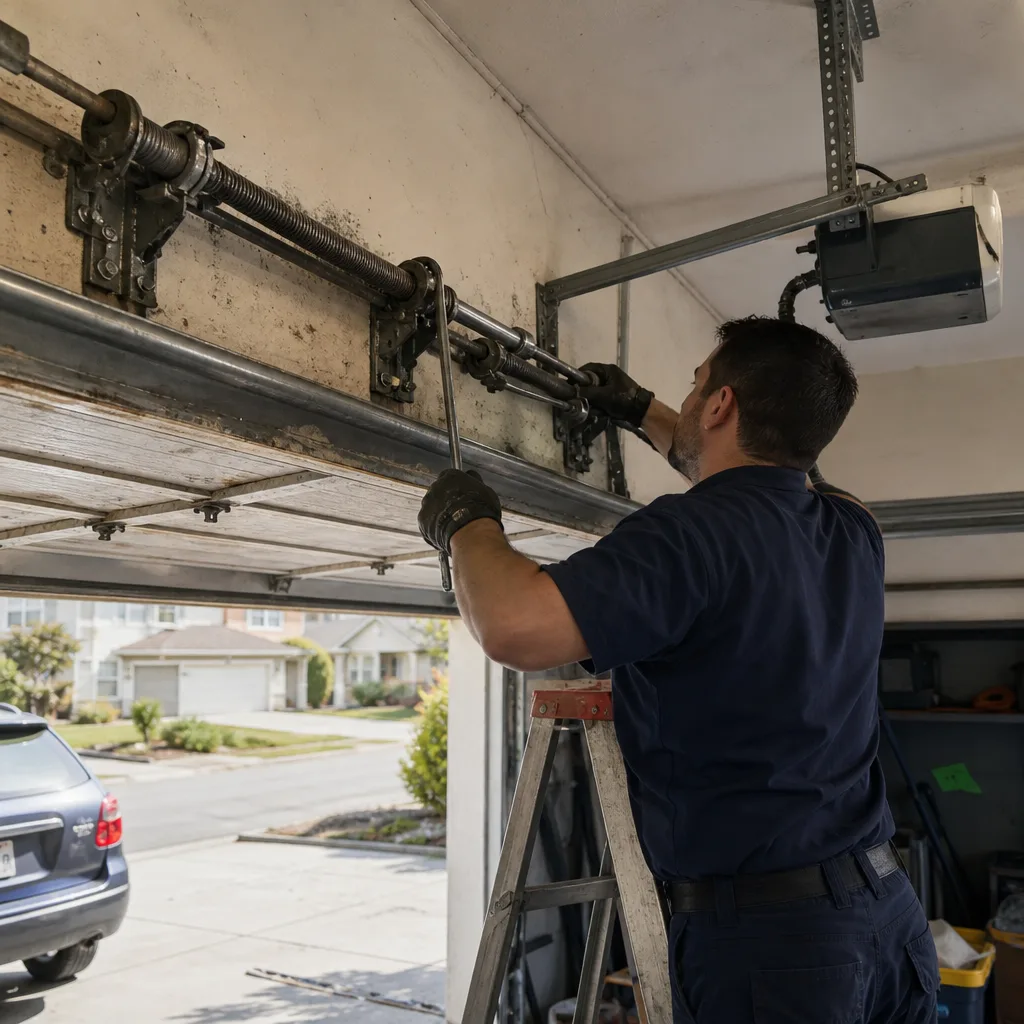
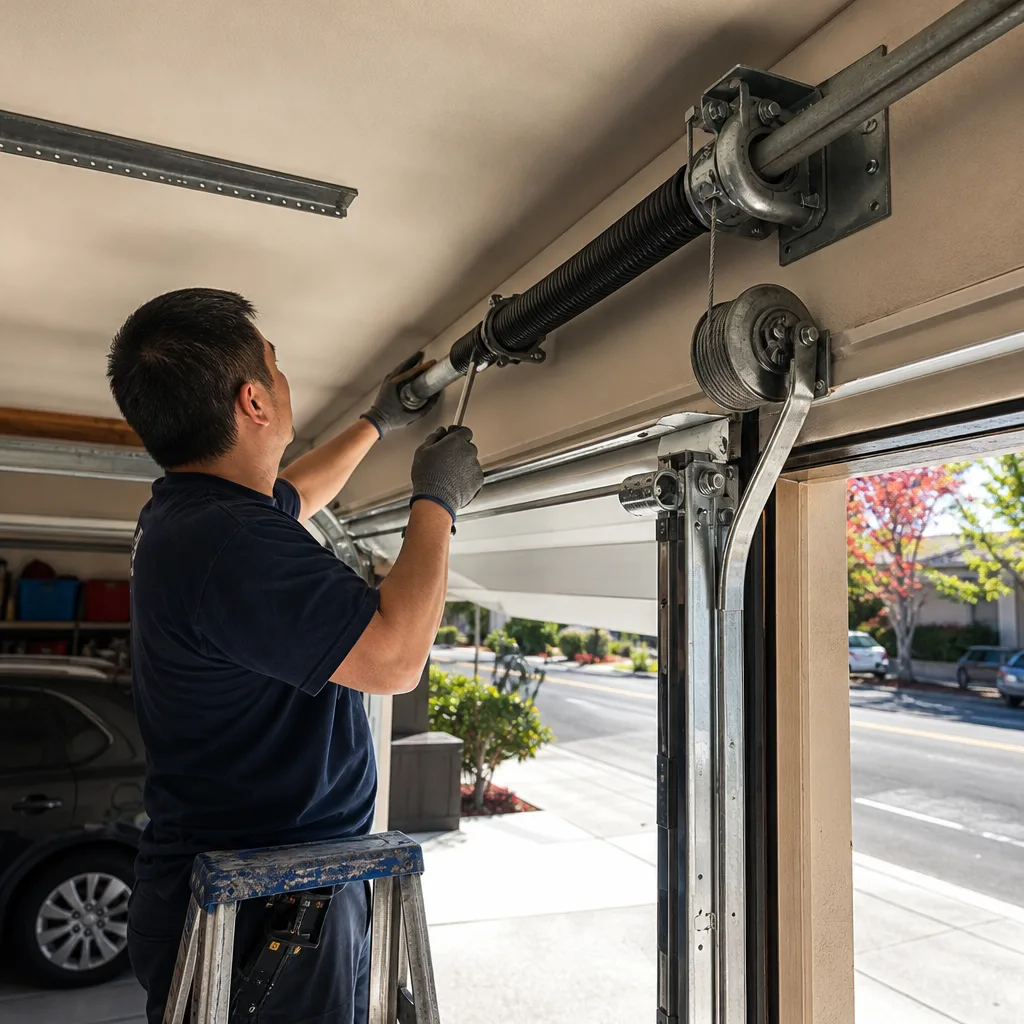
This is not a minor preference. It’s the difference between an agreement and a hostage situation. Once a torsion spring – the large coil mounted above the door that does most of the lifting – is off the shaft and the door is stranded half-open, a dishonest contractor can name any price and you’re stuck. A written estimate eliminates that leverage.
At Doyle Garage Door Repair, the price is written down and handed to the customer before a single bolt is turned. No verbal estimates. No “we’ll see once we get in there.” No invoice surprises at the end. That commitment is part of the no-hassle upfront pricing standard on every job, from a roller replacement to a full door install.
What should the written estimate include?
- The specific part being replaced or repaired, with brand name where applicable (a genuine LiftMaster logic board costs more than a generic, and you should know which one you’re paying for).
- Labor cost broken out separately from parts.
- Disposal or haul-away fees, if any.
- The total, including any trip charge or service fee.
- The warranty period in writing, with the start date.
If the contractor says “I’ll give you a number when I’m done,” you say “No thank you, I’ll call someone who will.”
Step 4: Get the Guarantee in Writing, Not Just in Words
Every contractor says they stand behind their work. Very few will write down what that means. The difference matters. A verbal “we’ll take care of you” means nothing when the torsion spring that was “just replaced” fails eight months later and the contractor’s phone goes to voicemail.
A written guarantee states specific terms: what’s covered, for how long, and what happens if the repair fails. Here’s what a real one looks like: “365 days from the date of repair – if it fails, we come back and make it right at no charge.” That’s the 365-Day Done Right Promise that Doyle Garage Door Repair puts in writing on every repair, included at no extra charge. If the repair fails within a year, the second visit is free. No argument. No prorated coverage. No fine print about “normal wear and tear.”
When you’re comparing contractors, ask this exact question: “Can you put the warranty in writing before I sign anything?” Then read it. Look for the duration, the exclusions, and the process for making a claim. If the contractor won’t write it down, the warranty doesn’t exist.
San Francisco-Specific Issues: Earthquake Bracing, Shared Walls, and Permit Triggers
San Francisco is not like other cities for garage door work. Three local factors create real ways an unvetted contractor can leave you worse off than when they arrived. See our Seasonal Garage Door Care for San Francisco: Year-Round Homeowner’s Guide for ongoing maintenance tips.
Earthquake bracing and the retrofit overlay. San Francisco sits in a Seismic Design Category D region, and the city’s existing-building code has mandatory retrofit triggers for certain garage conditions, especially when the garage supports living space above it (common in the Marina, the Richmond, and the Sunset). A garage door contractor who doesn’t understand SF’s seismic requirements can install a new door and new track system without the required bracing, and you won’t find out until the next building inspection or the next significant quake. Ask your contractor: “Does this installation require earthquake bracing under the current SF code, and is that included in the estimate?” If you get a blank stare, move on.
Shared-wall garages. In many San Francisco neighborhoods – Noe Valley, the Mission, Pacific Heights – garages are built into hillsides or share walls with neighboring homes. The clearance height, the track radius, and the side room all affect what door and opener system will actually fit. A contractor who quotes over the phone without asking about your door type, clearance height, or whether you have a shared-wall garage is guessing, and you’ll pay for the guess.
Permit triggers. Simple repairs (springs, cables, rollers, openers) don’t require a permit in San Francisco. Full door replacement may, depending on the scope and the building type. A licensed contractor knows when a permit applies and will factor it into the estimate. An unlicensed operator will tell you “you don’t need a permit” because they can’t pull one.
Red Flags: What a Bad Contractor Sounds Like on the Phone
You can eliminate most bad contractors before they ever step foot on your property. Here’s what it sounds like when you shouldn’t hire the person on the other end of the line:
- “What’s your address? I’ll send someone out.” No questions about your door type, brand, age, or the problem you’re experiencing. They’re dispatching a body, not diagnosing a problem.
- “It’ll probably be around three or four hundred.” A quote over the phone without knowing whether you have an 8×7 steel door or a 16×7 wood carriage door, a torsion or extension spring system, or a chain or belt opener. That’s not an estimate, it’s a guess, and the real price always arrives after the door is apart.
- “I can be there in 20 minutes.” If someone’s sitting idle waiting for your call, there’s usually a reason. Good contractors are booked; they schedule, they don’t hover.
- “We don’t do written estimates for small jobs.” Translation: “We want the door apart before we tell you what it costs.”
- “Cash discount if we do it today.” Cash-only deals bypass the paper trail. There’s no invoice, no record, and no warranty claim you can make later.
- “I’ll have to ask the office about insurance.” A legitimate contractor knows whether they’re insured. It’s not a trivia question.
Ten Questions to Ask Before You Say Yes
Print this list or keep it in your phone. Ask every question. If any answer is evasive, incomplete, or accompanied by pressure, end the call.
- What is your CSLB license number, and can I verify it online while I have you on the phone?
- Who is the technician coming to my house, and can you send a name and photo before they arrive?
- Will the price be written down, itemized, and handed to me before any work starts?
- Does the written price include all labor, parts, and disposal fees, with no additional charges?
- What is the warranty on the repair, in writing, and what exactly does it cover?
- Do you carry common parts on the truck – torsion springs, cables, rollers, opener logic boards – or will this require a second appointment?
- What brands do you service, and are you factory-trained on them?
- For San Francisco specifically: do you know whether my garage requires seismic bracing or any retrofit work under current code?
- Are you insured, and can you provide proof if I ask?
- Who answers if I call at 2 a.m. with a door stuck open – a person or a voicemail?
What Garage Door Work Actually Costs in San Francisco
San Francisco pricing runs higher than the national average – that’s true for everything from plumbers to parking, and garage door work is no exception. For a full breakdown of options, read The Complete Guide to Garage Door in San Francisco. Here are realistic ranges for 2025-2026:
| Service | Typical Range in San Francisco | Notes |
|---|---|---|
| Broken torsion spring replacement (single) | $180 – $340 | Includes parts and labor. Most companies quote the spring and installation together. |
| Broken torsion spring replacement (pair) | $300 – $550 | Replacing both springs at once is usually recommended; the second spring typically has similar wear. |
| Cable replacement (single side) | $150 – $275 | Often done with spring work when the cable has frayed or snapped. |
| Garage door opener replacement (belt drive, installed) | $450 – $800 | Includes removal of the old opener, new unit, programming, and safety sensor alignment. |
| New garage door installation (single, steel, standard size) | $1,800 – $3,500 | Varies by insulation, window options, and whether the old door removal and haul-away is included. |
| Roller replacement (set of 10-12) | $120 – $250 | Nylon rollers are quieter; most companies carry them on the truck. |
| Logic board replacement for opener | $150 – $320 | Common on LiftMaster and Chamberlain units 8-15 years old. |
These are not quotes. Your door, your opener, your access conditions, and your timeline determine the actual number. What these ranges should do is arm you: if someone quotes $175 for a torsion spring replacement in San Francisco, ask what corner of the price isn’t there. If someone quotes $1,200 for a single spring, ask what exactly is included. A good contractor will explain their number in writing, line by line.
For specific guidance on repair costs and options, see our Garage Door Repair in San Francisco page. If you’re weighing repair versus full replacement, our Garage Door Installation in San Francisco guide breaks down the decision. And if your opener is the problem – grinding, stopping mid-travel, or just not responding – our Garage Door Opener Repair in San Francisco page covers the common failure points.
Common Mistakes to Avoid
- Hiring on price alone. A $99 spring replacement in San Francisco either uses bargain-bin parts, unlicensed labor, or both. The spring fails in six months and the “contractor’s” phone number is disconnected.
- Skipping the CSLB check. Ninety seconds on a website is the difference between a bonded, insured contractor and a guy with a pickup and a wrench. In San Francisco, where unlicensed operators work the dense residential neighborhoods aggressively, skipping this check is the most expensive shortcut you can take.
- Accepting a verbal estimate. Once the torsion spring is off the shaft, the leverage is gone. Written price, before work, every time. No exceptions.
- Not asking about seismic bracing. In the Richmond, the Sunset, and the Marina especially, garages under living space have seismic requirements. A contractor who doesn’t know SF code will install the door and leave you with a future retrofit bill.
- Ignoring the warranty fine print. “90-day parts warranty” means the labor isn’t covered after 90 days, and if the part fails on day 91, you’re paying for the second visit. A written 365-day guarantee that covers the entire repair – parts, labor, and the second trip – is a different promise entirely.
- Using a contractor who won’t share the technician’s name. You’re opening your home to a stranger. If the company won’t tell you who that stranger is, you’re not hiring a professional service; you’re gambling.
- Not checking the license name against the company name. A license bonded to a different business entity than the one billing you is a red flag for churn-and-burn operators who let one entity absorb the complaints while another keeps selling.
See the difference
 Before
 After
After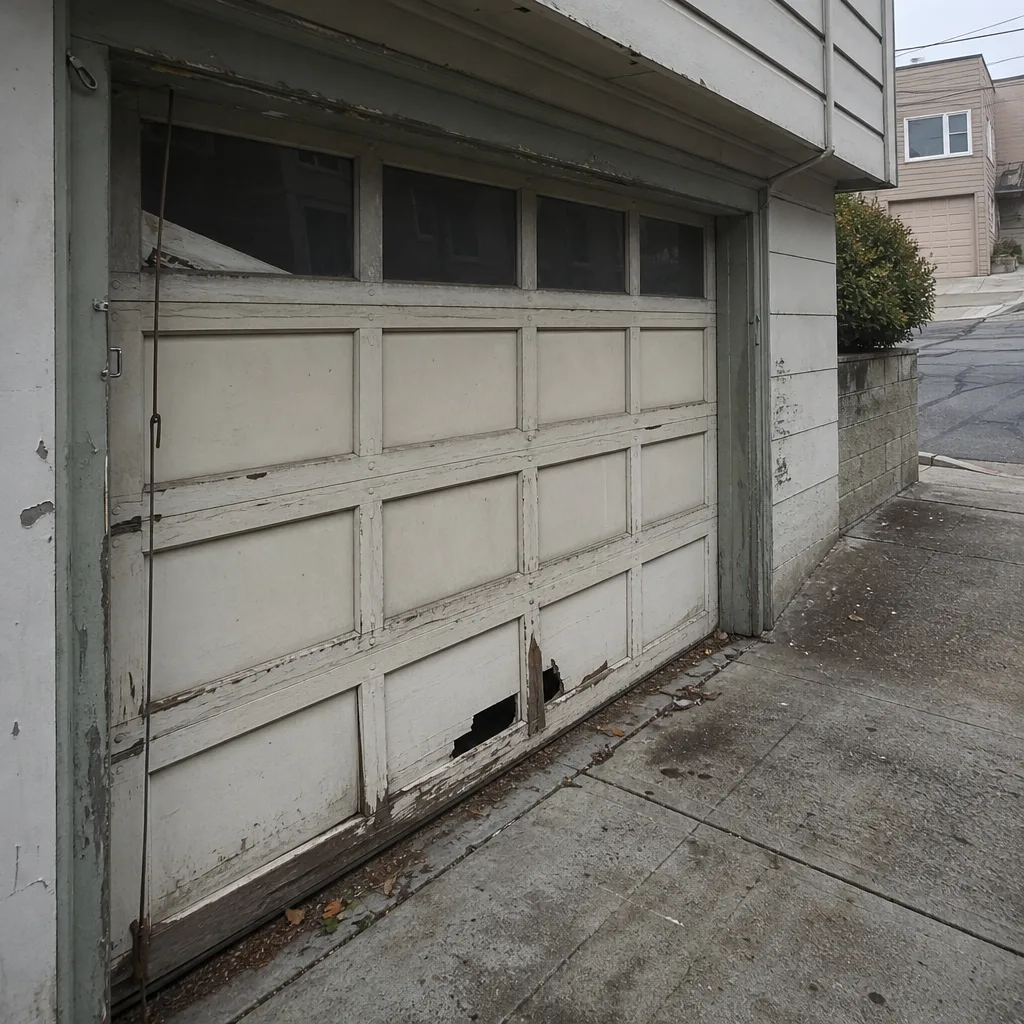 Before
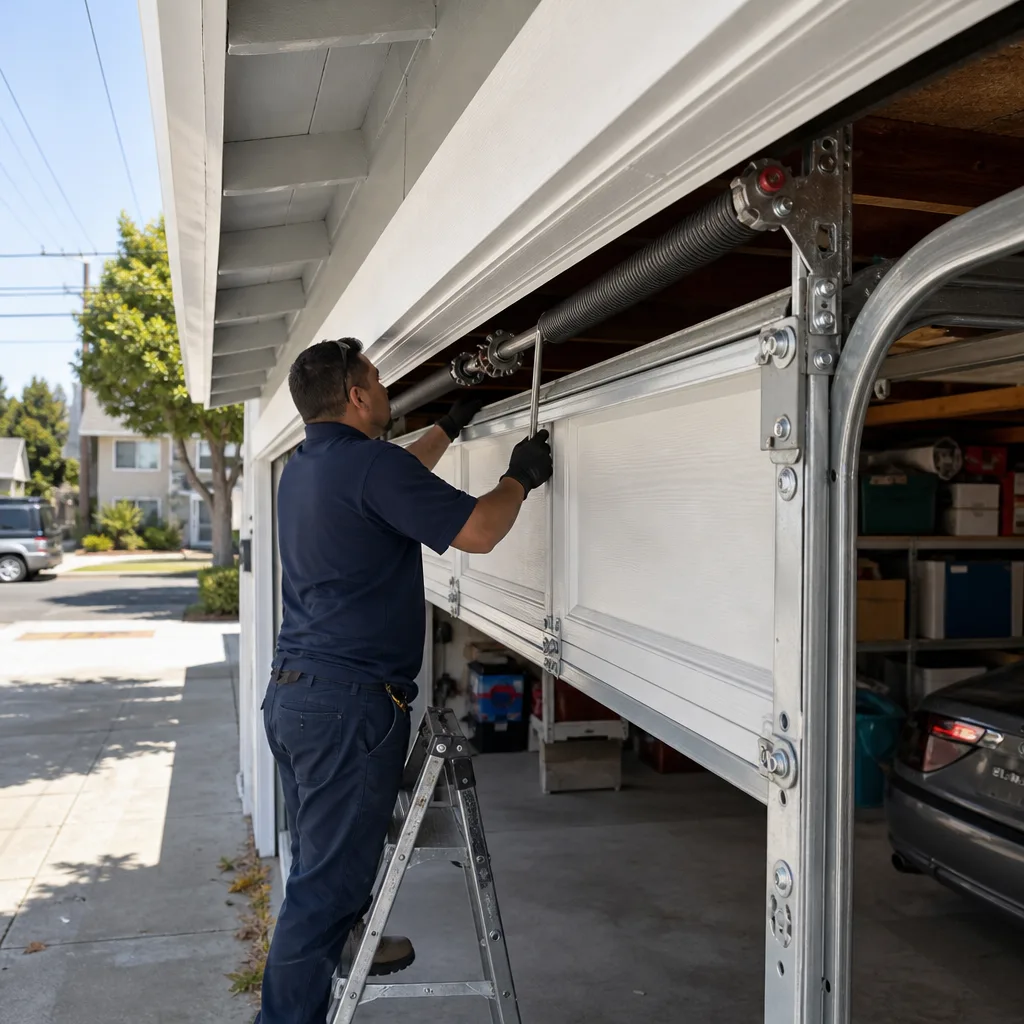 After
After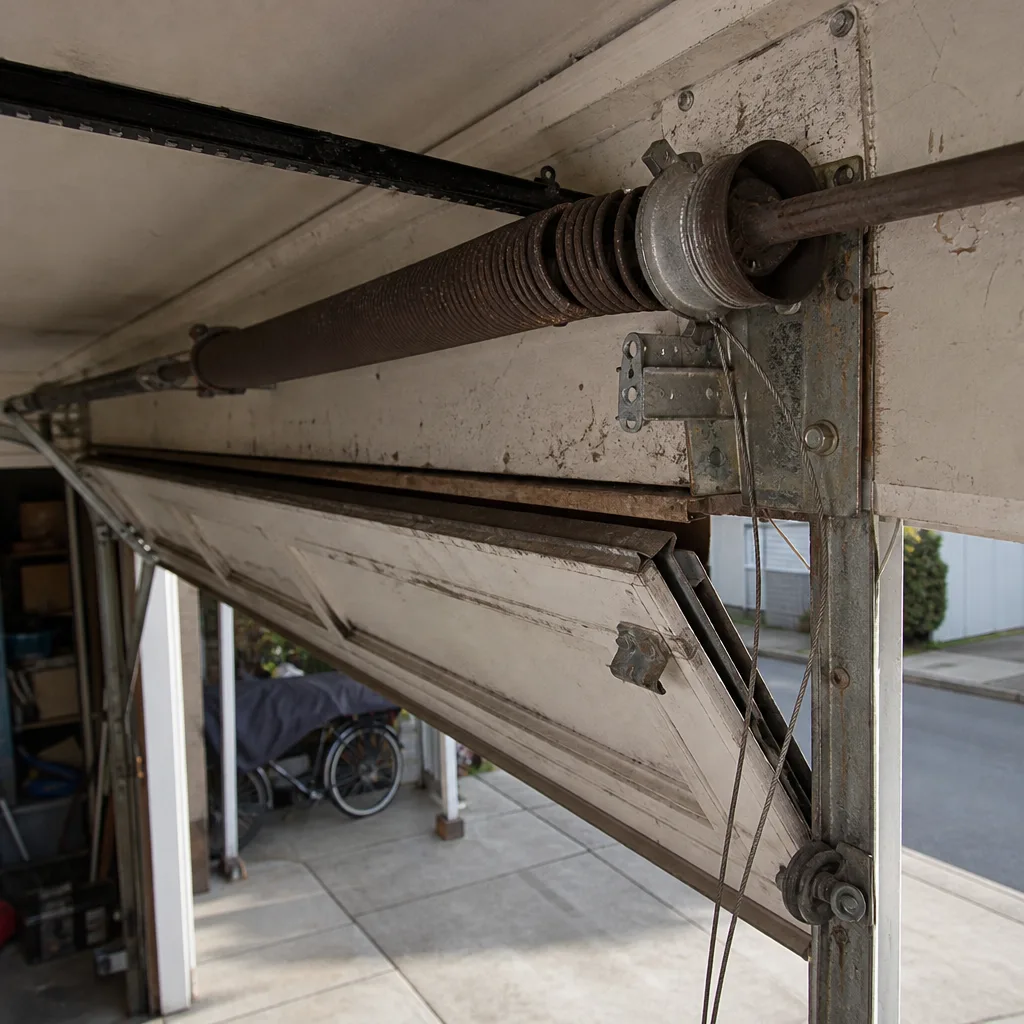 Before
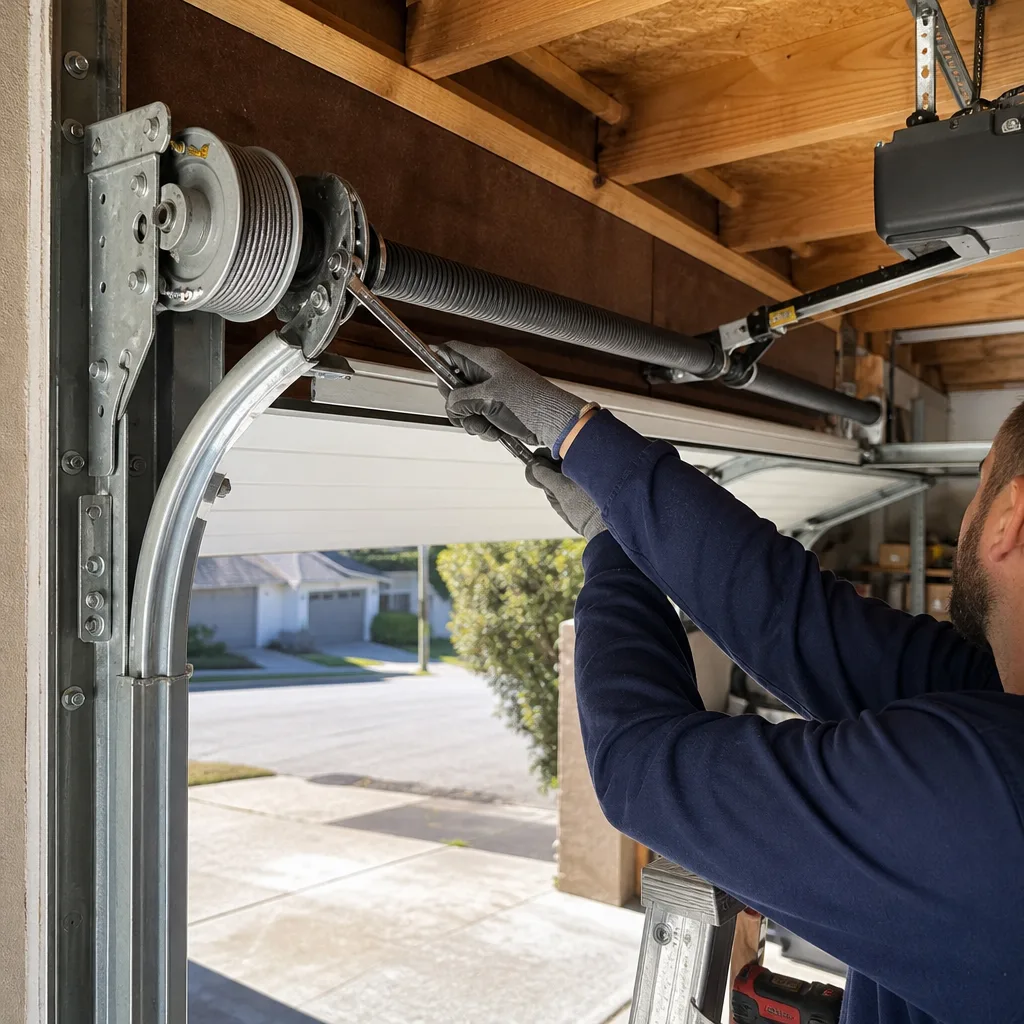 After
AfterWhen to Call a Professional
A garage door under tension is not a DIY project. The torsion spring – that coil mounted above the door that does the lifting – holds enough force to break bones or kill. Cables under tension can snap and whip. If your door is making grinding noises, moving unevenly, hanging crooked, or refusing to open with the spring intact, don’t try to fix it yourself and don’t ignore it. A door that comes off its track can fall on a car, a person, or a pet. Doyle Garage Doors San Francisco offers free estimates in San Francisco – call (650) 550-9734 and a live person answers day or night, weekends and holidays included. We’ll tell you who’s coming, with a name and photo, before they arrive. The price is written down before any work starts, and the repair is backed by a written 365-day guarantee.
Frequently Asked Questions
Simple repairs – springs, cables, rollers, openers – do not require a permit in San Francisco. Full door replacement may, depending on the scope, the building type, and whether the garage is part of a multi-unit structure. A licensed contractor will tell you if a permit applies to your specific project and will include it in the written estimate. An unlicensed operator will tell you nothing requires a permit because they can’t pull one.
Go to the CSLB website, click “Check a License,” and enter the number. Confirm the license is “Active,” that the business name matches the company you’re talking to, and that the classification covers the work being performed (B for general, C-61/D-28 for garage door specialty). The whole check takes less than two minutes. Call (650) 550-9734 if you want to talk through what you found.
A written estimate should itemize parts (with brand names where applicable), labor, disposal or haul-away fees, and the total. It should also state the warranty period and what the warranty covers. At Doyle Garage Door Repair, the written price is handed to the customer before any work starts – on every job, with no exceptions.
A single torsion spring replacement in San Francisco typically costs $180 to $340 installed, and a pair runs $300 to $550. The exact price depends on the spring size, the door weight, and the access conditions. Get a written price before the work starts so there are no surprises at the end. For an exact quote on your door, call (650) 550-9734 – estimates are free.
Because you’re about to let a stranger into your home, and you have a right to know who that person is before the doorbell rings. A company that sends a name and photo in advance has a vetting process – background checks, identity verification, a standard the technician is held to. A company that can’t or won’t provide it is telling you something important about how they operate.
At Doyle Garage Door Repair, the 365-Day Done Right Promise means exactly this: if the repair fails within 365 days from the date of service, we come back and make it right at no charge. Not parts only. Not prorated. The repair is covered, in writing, and a free second visit is automatic if it fails. If a contractor won’t put their warranty in writing, it doesn’t exist.
Yes. We’re factory-trained to service all major brands including Amarr, Wayne Dalton, Craftsman, Raynor, LiftMaster, Chamberlain, Genie, and Clopay. We stock common parts on the truck for the brands we see most in San Francisco, which means most repairs are completed on the first visit.
The Bottom Line
Hiring a garage door contractor in San Francisco is a trust decision with real safety and financial consequences. Verify the license, ask for the technician’s name and photo, demand a written itemized estimate, and require the warranty in writing. Pay attention to the San Francisco-specific factors – seismic bracing, shared-wall access, and permit triggers – that out-of-town or unlicensed operators miss. A good contractor makes all of this easy: the answers are immediate, the paperwork is offered before you ask, and the name and photo arrive before the technician does. Doyle Garage Door Repair is the garage door company of the Doyle Garage Doors San Francisco home family – independently owned, operating under the Threshold Verified standard, and serving San Francisco since 2001. Call (650) 550-9734 for a free estimate. A live person answers. Day, night, weekend, or holiday.
Written by Aaron Teague, Owner at Doyle Garage Doors San Francisco, serving San Francisco since 2001.