
Last updated October 16, 2026
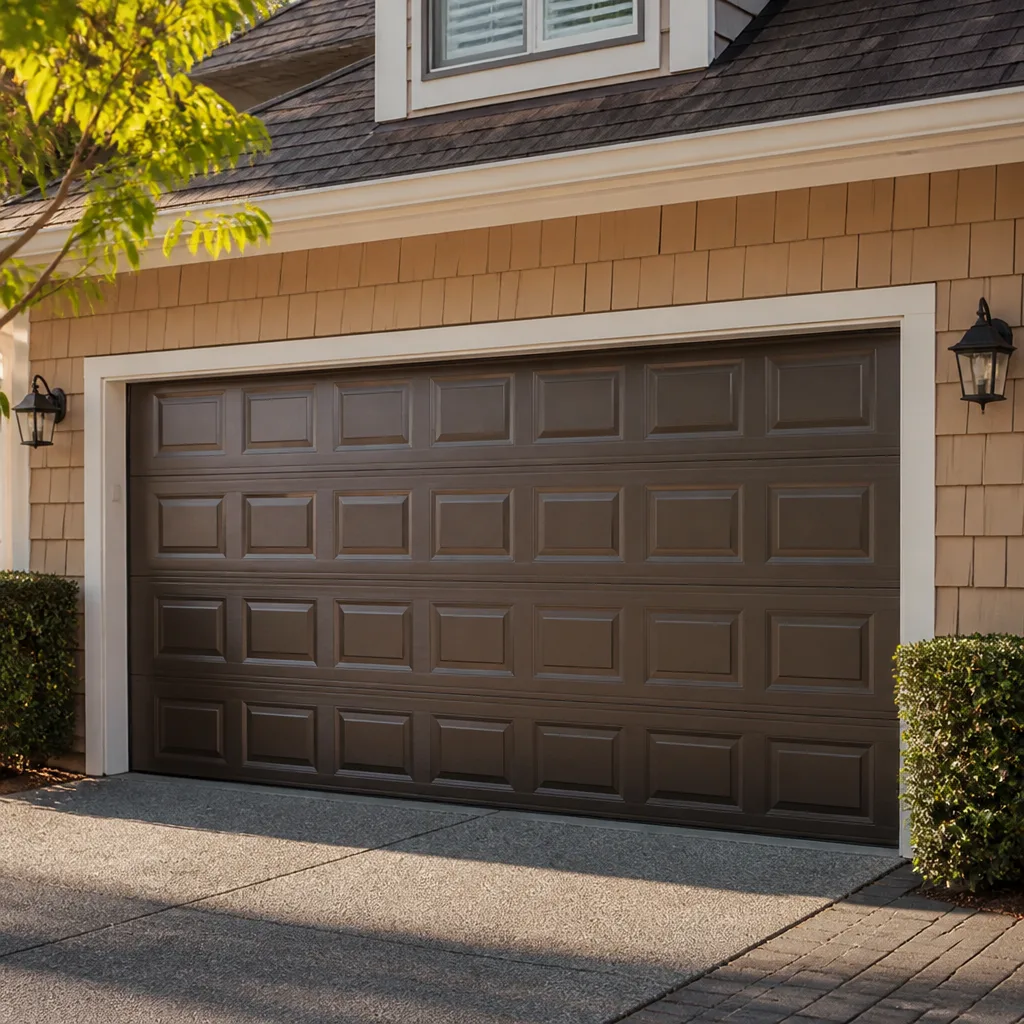 Raised-panel steel
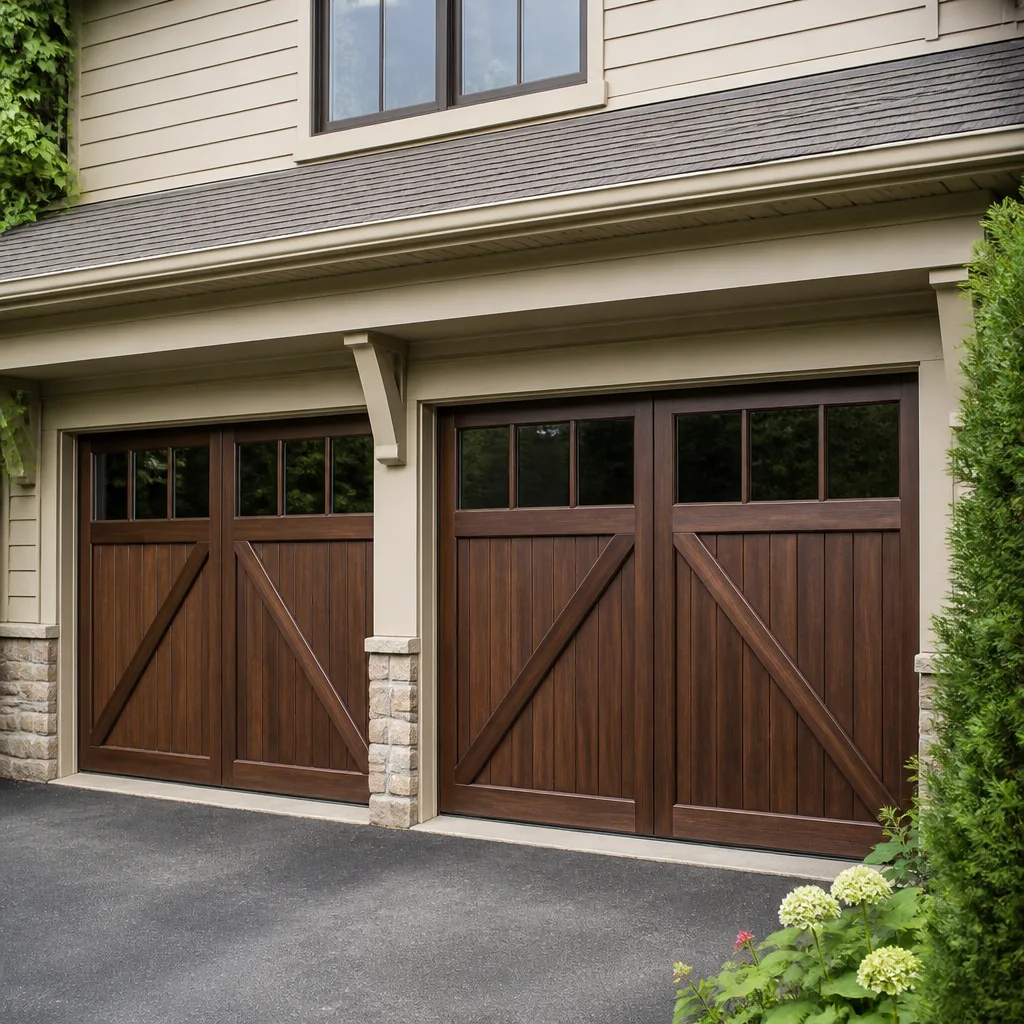 Carriage house
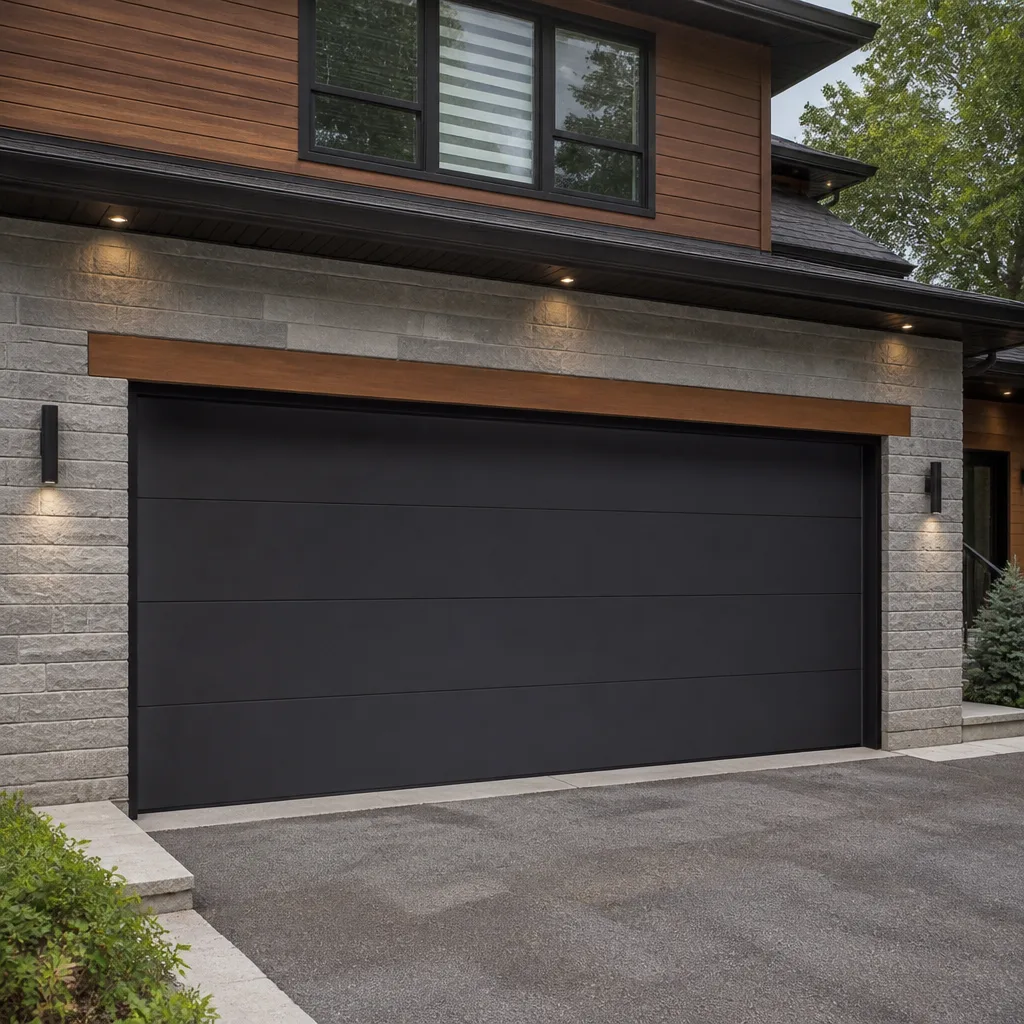 Modern flush
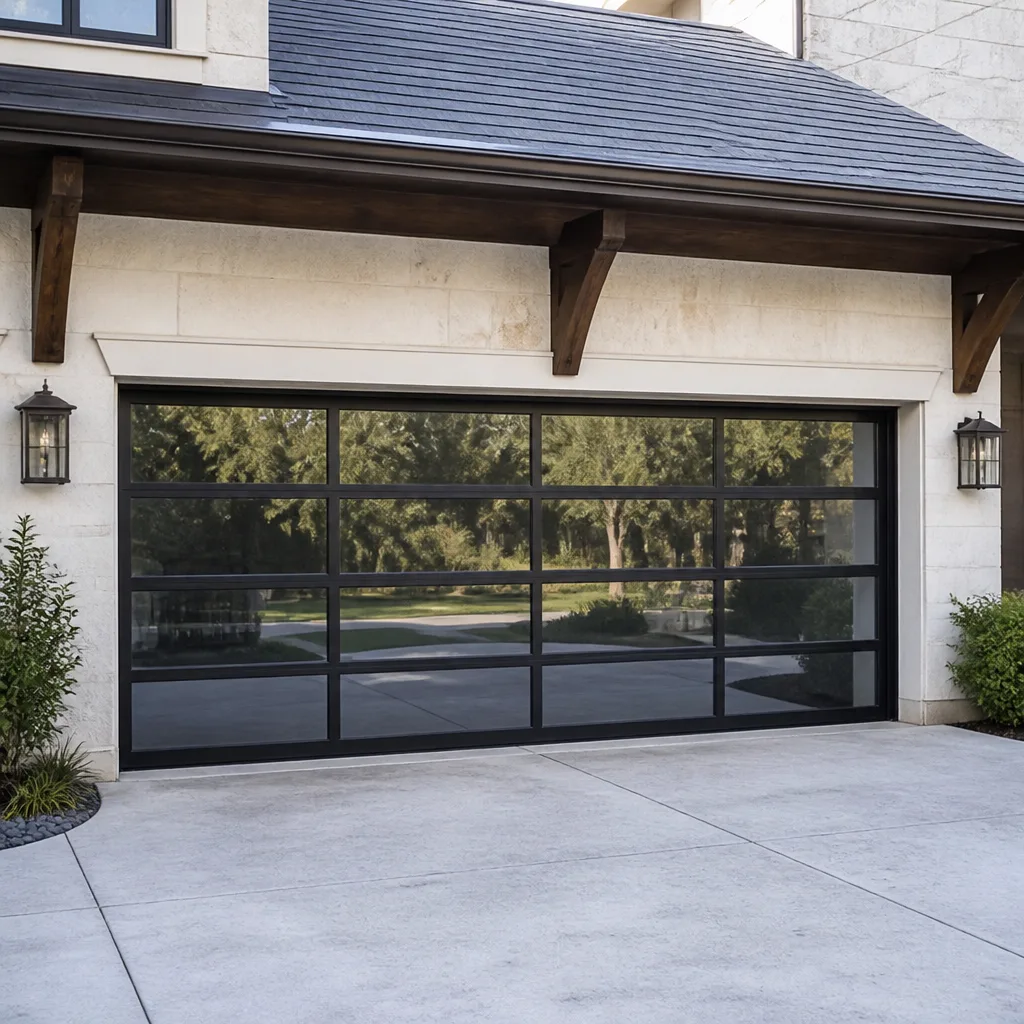 Full-view glass
 LiftMaster openers
 Chamberlain openers
Full 25-point door and opener safety check with every visit - springs, cables, rollers, tracks, and your LiftMaster or Chamberlain opener included
You get a price before we start. It does not change when the truck arrives.
Get your free estimateGarage Door Warning Signs: A San Francisco Homeowner’s Reference Guide
A garage door that hesitates for two seconds before moving isn’t “getting old.” It’s showing a specific symptom called limit switch drift, where the opener’s electronic stopping points shift over time. In San Francisco homes built with 1990s-era openers, that hesitation is often the first sign that the logic board is six months from failing. This guide works backward from the specific failure modes we see most often in San Francisco’s housing stock and fog climate, so you can match symptoms to causes before the door actually stops working. For a broader overview, see The Complete Guide to Garage Door in San Francisco.
Quick Answer
The most common garage door warning signs in San Francisco are unusual sounds (grinding, squealing, popping, rattling, clicking), visible rust patterns on springs and hardware, a door that drifts or creeps on its own, slow or uneven movement, and gaps at the top corners of the door. Each sound and visual cue maps to a specific component: the trolley carriage, torsion shaft bearings, cables, track bolts, or limit switch. Most doors give observable warning signs at least 10 days before a full failure, and catching them early typically means a $150-$300 repair instead of a $600-$900 emergency replacement.
Styles & brands we work with
Table of Contents
- The Five Sounds That Map to Specific Components
- Visual Rust Patterns That Predict Imminent Failure
- The “Door Drifts” Diagnostic: Spring Imbalance vs. Opener Problems
- SF-Specific Warning: Uneven Top Corners in Shared Victorian Garages
- The 10-Day Rule: What to Document Before Calling a Technician
- Common Mistakes to Avoid
- When to Call a Professional
- Frequently Asked Questions
The Five Sounds That Map to Specific Components
Most garage door problems announce themselves audibly before they show up visually. Here are the five sounds we hear described most often from San Francisco homeowners, mapped to the specific component causing each one.
1. Grinding (worn trolley carriage)
A grinding or metal-on-metal scraping sound during opening or closing almost always points to the trolley carriage, which is the small wheeled assembly that pulls the door along the opener rail. When the carriage’s internal rollers wear down, they drag instead of roll. On LiftMaster and Chamberlain openers from the late 1990s and early 2000s, which are extremely common in San Francisco garages, the carriage is usually the first component to go. A replacement carriage with labor typically runs $140-$220, and it’s a same-day repair in most cases. If you ignore it, the carriage will eventually seize and the opener will burn out its motor trying to move a frozen assembly, which turns a $200 fix into a $500-$700 opener replacement.
2. Squealing (dry torsion shaft bearings)
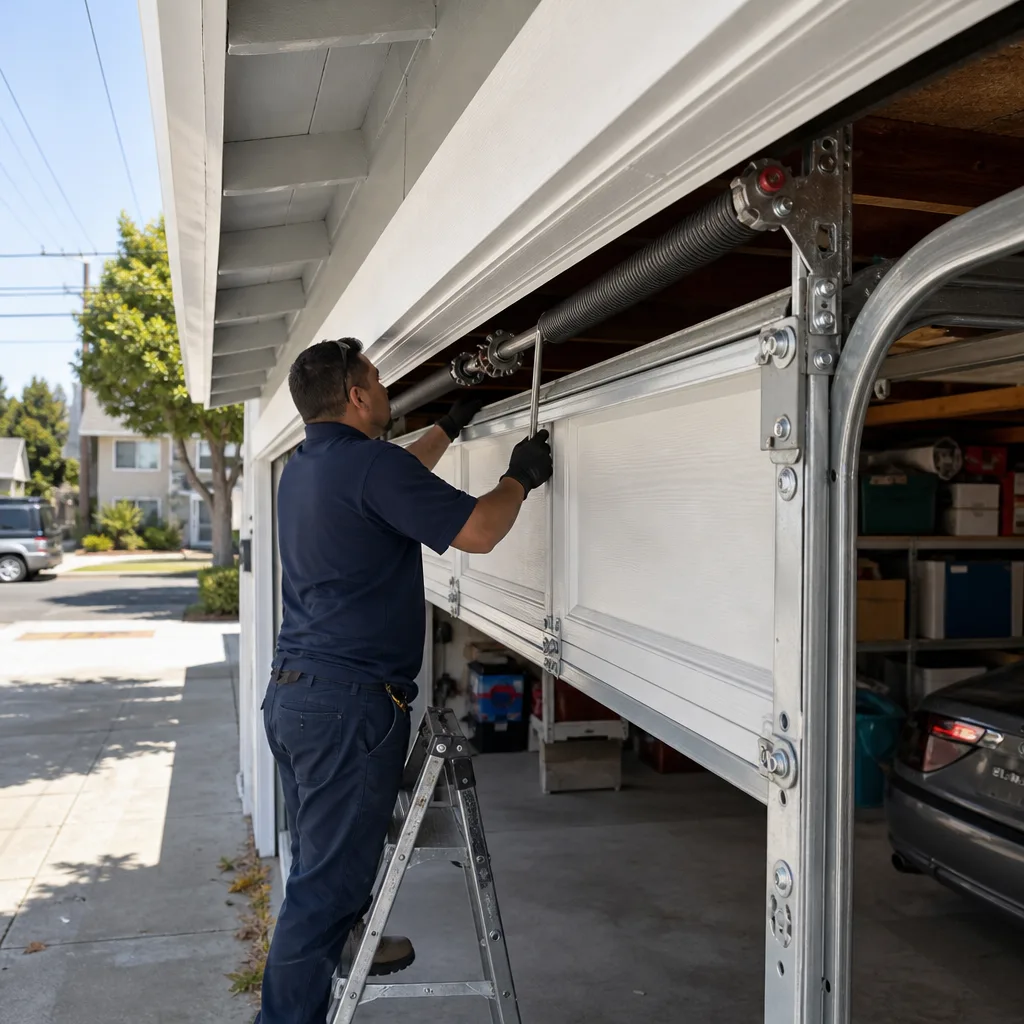
A high-pitched squeal that happens while the door is in motion, not when it first starts, usually comes from the torsion shaft bearings. The torsion shaft is the horizontal bar above the door that the torsion springs, those large coils mounted above the door that do most of the lifting, are wound around. The shaft rides on small bearings at each end, and when those bearings lose their lubrication or wear out, they squeal. In San Francisco’s coastal neighborhoods like the Sunset, Richmond, and Ingleside, salt-laden fog accelerates bearing wear. We see dry shaft bearings roughly twice as often in the outer neighborhoods than in Noe Valley or Glen Park. A bearing replacement usually costs $90-$150 per side, and it’s a job that takes under an hour.
3. Popping (cable jumping the drum)
A sharp pop or bang during operation is the sound of a cable momentarily jumping out of its groove on the cable drum, the grooved wheel at each end of the torsion shaft that winds and unwinds the lifting cables. This happens when the cable loses tension, usually because a spring has weakened or the door has come out of alignment. A popped cable is a genuine safety issue: the cable is under high tension, and when it releases, it can whip. If you hear a pop and the door still moves, stop using the door and call a technician. A cable that fully comes off the drum can allow the door to fall, and a falling garage door can weigh 150 to 400 pounds depending on the model. Cable replacement with spring adjustment typically costs $180-$280 in San Francisco, and this is not a job to attempt yourself.
4. Rattling (loose track bolts)
A persistent rattle, especially in the vertical or curved sections of track, usually means the bolts holding the track to the wall or ceiling have loosened. This is one of the most common issues in San Francisco because so many garages here are built into hillsides or under living spaces, where minor seismic movement and foundation settling are constant. Loose track bolts let the track vibrate against the wall brackets, and over time the vibration can actually wallow out the bolt holes, making the problem worse. A track tightening service call typically runs $80-$120, and most homes need it done every 3-5 years. If the rattle is accompanied by visible movement of the track itself, stop using the door and call a professional, because a derailed door is the next step.
5. Clicking (limit switch or logic board)
A rapid clicking sound from the opener unit, especially when the door is NOT moving, usually points to the limit switch or the logic board. The limit switch is the component inside the opener that tells the motor where “up” and “down” are. When it drifts or fails, the opener clicks repeatedly as it tries to find its stopping point. On 1990s-era Genie and Chamberlain openers, this clicking is frequently the final warning before the logic board fails entirely. A limit switch adjustment is often part of a standard service call at $90-$140, while a full logic board replacement on an older opener usually doesn’t make financial sense compared to a new opener install at $350-$550.
Visual Rust Patterns That Predict Imminent Failure
San Francisco’s fog is the defining factor in garage door longevity here. The same marine layer that keeps the city cool also delivers a constant dose of moisture and salt to every piece of exposed metal in your garage. Understanding the difference between cosmetic rust and structural rust can save you from a dangerous spring failure.
Surface Rust on Spring Coils: Cosmetic
A light, even coating of reddish-brown rust on the outside of a torsion spring coil is normal in San Francisco. It’s what happens when fog moisture sits on exposed steel. This surface rust does not meaningfully weaken the spring, and it does not require replacement. If your springs have a dusty, uniform rust layer and the door operates smoothly and evenly, you’re fine.
Rust Inside the Coil Winding: Structural Warning
What you need to look for is rust that has worked its way between the coils, into the tight spaces where the spring wire nearly touches itself. When you see rust inside the coil winding, especially if it’s flaking or crusty, that’s a structural failure warning. The rust is growing inside the spring where the stress concentration is highest, creating micro-cracks that will eventually cause the spring to snap. We’ve replaced springs in the Richmond District that looked fine on the outside but had rust-created stress cracks deep inside the coil. This is a different repair entirely from surface rust: a structural rust finding means spring replacement is needed now, not in six months. A dual spring replacement in San Francisco typically runs $280-$420, and it’s a same-day job in most neighborhoods.
Rust on the Bottom Panel
One more rust pattern worth noting: if the bottom panel of the door, the part that meets the ground, is rusting from the ground up, that’s usually a sign of water pooling against the base of the door. In San Francisco garages built at grade on flat lots, this is common in the winter rainy season. The fix is usually a bottom seal replacement plus a drainage assessment, and that runs $85-$140. Left unchecked, bottom panel rust spreads upward into the door’s structural frame, and a panel replacement on a Clopay or Amarr door can run $500-$800.
The “Door Drifts” Diagnostic: Spring Imbalance vs. Opener Problems
Here is one of the most common and most expensive mistakes we see San Francisco homeowners make: a door that creeps open or closed on its own after stopping is usually a spring imbalance, not an opener problem. When a torsion spring loses tension, usually because it’s near the end of its rated cycle life, the door’s weight is no longer evenly counterbalanced. The result is a door that drifts down when it should stay put, or slowly rises if the spring still has tension but the door’s weight has shifted.
Replacing the opener first is the expensive mistake. An opener’s job is to push and pull a balanced door. When the spring is weak, the opener is doing double duty, and a new opener will fail prematurely in exactly the same way. We have replaced openers that homeowners installed themselves six months prior, only to find the real problem was a spring that had lost 20% of its tension. A spring replacement costs $250-$400 in San Francisco, while a new opener from a residential brand runs $350-$650 installed. Fixing the spring first is almost always the right call. Here’s how to diagnose it yourself:
- Disconnect the opener using the red emergency release cord, so the door operates manually.
- Lift the door to waist height and let go. A properly balanced door will stay roughly in place, moving no more than a few inches.
- If the door drifts down, the spring has lost tension and needs adjustment or replacement.
- If the door drifts up, the spring may be over-tensioned from a previous adjustment, or the door has become lighter due to a panel change or hardware removal.
- If the door stays put but the opener still misbehaves, then and only then is the opener the likely culprit. The Garage Door Opener Repair in San Francisco guide covers opener-specific diagnostics in detail.
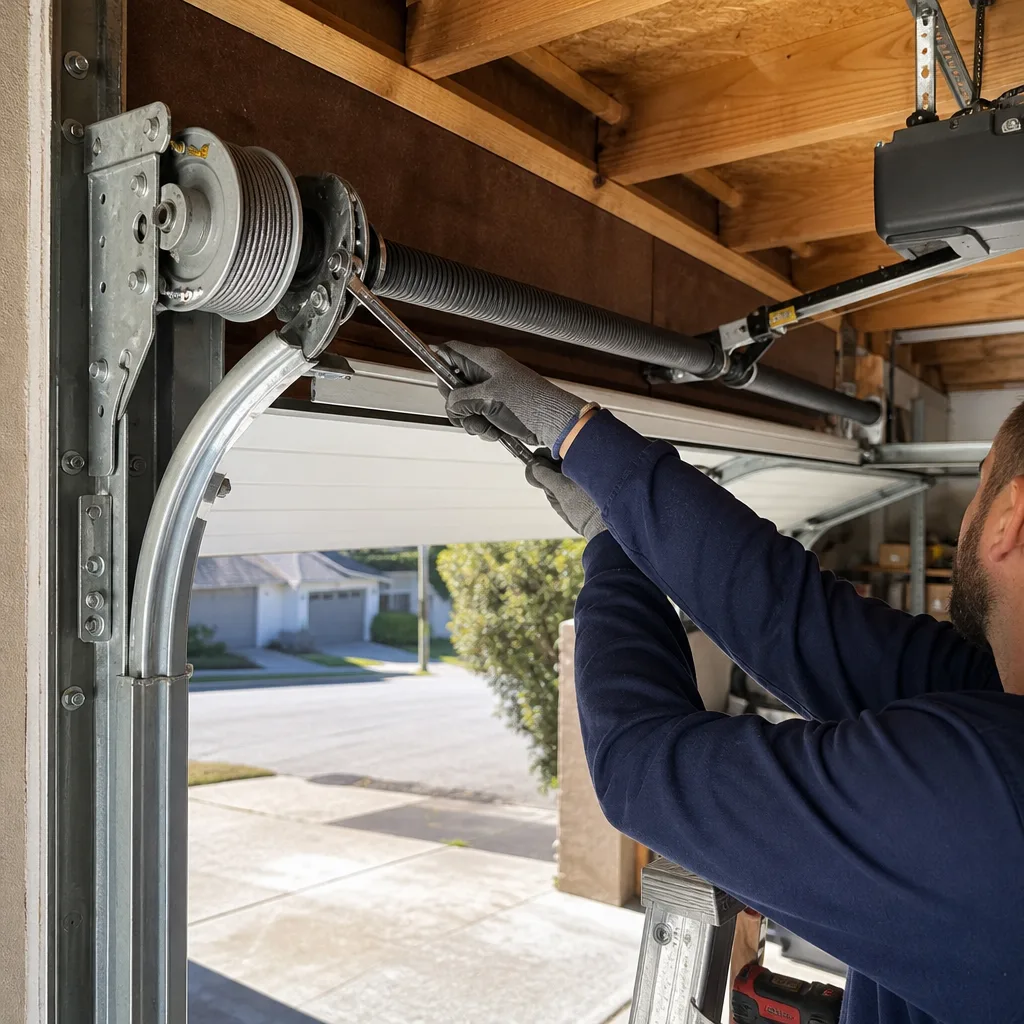
One important caution on the spring topic: torsion springs are under extreme tension, enough to cause serious injury if they release unexpectedly. Do not attempt to adjust or replace a torsion spring yourself. This is a job for a trained professional with the right winding bars and experience, and there is no safe workaround.
SF-Specific Warning: Uneven Top Corners in Shared Victorian Garages
San Francisco has thousands of Victorian and Edwardian buildings where the garage was originally a carriage house or was carved out of the ground floor decades after construction. In these garages, we regularly see a specific warning sign that almost never appears in newer suburban construction: an uneven gap at the top corners of the door. One corner sits flush against the header while the other shows a visible gap an inch or wider.
Many homeowners assume this is a spring problem, but in shared Victorian garages it is usually header sag. The header is the horizontal beam above the garage door opening that carries the weight of the wall above it. In older San Francisco buildings, especially those with timber framing that has been exposed to a century of fog moisture, the header can sag or shift. When the header sags, the top of the door frame is no longer level, and the door cannot seal evenly.
This requires a different repair entirely from spring work. The fix is typically a header reinforcement or a track realignment with adjustable brackets, and in some cases the door top section may need to be trimmed or replaced to match the new frame line. Header repair work in San Francisco typically runs $600-$1,200 depending on scope, and it often involves coordination with a general contractor if structural work is needed. The key point: if you see uneven top corners and your door’s balance test comes back normal, stop looking at springs and have the header inspected.
The 10-Day Rule: What to Document Before Calling a Technician
Most garage door failures give observable warning signs at least 10 days before the door actually stops working. The goal of this guide is not just to help you identify problems, but to help you document them so a technician can bring the right parts on the first visit. In San Francisco, where parking is tight and a technician’s truck is a rolling warehouse of parts, a first-visit fix saves you a second appointment and a second fee.
Here is our recommendation for what to document, and how:
- Record the sound on your phone. Ten seconds of video with clear audio is worth a thousand descriptions. Grinding versus squealing versus popping maps to different parts, and your recording lets the technician identify the component before they arrive.
- Note the time of day and weather conditions. A door that sticks only in the morning fog or only after rain is giving you diagnostic information about moisture-related issues.
- Document the exact behavior. “Door hesitates two seconds then opens” is more useful than “door is acting weird.” Note whether it happens on opening, closing, or both, and whether it’s consistent or intermittent.
- Photograph any visible rust, gaps, or wear. Close-up photos of spring coils, cable drums, and track bolts help the technician prepare.
- Note whether the problem started suddenly or gradually. Sudden onset usually means a broken component; gradual onset usually means wear.
When you call a company like Doyle Garage Doors San Francisco home, this documentation means the technician shows up with the right parts and the right diagnosis already in mind. That is what makes the difference between a one-visit fix and a two-visit hassle.
Common Mistakes to Avoid
- Replacing the opener before checking the spring. As covered in the drift section, a weak spring is the most common hidden cause of opener failure. Fix the spring first, and you may not need a new opener at all.
- Ignoring a popping sound because the door still works. A popped cable is a warning that the door is about to become unbalanced. In San Francisco’s fog climate, cables corrode and fail faster than they do inland, and a failed cable can allow a door to drop.
- Assuming rust is always cosmetic. Surface rust is normal in this city, but rust inside the coil winding is a structural failure warning. If you can see flaking rust between coils, replace the spring now.
- Hiring the cheapest company without verification. A garage door repair means letting a stranger into your home. Before you book, ask whether the technician is background-checked, whether you will receive their name and photo in advance, and whether the price will be in writing before work starts. If the answer to any of those questions is no, keep looking.
- Attempting DIY spring or cable work. The torsion spring on a residential door is under enough tension to cause serious injury or death if it releases. Even experienced DIYers should not touch torsion springs without professional training.
- Waiting until the door fails completely. An emergency call on a weekend or holiday, which is when doors inevitably fail, costs more than a scheduled repair. The 10-day rule exists because most failures give you a window to act.
When to Call a Professional
Call a professional immediately if you hear a pop or bang followed by the door hanging unevenly, if the door drifts on its own when disconnected from the opener, if you see rust inside the spring coil windings, or if the door will not move and the opener is still running. These are all signs of a failed or failing spring or cable system, and they are dangerous to ignore. Call a professional within the week if you hear persistent grinding, squealing, or rattling, if you notice uneven gaps at the top corners of the door, or if the door hesitates before moving. Doyle Garage Doors San Francisco offers free estimates in San Francisco, and every job includes a written price before any work starts. Call (650) 550-9734 to schedule.
Frequently Asked Questions
Spring replacement in San Francisco typically costs $250-$400 for a standard residential torsion spring pair, including labor. The cost varies based on door weight, spring size, and whether the job requires a same-day emergency visit. Every spring we replace is covered by a written 365-day guarantee, and the price is written down and handed to you before any work starts. Call (650) 550-9734 for an exact quote, and expect the technician to confirm the price before turning a single bolt.
Yes, most spring, cable, and roller repairs are same-day jobs in San Francisco. We carry the most common spring sizes and replacement parts on the truck, and our technicians arrive with the name and photo of who is coming sent to you in advance. For more complex jobs like full door replacements or installations, the work is scheduled after a free measure and a written quote. Call (650) 550-9734 and a real person will answer, day or night. For more guides & resources, visit our blog.
No. The price you are quoted is the price you pay, and it’s written down and handed to you before any work begins. If the technician finds an additional problem during the repair, they will stop, explain what they found, and provide a written price for the additional work before doing it. No verbal estimates, no invoice surprises.
Yes. Our trucks are stocked with the most common spring sizes, cables, rollers, brackets, and hardware for the major brands we service, including Genie, Clopay, Amarr, and Wayne Dalton. That’s why the 10-day documentation approach matters: if you tell us what you’re seeing before the visit, we can make sure the right part is on board when we arrive.
Standard torsion springs are rated for 10,000 cycles, which is roughly 7-10 years of normal use in a San Francisco home. In fog-exposed neighborhoods like the Sunset and Richmond Districts, springs may fail a year or two earlier due to moisture-driven corrosion that accelerates fatigue cracking. If your springs are over 8 years old and you see rust inside the coil windings, replacement is a smart preventive move before they snap.
First, check the obvious: make sure the opener is plugged in and the emergency release cord has not been accidentally pulled. If the door is stuck in the open or partially open position, do not attempt to force it down manually, as a failed spring or cable may allow it to drop. Call (650) 550-9734 for emergency service, and know that a live person answers 24/7, including nights, weekends, and holidays. If the door cannot be secured, a technician can often arrive within hours.
The Bottom Line
A San Francisco garage door that is making noise, drifting, or showing rust is giving you a warning that is specific, identifiable, and actionable. Grinding means the trolley carriage. Squealing means shaft bearings. Popping means a cable problem. Rust between the coils means spring replacement. Uneven top corners in an old Victorian garage often mean header sag, not springs. Most failures give you at least 10 days of warning, and documenting what you see and hear means the technician arrives with the right parts on the first visit. When you call, expect to know who is coming, what it will cost, and that both are in writing before the work begins. For Garage Door Installation in San Francisco or Garage Door Repair in San Francisco, call (650) 550-9734.
Written by Aaron Teague, Owner at Doyle Garage Doors San Francisco, serving San Francisco since 2001.
See the difference
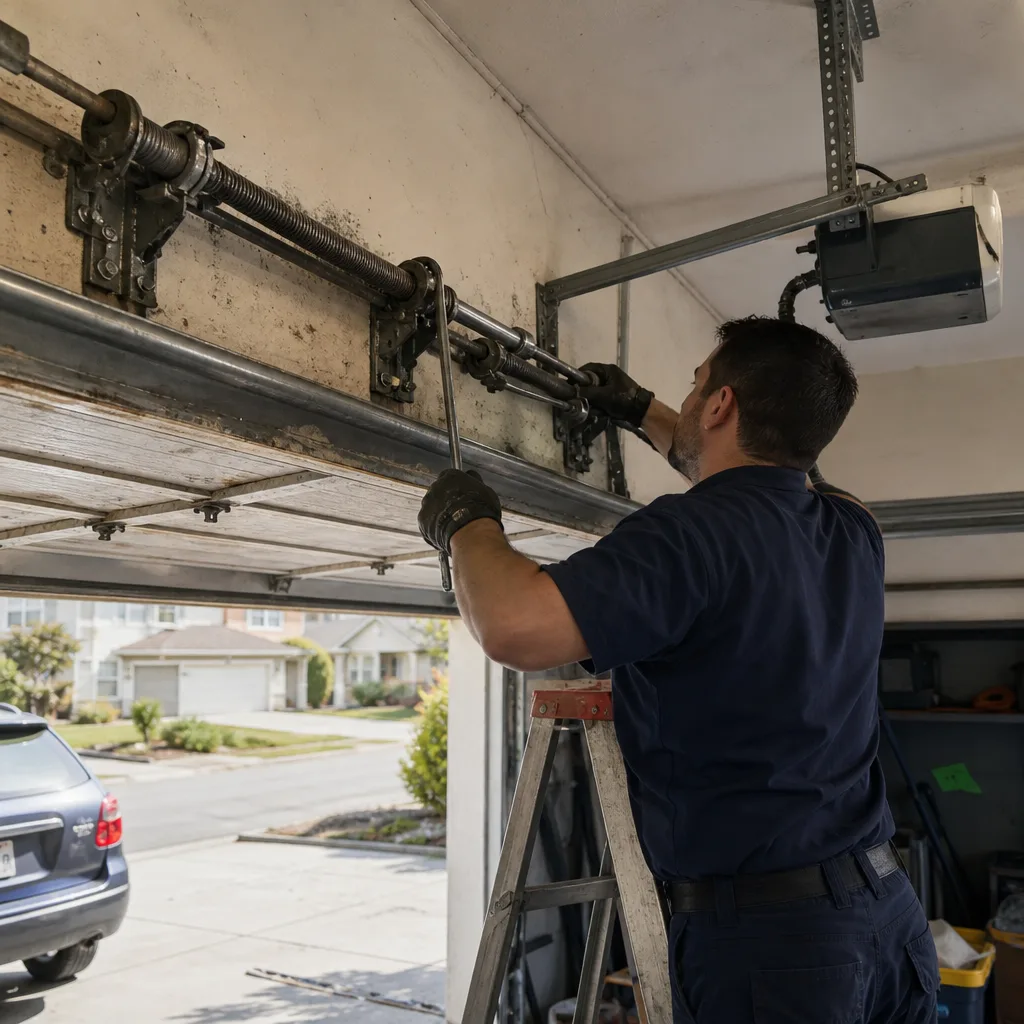 Before
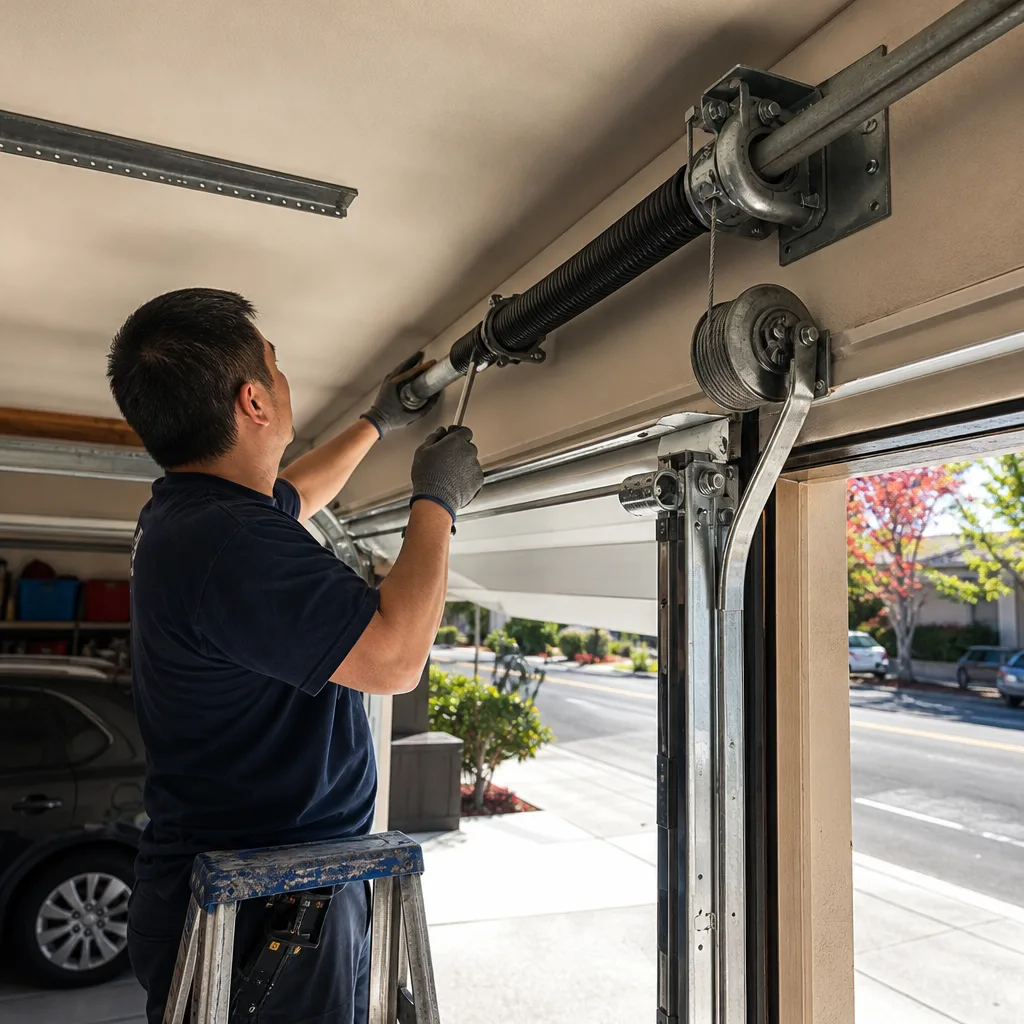 After
After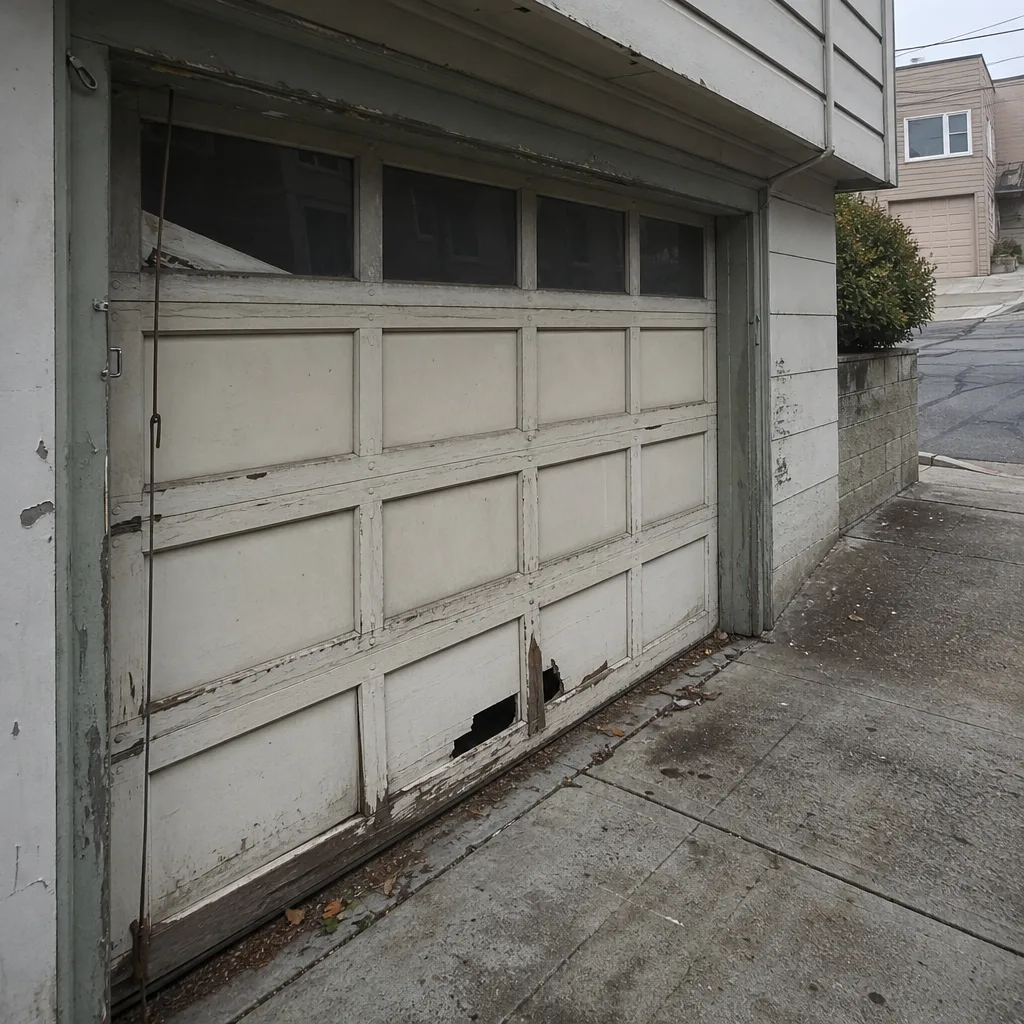 Before
 After
After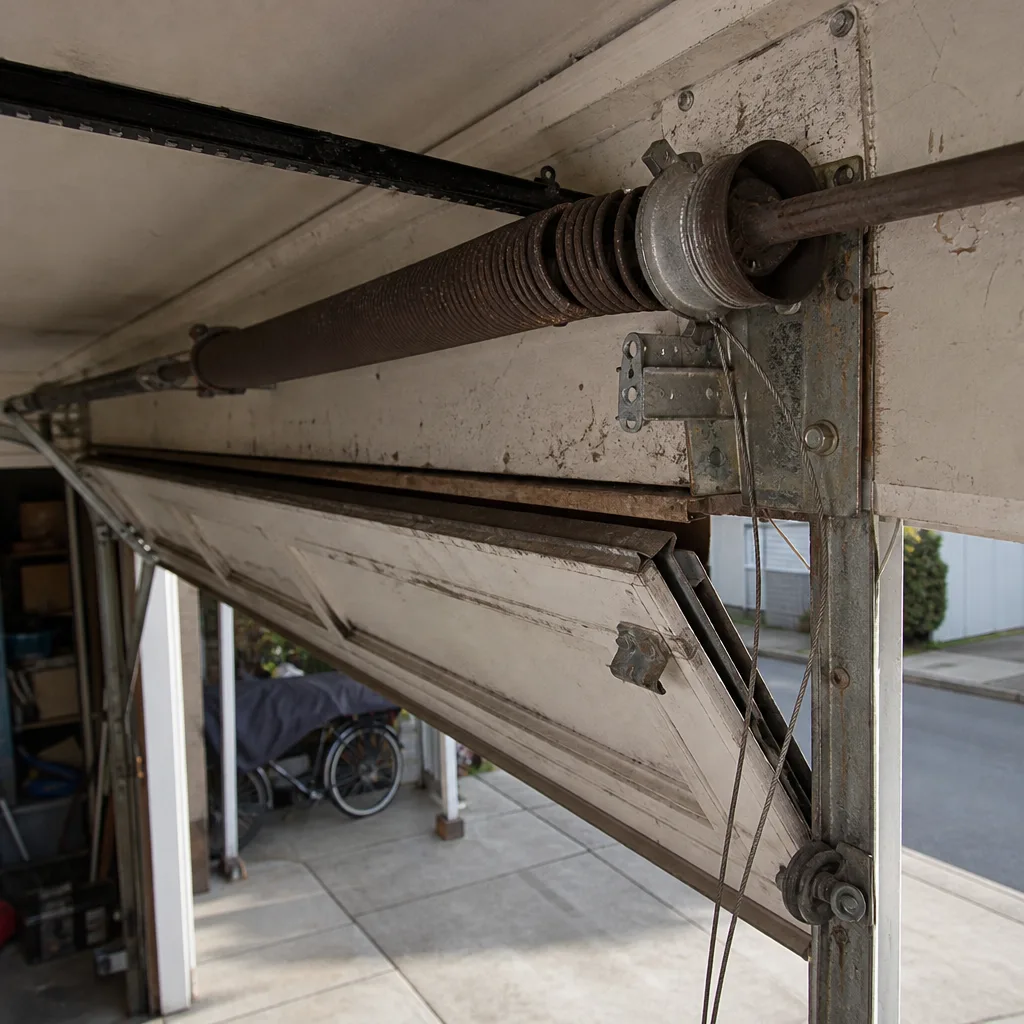 Before
 After
After